Studio Hound 13 has revealed new details about Dragon Sword (formerly known as Project D), an action RPG that promises to redefine realism in fantasy combat. Developed in Unreal Engine 5, the title leverages the Lumen global illumination system to render fantasy environments with dynamic lighting quality. Additionally, it integrates impact physics that react in real-time, a technical challenge that few titles in the genre have managed to optimize on consoles and mid-range PCs.
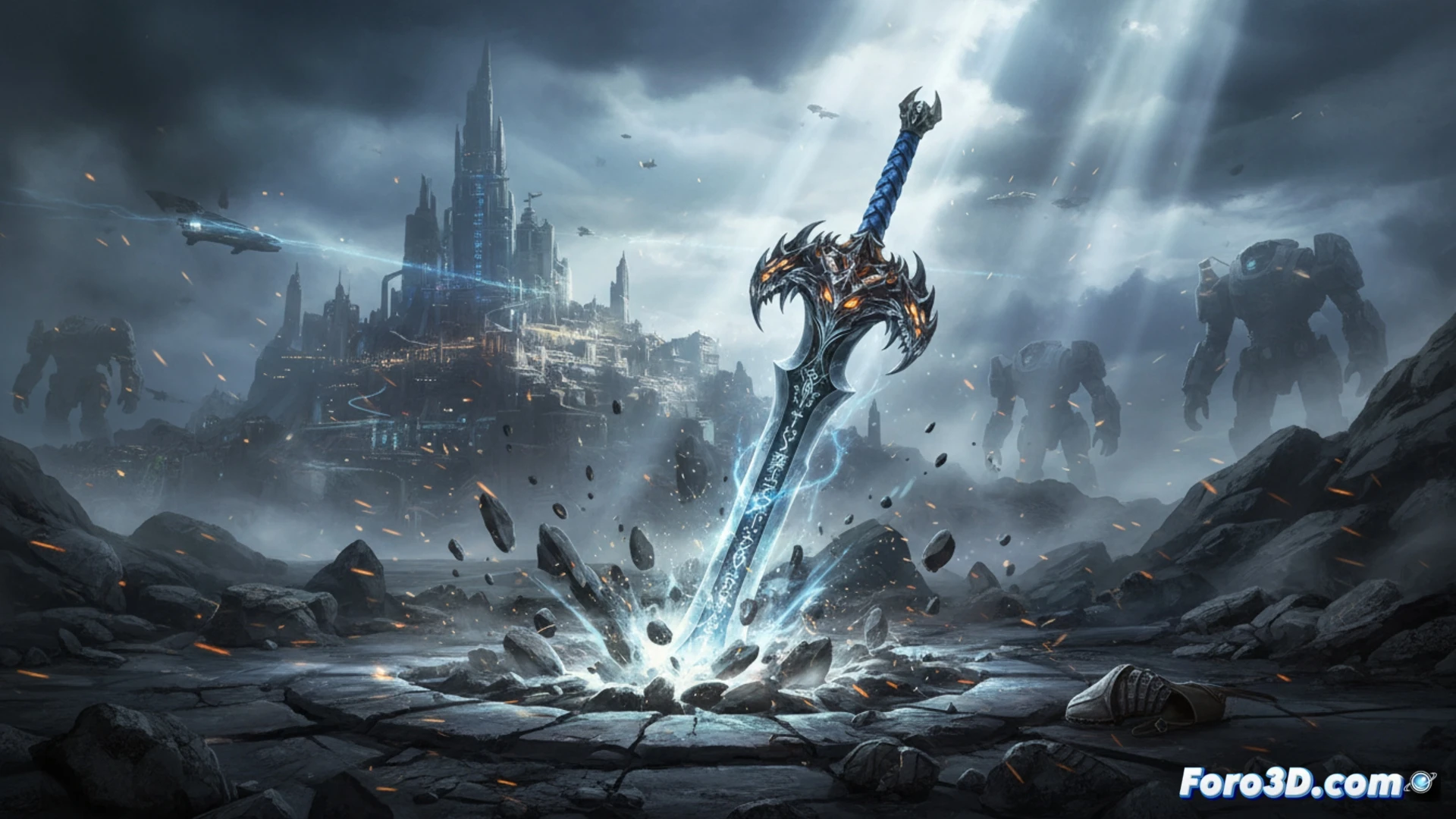
Technical Pipeline: Maya, ZBrush, and the Challenge of Giant Monsters ⚔️
To achieve the fluid animations required by an action RPG, the team uses Autodesk Maya, where rigs and movement cycles for characters and creatures are created. The sculpting of giant monsters is done in ZBrush, leveraging its ability to generate high-resolution details that are later retopologized for the engine. Integration with Unreal Engine 5 allows the mesh fracture and deformation system (Chaos Physics) to act on these assets, delivering impacts that modify the environment. Compared to titles like Elden Ring or Black Myth: Wukong, Dragon Sword bets on greater physical interactivity, although it will need to prove its performance remains stable in scenes with multiple enemies and particles.
The New Visual Standard of the Genre? 🔥
The combination of Lumen with realistic impact physics places Dragon Sword in a promising position within video game development. However, the real challenge is not just technical, but also design-oriented: ensuring that dynamic lighting and physics do not hinder gameplay. If Hound 13 manages to balance these systems without sacrificing frame rate, we could be looking at a benchmark in the implementation of Unreal Engine 5 for action RPGs. The industry is closely watching how this title will handle the workload in open scenarios and massive boss fights.
How does Dragon Sword manage to optimize the use of Lumen and the realistic physics of Unreal Engine 5 to maintain stable performance in massive combat scenarios without sacrificing visual quality?
(PS: shaders are like mayonnaise: if they break, you have to start all over again)