The artisan gilder faces a paradox: working with the noblest materials (gold, silver, copper) while breathing fumes from solvents, varnishes, and acids. Chronic exposure to metal dusts and volatile organic compounds causes dermatitis, respiratory irritation, and eye strain. However, digital jewelry offers an escape route: shifting the danger to the 3D model.
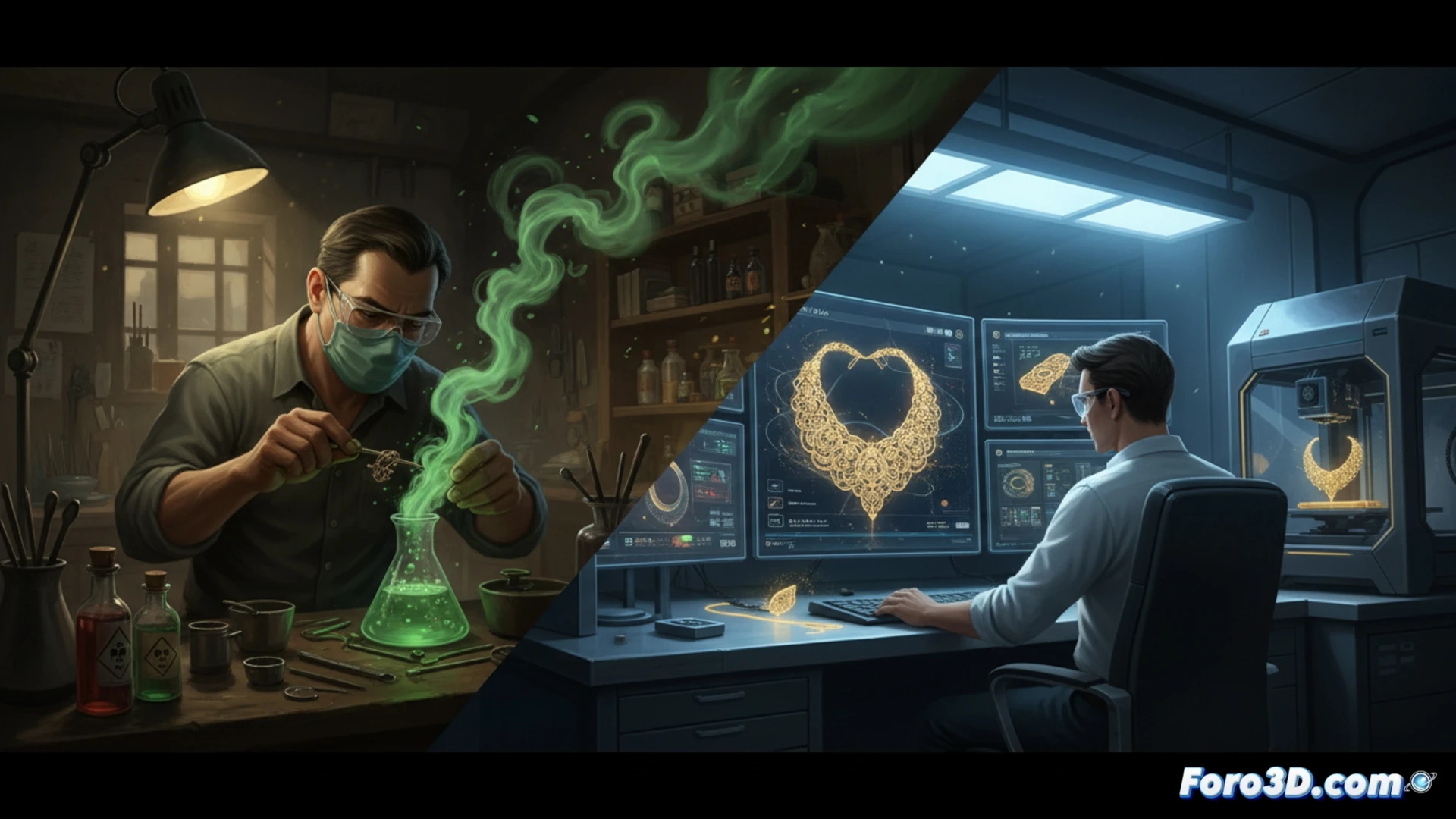
Chemical toxicity and metal dust: the invisible enemy 🧪
The varnishes and mordants used in fire gilding contain toluene, xylene, and epoxy resins. Constant inhalation of these fumes causes liver and neurological poisoning. Added to this is copper and aluminum dust during polishing, which irritates the airways. With parametric CAD design, the gilder models the piece without handling chemicals. 3D printing in wax allows direct casting, eliminating the use of varnishes. Metal powders are confined within the metal printer, controlled by localized extraction.
Posture, fire, and fatigue: the human cost of detail 🔥
The precision of gilding demands forced postures and microscopes that strain the eyes. Applying gold leaf with a torch adds burns from radiant heat. Ergonomic simulation in 3D software allows for virtual adjustment of the piece, reducing hours of manual labor. Direct additive manufacturing in gold avoids fire and hot varnish. The result: a safer craft, where the artisan controls the machine instead of breathing in the workshop.
Is it possible to achieve a gilded finish that matches artisan quality using exclusively 3D printing technologies without resorting to any toxic chemical process?
(PS: 3D jewelry allows you to wear jewels that don't exist... until you print them.)