Photographs and previously classified documents have come to light, revealing unexpected details about the world's first atomic test, conducted in 1945 in the New Mexico desert. The material offers a more complete view of the technical and logistical preparations that led to the bomb's detonation, weeks before the bombings of Hiroshima and Nagasaki.
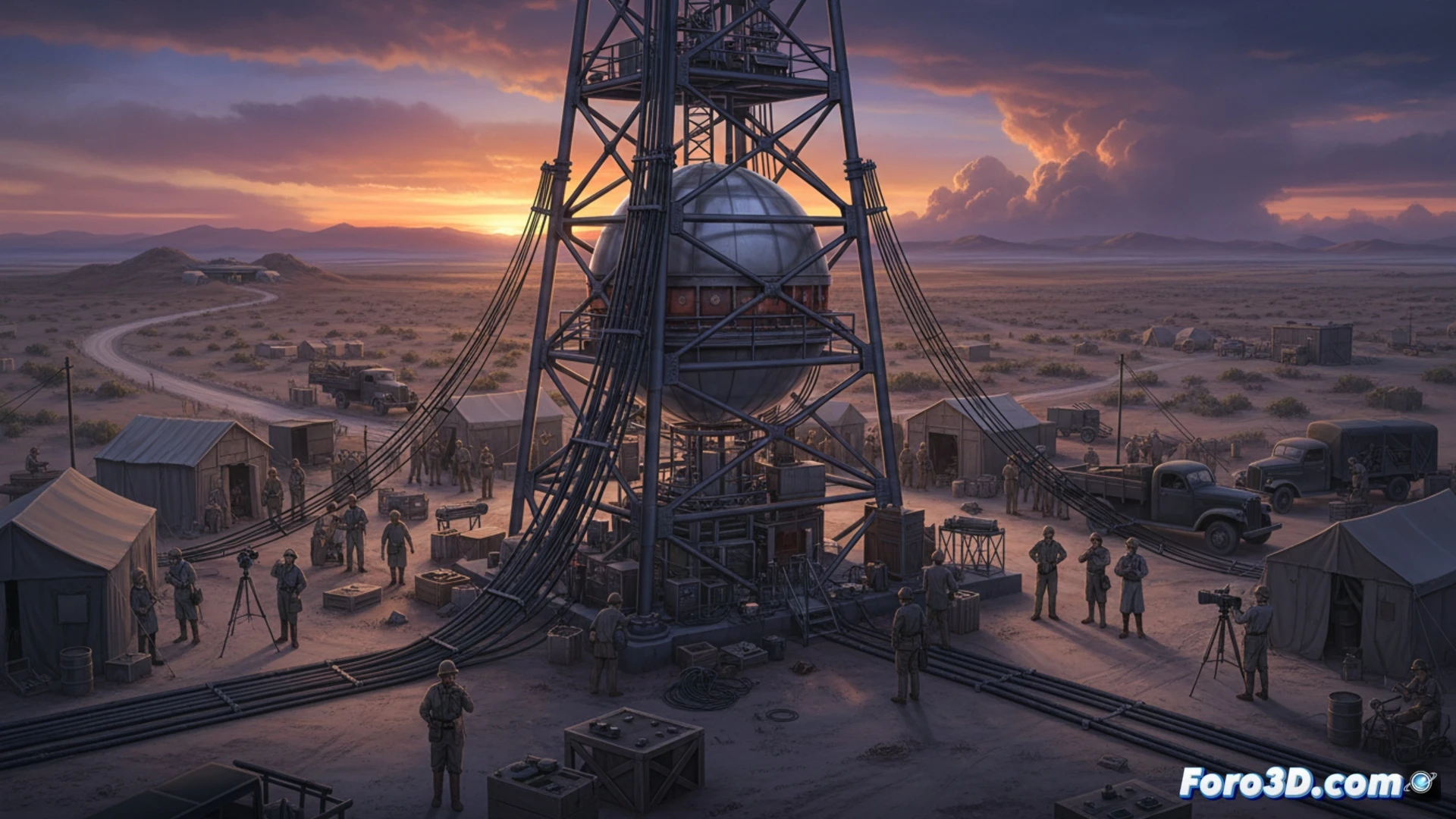
The meticulous scientific work behind the mushroom cloud 🔬
The images reveal the complexity of the experiments and measurements carried out to ensure the device's operation. Scientists used advanced techniques for the time, including radiation detectors and high-speed cameras. Each component of the plutonium core and the detonation systems was documented, as well as the safety protocols for the team in the desert. Every calculation and adjustment was recorded.
The rehearsal nobody asked for the end of the world 💥
Seeing the photos of the preparations is like watching a group of engineers assembling a giant firework, except this one wasn't meant to celebrate the 4th of July. The documents show that the scientists, with their sunglasses and notebooks, seemed more worried about whether the bomb would work than whether it would wipe out the state of New Mexico. In the end, it worked, and the rest is history (and ash).