The diagnosis of death in charred corpses presents unique challenges due to the extreme fragility of tissues and the loss of identifying features. Physical manipulation during traditional autopsy can destroy crucial evidence. This is where 3D technologies offer a revolutionary solution, allowing the exact state of the scene and the body to be captured before any intervention.
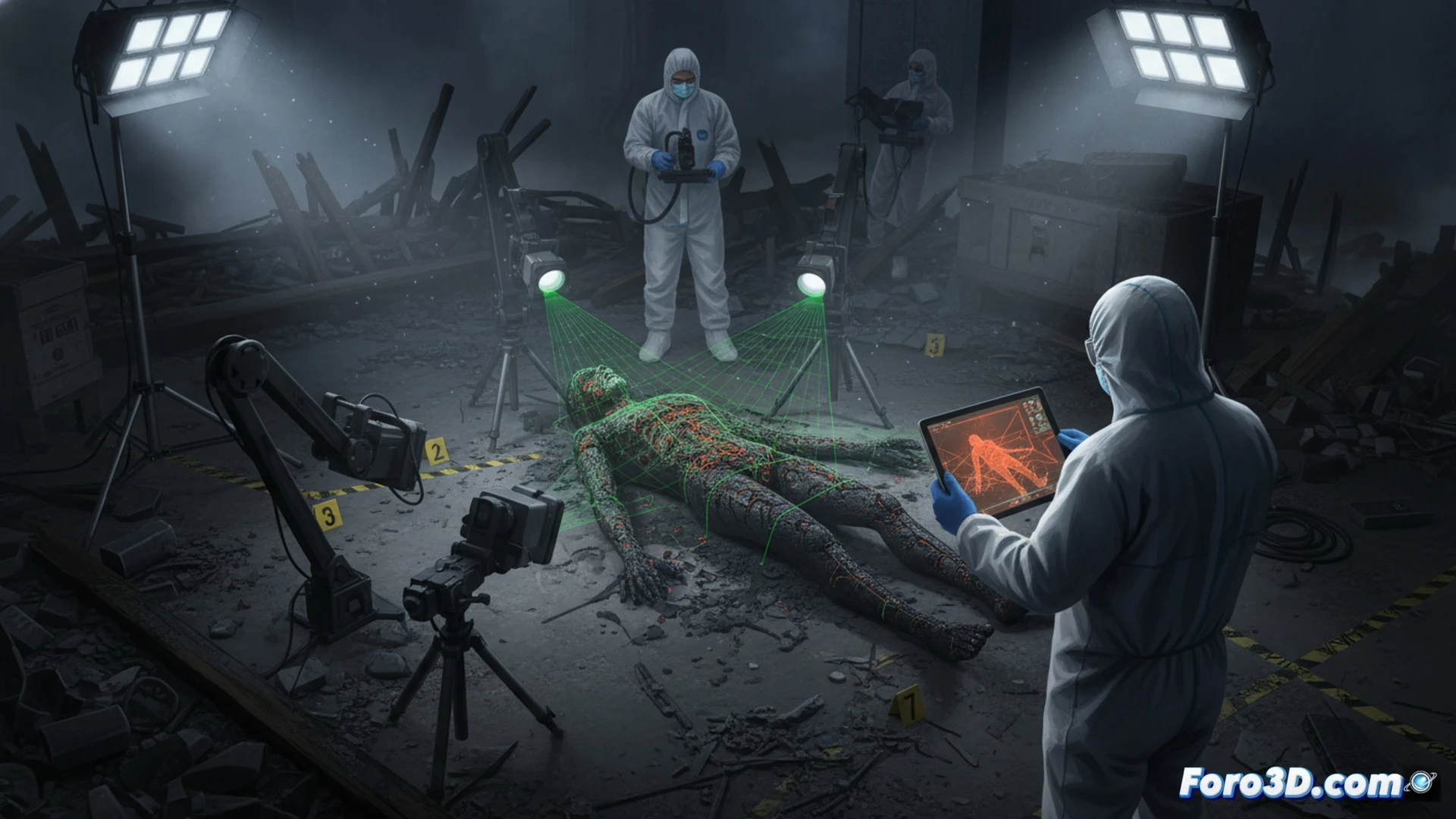
Technical workflow: from the scene to the forensic model 🔬
The pipeline begins with capture at the crime scene. A dual approach is recommended: photogrammetry with a high-resolution DSLR camera for texture and color, combined with laser scanning (LiDAR) for precise geometry in areas of smoke or difficult lighting. Between 80 and 150 photographs are captured around the charred corpse, avoiding harsh shadows. Processing in software such as Agisoft Metashape or RealityCapture generates a dense point cloud and a textured mesh. This 3D model allows analysis of the body's position, the charring pattern, and the relationship with nearby objects without physical contact. The key advantage is the digital preservation of ephemeral evidence such as skin cracks or attached clothing fragments.
Digital preservation as a guarantee of objectivity 🛡️
Beyond simple documentation, the 3D model becomes an immutable repository for deferred analysis. It allows multiple experts to examine the same evidence from any angle, take precise measurements of injuries or trajectories, and generate interactive visual reports for courts. This methodology reduces manipulation bias and offers a layer of transparency that strengthens the chain of custody, transforming a charred corpse into an analyzable digital file forever.
How would you integrate this finding into an existing forensic pipeline?