The Beneath project explores psychological horror in a deep ocean environment, using Unreal Engine 5 to generate underwater visual distortion and realistic light caustics through the Lumen global illumination system. The proposal combines an oppressive atmosphere with advanced physics-based destructible environments, where every graphical element seeks to disorient the player. The integration of tools like Maya, ZBrush, and Substance is key to materializing assets that withstand the visual pressure of the ocean and the creatures lurking in the darkness.
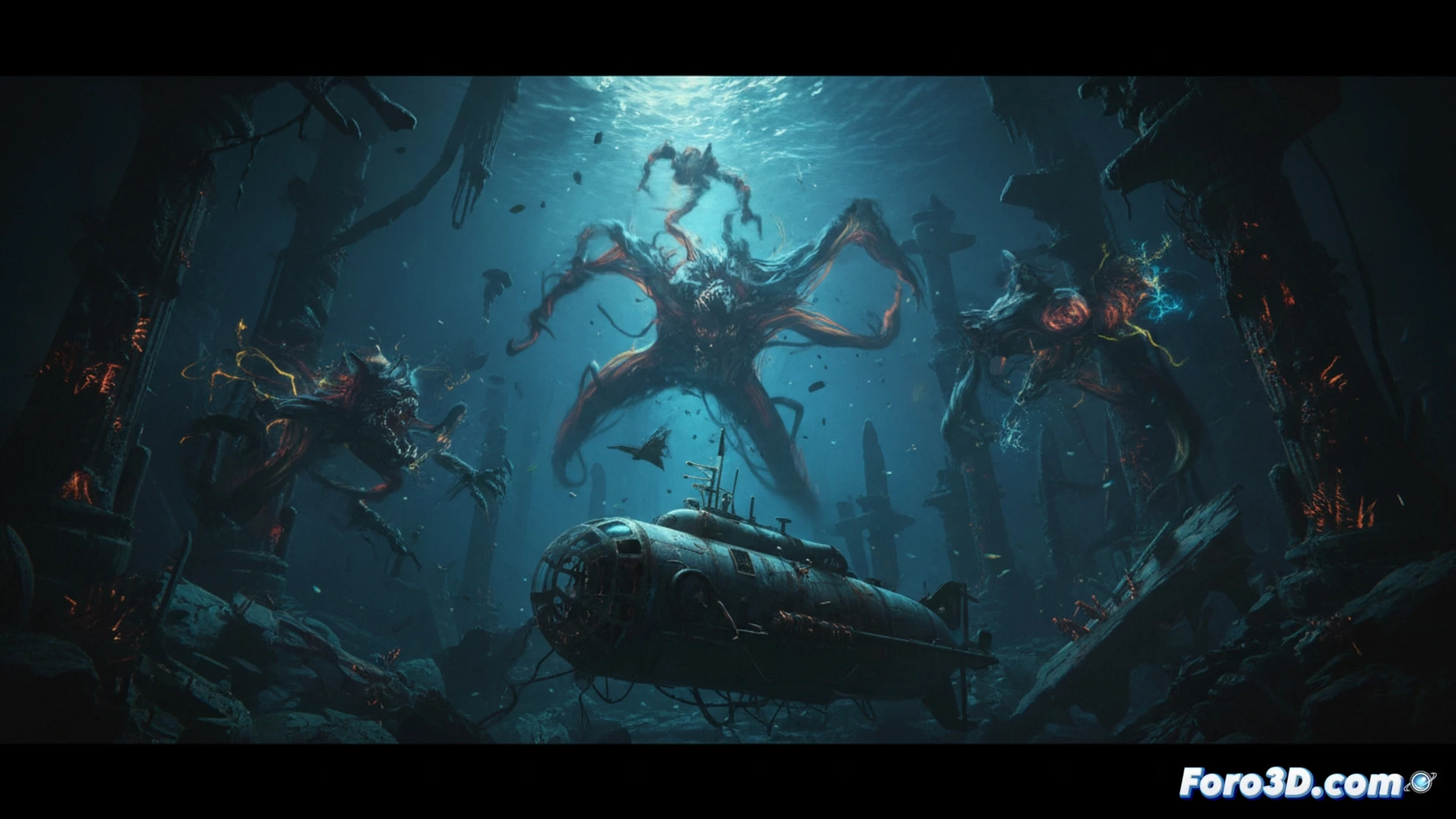
Lighting and material techniques for the water effect 🌊
To achieve realistic visual distortion, the team uses Lumen in diffuse and specular reflection mode, combined with custom materials in the Unreal editor. Caustics are generated using procedural textures that simulate light refraction as it passes through the water surface, synchronized with wave animations. The main assets, modeled in Maya and sculpted in ZBrush, go through Substance Designer to create normal and displacement maps that mimic marine erosion. Optimization focuses on using dynamic LODs and simplified collision meshes to maintain 60 FPS on current-generation consoles, sacrificing detail on distant objects to preserve real-time lighting.
The balance between realism and performance in the abyss 🐙
Beneath demonstrates that real-time underwater horror demands a compromise between visual fidelity and technical fluidity. Destructible physics, based on Unreal's Chaos system, adds layers of tension by allowing the environment to react to water pressure and creature attacks. However, the greatest challenge lies in maintaining lighting coherence underwater without sacrificing gameplay. The decision to prioritize caustics over polygonal density on the seafloor reflects a design philosophy where atmosphere outweighs surface detail.
How does Unreal Engine 5 recreate the visual distortion of deep water to enhance the feeling of psychological horror without breaking the player's immersion in Beneath?
(PS: a game developer is someone who spends 1000 hours making a game that people complete in 2)