Broadcasters face a lethal combination of risk factors: vocal overexertion, stress from tight deadlines, and rotating shifts. The prevalence of chronic dysphonia in this group reaches 65%, far above the 20% in administrative occupations. Mental fatigue and anxiety spike during live broadcasts, creating a unique epidemiological profile that demands urgent intervention from Public Health.
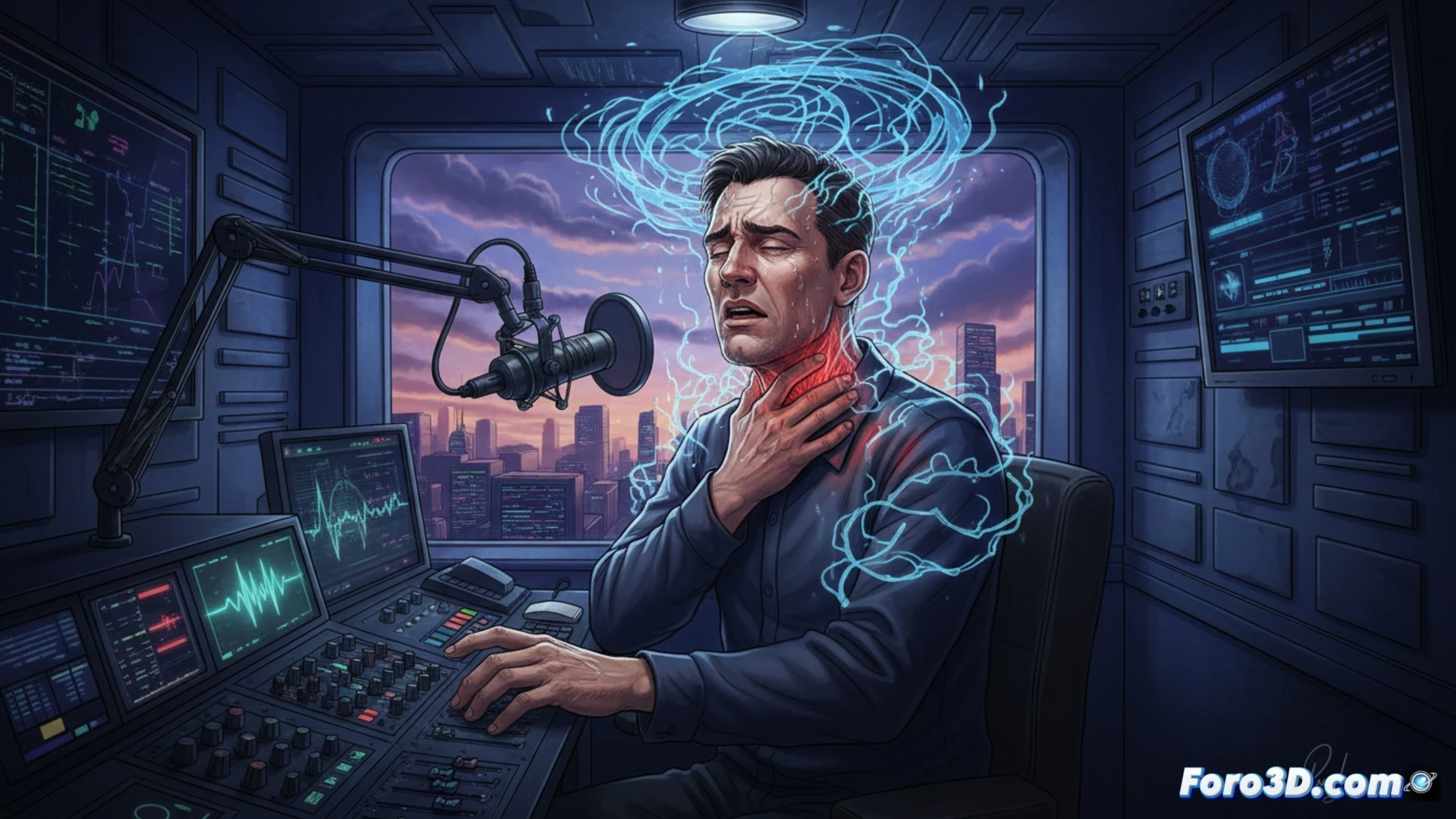
3D Visualization of Vocal Load and Work Stress 🎙️
Using three-dimensional anatomical models, we can observe the direct impact of vocal abuse on the vocal cords, showing areas of edema and incipient nodules. Heat maps reveal that stress peaks coincide with rotating shifts: morning broadcasts and nighttime programs generate 40% more salivary cortisol. Interactive graphs link each hour of continuous vocal exposure to a 12% increase in the risk of developing nodules, data that intersects with the mental fatigue reported by professionals.
The Hidden Cost of the Voice as a Work Tool 💼
Anxiety and mental fatigue are not mere side effects; they are indicators of a system that prioritizes productivity over worker health. Visualizing this data in 3D allows epidemiologists to identify risk patterns and propose mandatory vocal rest breaks, more humane shift rotations, and limits on headphone noise exposure. The voice should not pay the price for an audience.
What is the impact of work stress on the prevalence of dysphonia among broadcasters, and what visual prevention measures can be applied to monitor the first signs of vocal fatigue in the booth?
(PS: the 3D incidence maps look so good they almost make being sick enjoyable) 🎧