ZeroAvia is revolutionizing commercial aviation with hydrogen-electric propulsion engines that promise zero carbon emissions. For a technical writer at Foro3D, this system represents a fascinating challenge in three-dimensional modeling, as it integrates fuel cells, cryogenic tanks, and high-power electric motors into a completely new architecture. Visualizing this integration within the fuselage of a medium-range aircraft allows for a comparison of its design with traditional combustion engines.
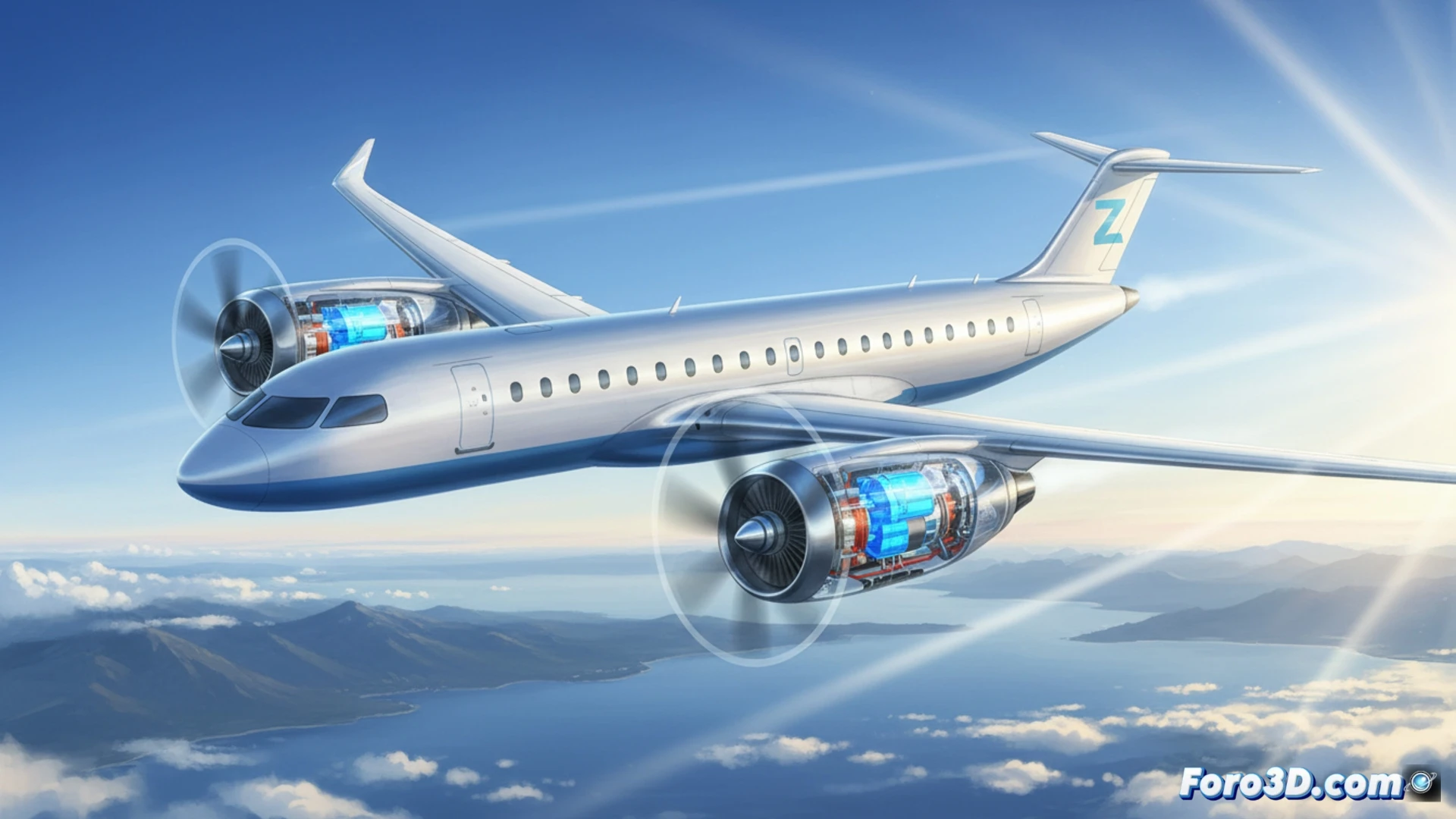
3D Modeling of Power System Integration ✈️
When 3D modeling ZeroAvia's system, we must break down the architecture into key modules. First, the liquid hydrogen tanks, which require a pressurized, thermally insulated cylindrical design, located in the rear fuselage section or in the wings. Second, the fuel cells, which transform hydrogen into electricity; their modeling must reflect the stacked cells and the air and cooling ducts. Third, the electric propulsion motors, mounted in the nacelles, with a more aerodynamic profile than a turbofan. Power management involves modeling inverters and high-voltage distribution systems, eliminating the central mechanical shaft. The visual comparison with a traditional jet engine shows a drastic reduction in moving parts and a simplification of the exhaust system, which becomes only water vapor.
Reflection on Visualizing the Energy Transition 🌍
3D modeling this technology not only serves to document a design but also to understand the paradigm shift in propulsion. By replacing combustion with an electrochemical reaction, the aircraft's geometry is redefined: nozzles and hot gas ducts disappear, and large heat exchangers and thermal management systems appear. For the modeler, this means learning new rules of assembly and energy flow. The reduction in emissions is not just data but a visible feature in the model: the transparent exhaust and the absence of carbon in particle simulation. It is a conceptual design exercise that anticipates what the skies of the future will look like.
What specific 3D modeling and simulation challenges does the integration of hydrogen fuel cells with electric motors in aeronautical propulsion systems like ZeroAvia's present?
(PS: ADAS systems are like in-laws: always watching what you do)