Music is not only heard, it is inhabited. When a morning melody wakes us up or a ballad tints a sunset, a sensory bond is created that transforms the everyday into an immersive experience. In the world of 3D scenography, this phenomenon is the key to designing shows that are not only seen, but felt like a living memory, synchronizing lighting, video mapping, and acoustics to evoke that magic.
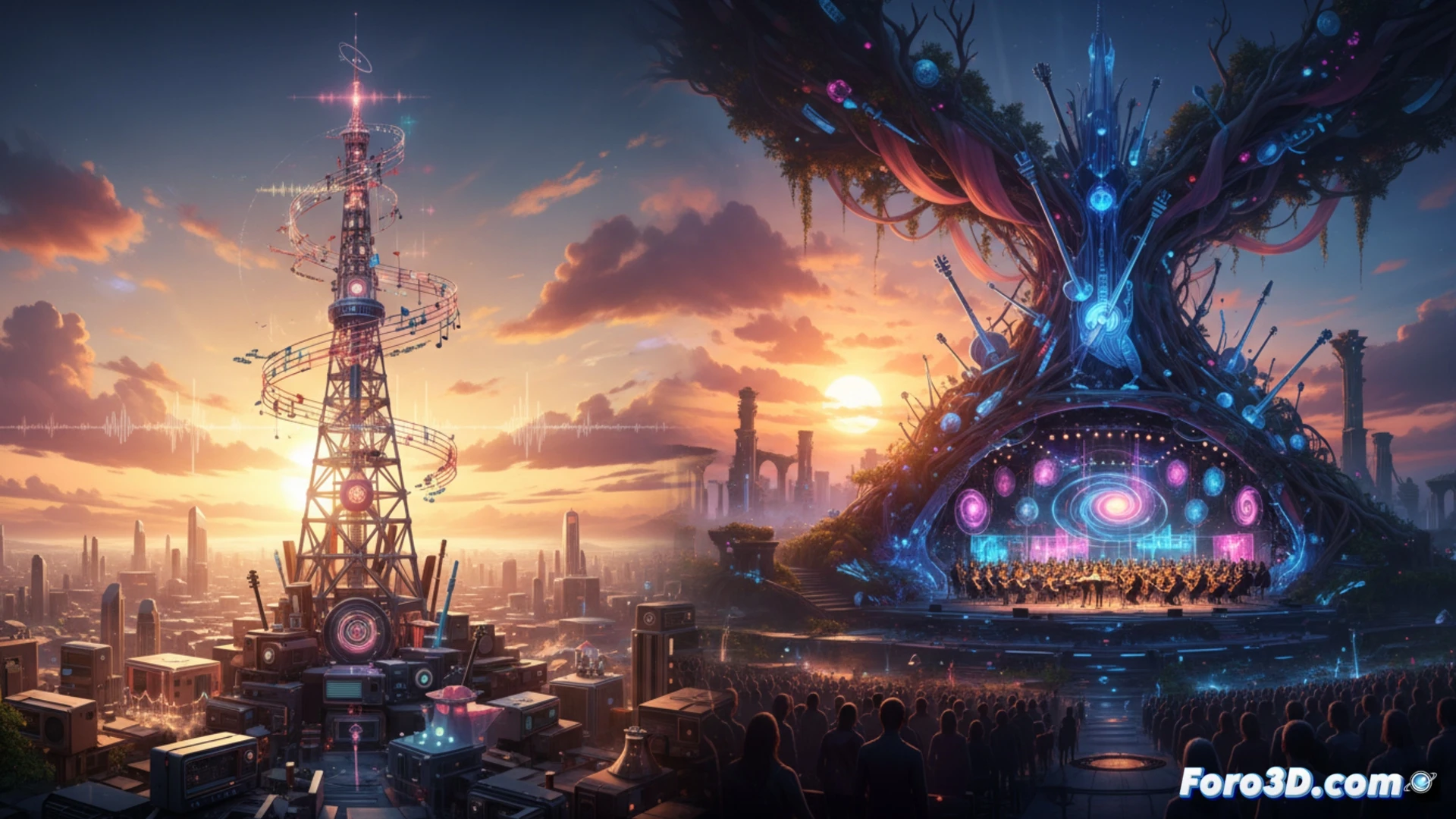
Acoustic simulation and spherical mapping for personal soundtracks 🎵
To recreate the atmosphere of a radio morning in a concert, 3D designers use acoustic simulations that model the reverberation of an enclosed space at dawn, combined with video mapping that projects warm textures and orange gradients. Dynamic lighting technology, synchronized via MIDI or real-time, allows each note to trigger a lighting change, like the sun peeking through. For romantic sunsets, 3D environments with generative skies are used, where the position of the virtual light changes gradually, while surround sound systems (such as Dolby Atmos or Ambisonics) place the viewer at the center of a sound bubble, making the shared song seem to emerge from the artificial horizon.
The engineering of nostalgia in live performance 🌅
In the end, the real technical challenge is not just to show a sunset, but to make the audience feel they have lived that moment before. Well-executed 3D scenography acts as a vehicle for emotional transport, where daily routines become choreographed sequences of light and sound. This connection between visual design and personal memory transforms each event into a unique soundtrack, demonstrating that technology does not replace emotion, but amplifies it to take us elsewhere.
How is the emotional progression from a radio sunrise to a scenic sunset translated into the lighting and textures of a 3D model for shows?
(PS: modeling a 3D audience is easier than the real one: they don't complain, they don't record with their phones, and they always applaud)