A study by zoologist Piotr Jablonski proposes that the primitive wings of dinosaurs did not emerge for flight, but rather as a mechanism to scare prey. The hypothesis arises from observing modern birds that spread their feathers to startle insects and then hunt them. To validate the idea, the team designed a robot based on the feathered dinosaur Caudipteryx, named Robopteryx, and tested it with wild grasshoppers in South Korea. The results open a new perspective on the evolution of these structures.
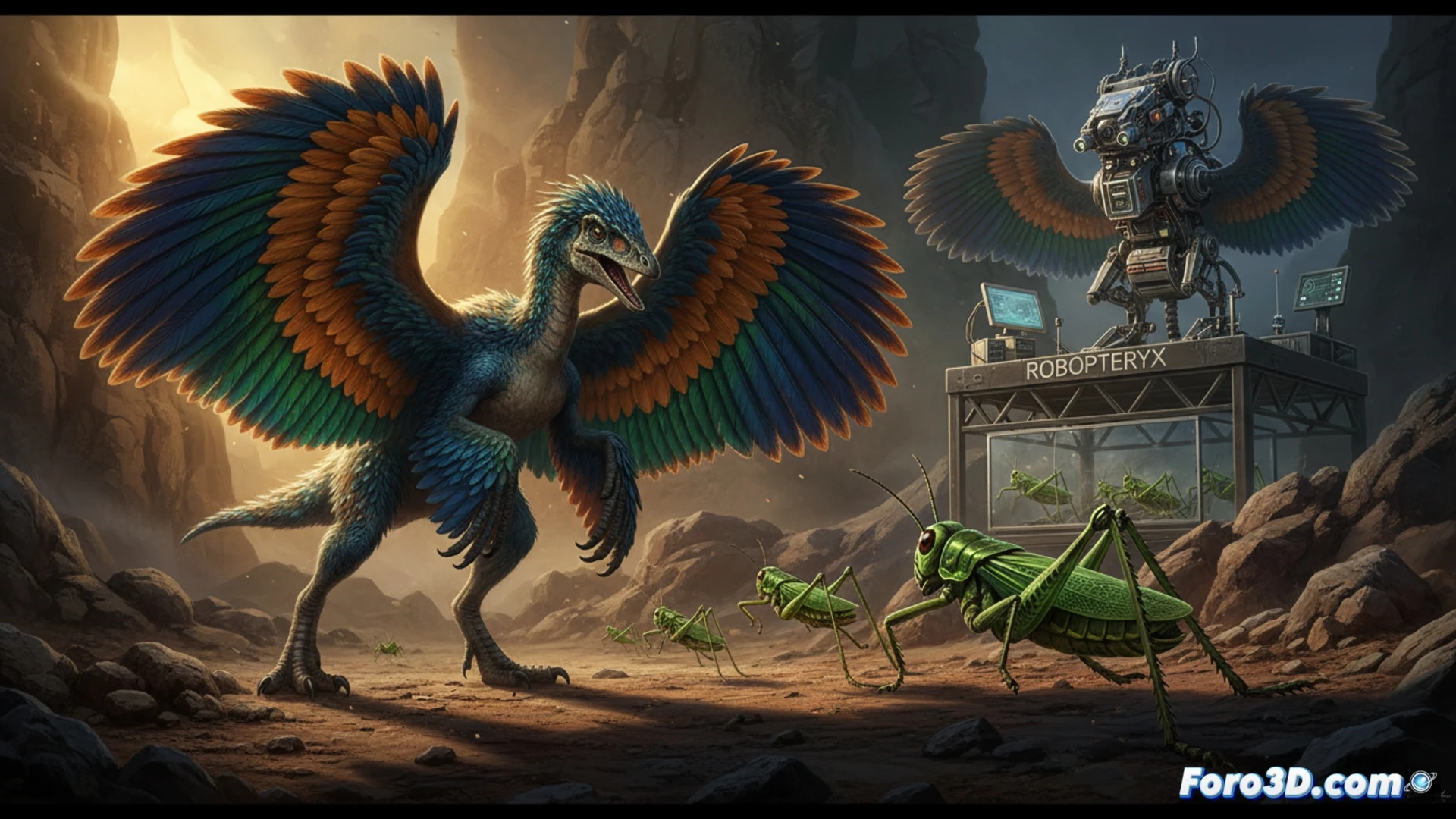
Robopteryx: the robot that tests the prehistoric scare 🦗
The team built Robopteryx with lightweight materials and a mechanism that simulates the wing and feather movement of Caudipteryx. They faced it against grasshoppers in their natural habitat, measuring their escape reactions. The data showed that the insects were startled by the sudden wing display, suggesting that dinosaurs could use this strategy to disorient their prey before catching them. The experiment controlled variables such as the robot's size and movement speed, offering solid evidence for Jablonski's hypothesis.
The scare worked, but flight remained on hold 😅
Although Robopteryx proved to be an effective scarecrow, it did not manage to lift off the ground even a centimeter. The grasshoppers fled, but the robot stood there like a museum statue. It seems scaring insects was easier than inventing aerodynamics. At least, the feathered dinosaurs had a plan B: if they couldn't fly, they could at least give a good scare at dinner time.