A recent study published in Biology Letters challenges classical theories about sexual dimorphism in primates. Analyzing data from 146 species, researchers discovered that the size difference between males and females correlates more with the overlap of territories between rival groups than with internal competition for mates. Larger males would act as visual deterrents against neighboring groups, protecting resources without the need for direct combat.
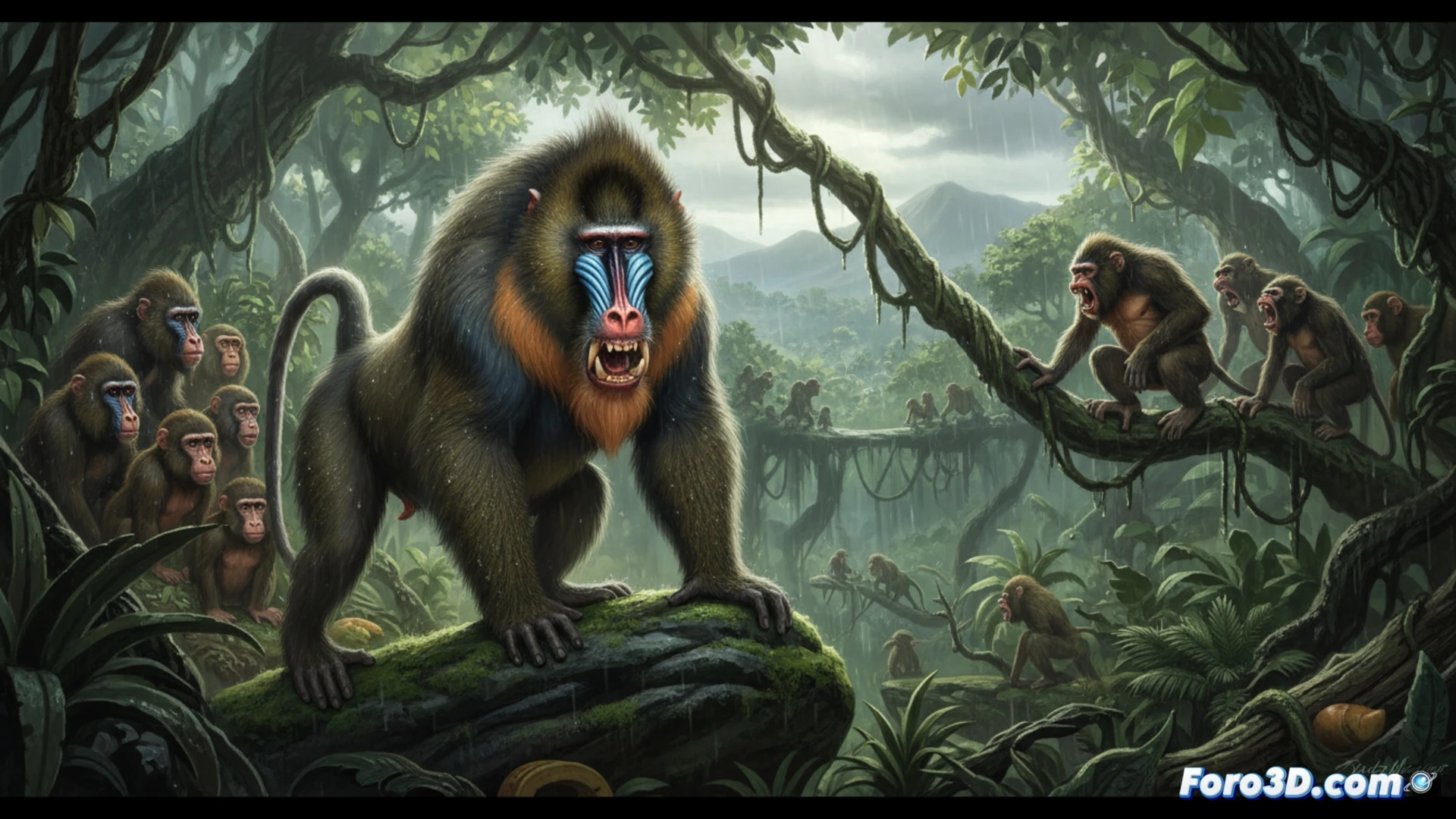
3D Modeling of Anatomical and Territorial Data 🦍
To visualize this hypothesis, we propose an interactive 3D infographic that integrates scaled anatomical models of species such as mandrills, baboons, and chimpanzees. The tool would overlay territorial heat maps based on home range overlap data, with animations representing encounters between groups. Using sliders, the user could adjust variables such as the degree of territorial conflict and observe how dimorphism varies in real time. The bone and muscle models, textured with scientific precision, would allow direct comparison of male and female proportions, highlighting hypertrophy in the shoulders and jaws of males in species with high territorial pressure.
Visual Deterrence: A Hypothesis to Explore in 3D 🧠
The absence of a significant correlation with mating systems reinforces the need for new outreach tools. A 3D simulation could show how a large male, by displaying at the edge of its territory, reduces the likelihood of enemy incursions. This approach not only educates about an underestimated evolutionary factor but also invites users to question biases in traditional scientific literature. The volumetric representation of the constant threat posed by neighboring groups would be a powerful visual resource for understanding natural selection beyond the struggle for females.
How can 3D visualization of morphometric data and territorial dynamics help model the relationship between sexual dimorphism in primates and competition for resources in a simulated evolutionary environment
(PS: modeling manta rays is easy; the hard part is making them not look like floating plastic bags)