3D printing allows dietitians to create foods with modified textures for patients with dysphagia, customizing nutrients and shape. They also model bodies in 3D to calculate exact body composition. Programs like Blender for food design, 3D Slicer for processing medical scans, and Simplify3D for managing culinary printers are key tools.
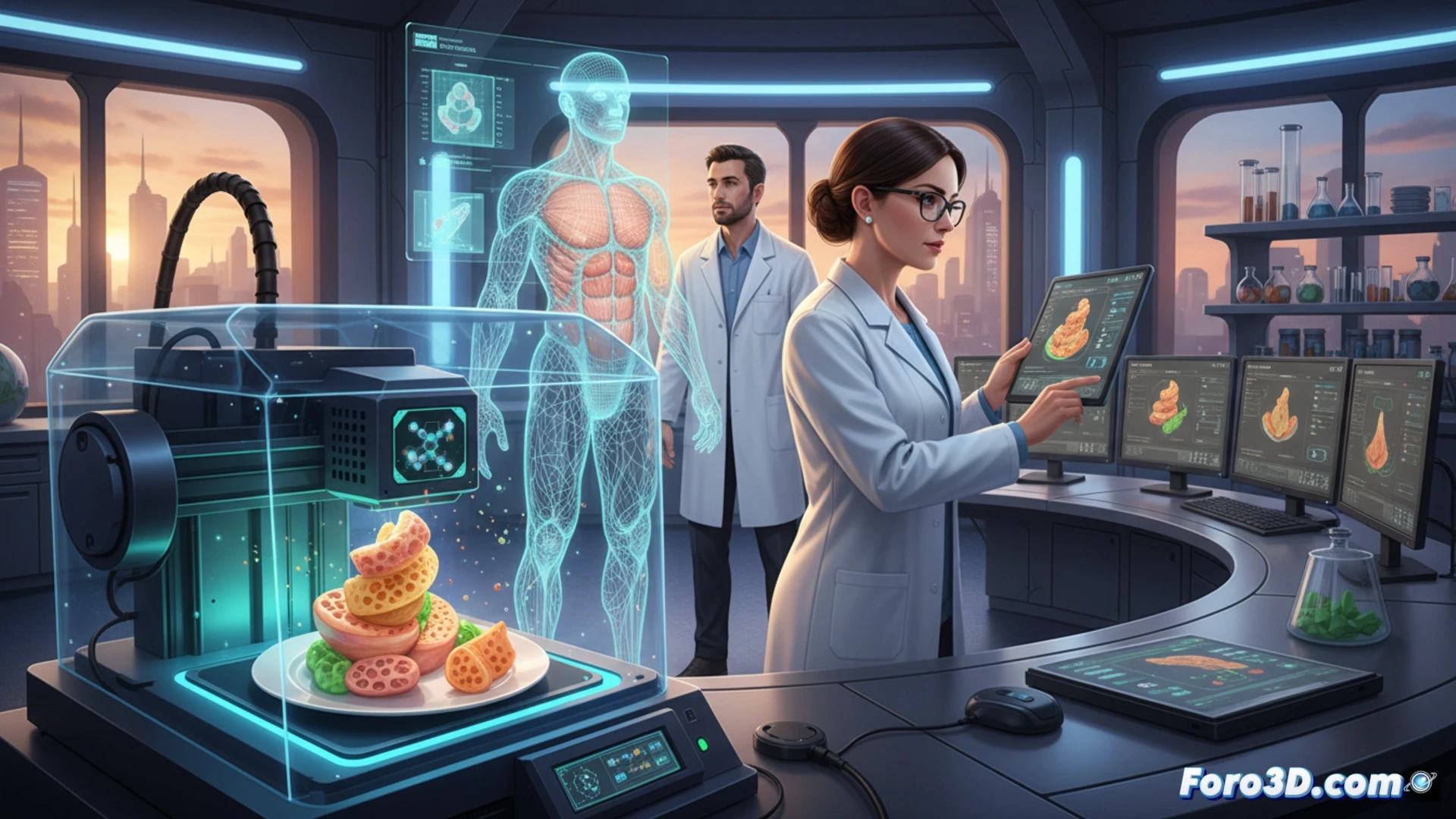
Volumetric modeling for precise nutritional plans 🥦
With software like ZBrush or Meshmixer, the dietitian designs portions with precise geometry, adjusting density and caloric volume. A 3D scanner like the Structure Sensor captures the patient's body; then, in programs like BodyScanAnalyzer, fat and muscle mass are calculated. The 3D food printer (Foodini type) materializes purees into attractive shapes, improving intake in the elderly without using artificial texturizers.
When the patient asks for pizza and you print them a carrot shaped like a pizza 🍕
Imagine arriving hungry for a burger and the dietitian pulls out one printed in broccoli puree shaped like a bun. The patient keeps a poker face while the machine hums. The good thing is that you can at least bite the head of a shrimp made from pumpkin. Technology advances, but the taste of printed cardboard remains the same. The future is now, and it tastes like recycled plastic.