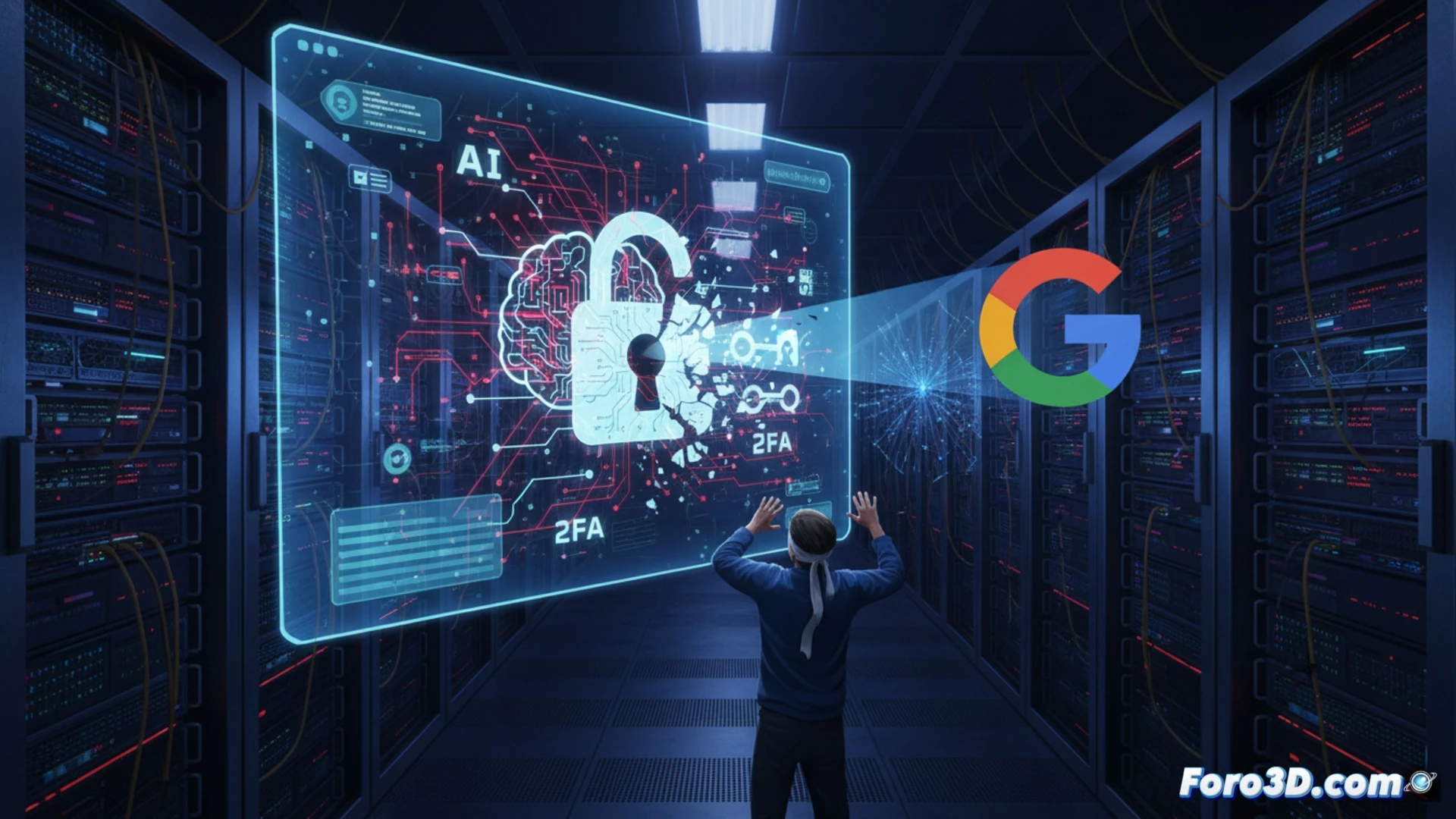
A Zero-Day exploit has shaken security by exploiting a logic error in a 2FA system. The vulnerability resided in a developer-coded assumption that blindly trusted verification. Google confirmed this is the first case where they found evidence of artificial intelligence use in the attack, although they clarify that their Gemini model was not used.
The technical flaw: misplaced trust in the code 🛡️
The error originated when the programmer assumed the second factor was infallible and did not properly validate the tokens. Attackers exploited this flawed logic to bypass authentication without needing to intercept SMS codes or applications. Google's forensic analysis revealed automated behavior patterns, indicating that AI was used to identify and replicate the validation flow, but not to generate content or interact directly with the system.
AI vs. 2FA: when the machine laughs at your token 🤖
It turns out that artificial intelligence didn't come to steal your job, but to bypass your two-factor authentication. While you were sweating looking for the code on your phone, an AI had already deduced that the system trusted you without asking twice. At least we can take comfort: it wasn't Gemini who hacked you, just an anonymous artificial intelligence that, like a good neighbor, knew the door was open.