The arrival of Devin, the first autonomous software engineer created by Cognition, has shaken the foundations of the technology sector. This artificial intelligence agent not only writes code; it is capable of planning an architecture, debugging errors, deploying complete projects, and managing its own development environment. The question is no longer whether AI can help with programming, but whether it can completely replace the human engineer, sparking an urgent debate about the future of work and software quality. 🤖
Technical Architecture: Autonomous Agents and Automated Workflows ⚙️
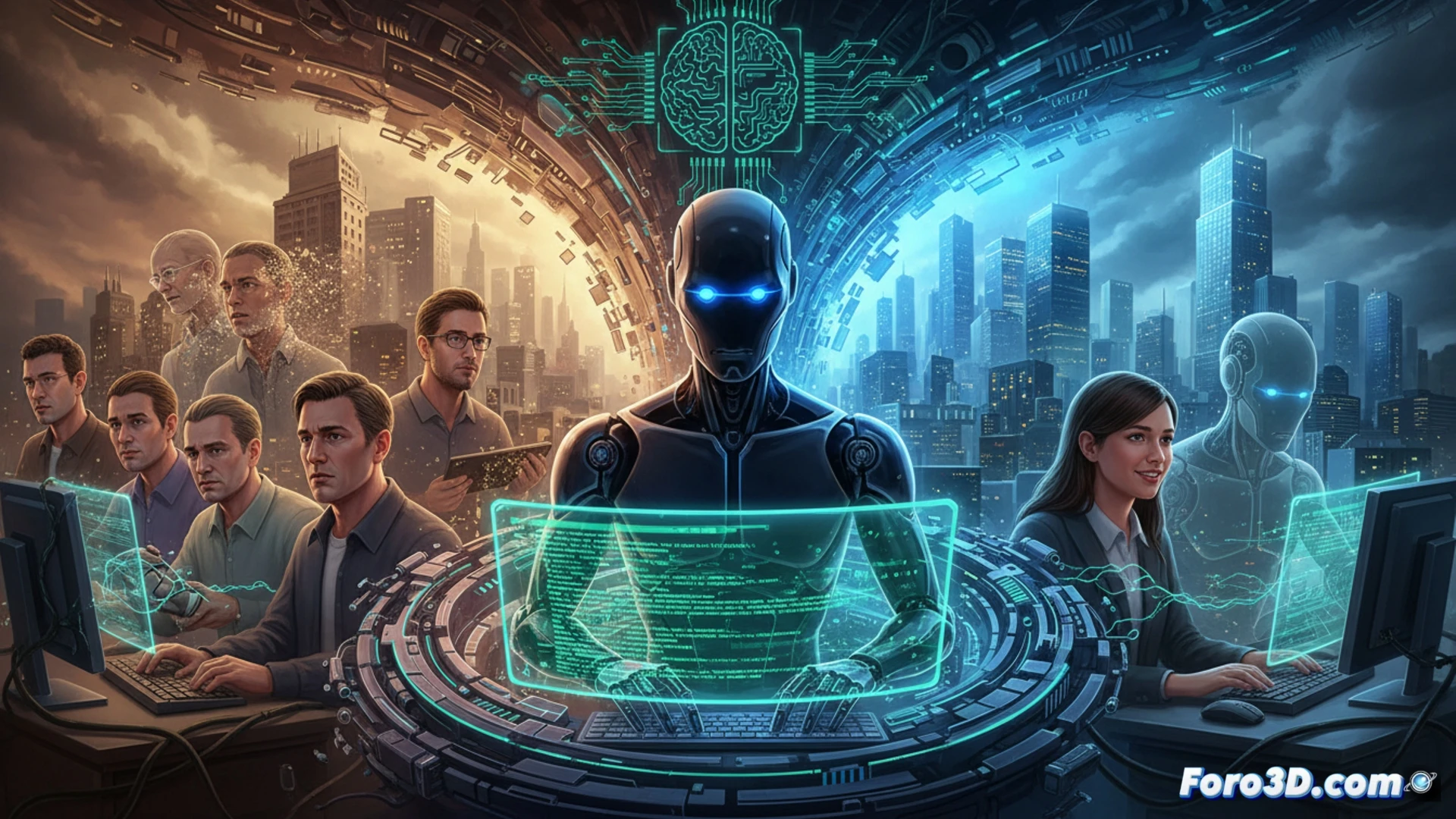
Devin operates through a system of advanced language models combined with a secure computing sandbox. Unlike tools like GitHub Copilot, which suggest lines of code, Devin manages the entire project lifecycle. It uses an internal planner that breaks down complex tasks into subtasks, executes commands in its own terminal, browses the web to search for documentation, and learns from its mistakes in real-time. 3D visualizations of its workflow show a branched decision tree where the agent iterates over code, while a traditional human workflow is represented as a sequential line with manual review points. The key difference is the iteration speed and the absence of constant supervision, which poses risks of technological dependency and undetected errors.
Social Impact: Ethics, Employment, and the Illusion of Autonomy 🌍
The real challenge of Devin is not technical, but social. The automation of entry-level positions in software engineering could accelerate job precarity, while the lack of human control over the generated code introduces ethical dilemmas about responsibility and quality. Public perception oscillates between fascination with an AI that works 24/7 and the fear of relying on a black box that can replicate biases or generate security vulnerabilities. Devin is not the end of the programmer, but it is the end of the idea that software development is a safe haven from automation.
Devin automates programming tasks, but if its mass adoption reduces the need for human programmers, how will job roles and professional ethics be redefined in the digital society?
(PS: the Streisand effect in action: the more you ban it, the more they use it, like microslop)