Go Nagai's masterpiece, Devilman, is not just a horror manga; it is a fierce critique of social hypocrisy. Akira Fudo, upon merging with a demon, discovers that the true threat is not the ancient creatures, but the darkness that dwells in the human heart. This message, wrapped in aggressive strokes and visceral ink, finds a new battlefield in contemporary digital art.
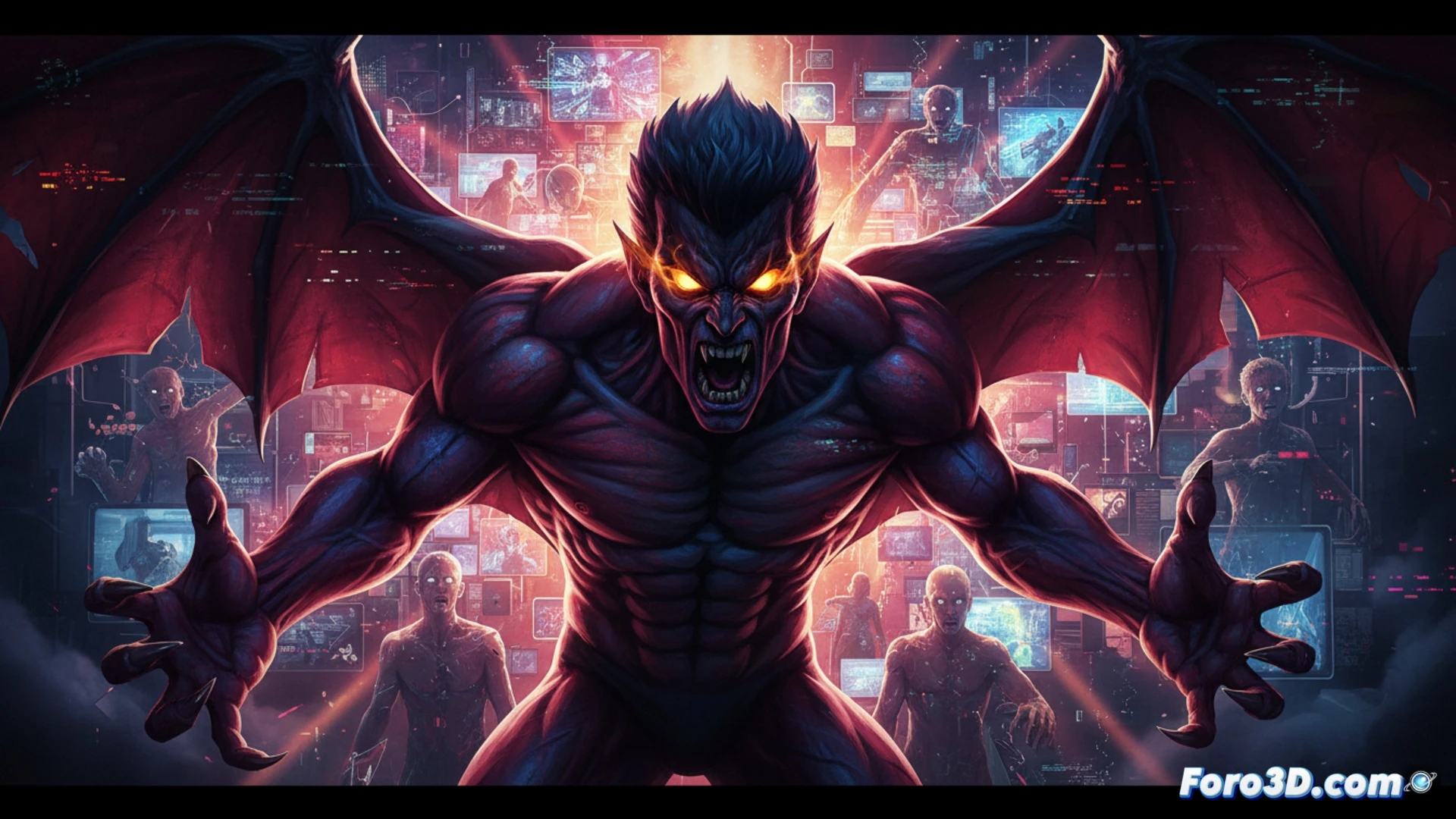
Stylized modeling and dramatic lighting to convey hopelessness 🎭
To capture the essence of Nagai's linework in 3D, stylized modeling that exaggerates anatomical proportions and facial expressions must be prioritized, avoiding photorealism. Lighting is key: the use of hard directional lights with deep shadows, combined with particle VFX and volumetric fog, can replicate the atmosphere of absolute horror. Post-production techniques such as motion blur and chromatic aberration enhance the feeling of chaos and psychological violence, essential elements for conveying the work's social critique.
Technology as a mirror of human darkness 🔥
The digital reinterpretation of Devilman is not a mere aesthetic exercise. By employing 3D animation tools and immersive environments, creators can force the viewer to confront the hopelessness and inherent violence of the human being. This technical approach transforms the classic manga into an experience of visual activism, where every shadow and every texture screams the same truth: the monster is not the demon, but man.
How can the expressionist and terrifying aesthetic of Devilman in 3D serve as a tool for social critique and digital activism today?
(PS: digital political art is like an NFT: everyone talks about it but no one really knows what it is)