Germany, known for its industrial efficiency, sees its railway network crumbling. Deutsche Bahn trains, once a symbol of German punctuality, are accumulating constant delays. The infrastructure, neglected for two decades, turns every journey into an uncertainty. For citizens, this means arriving late to work, missing classes, or canceling plans. The problem is not minor: it affects the economy and the daily lives of millions of people who depend on a service that is no longer reliable.
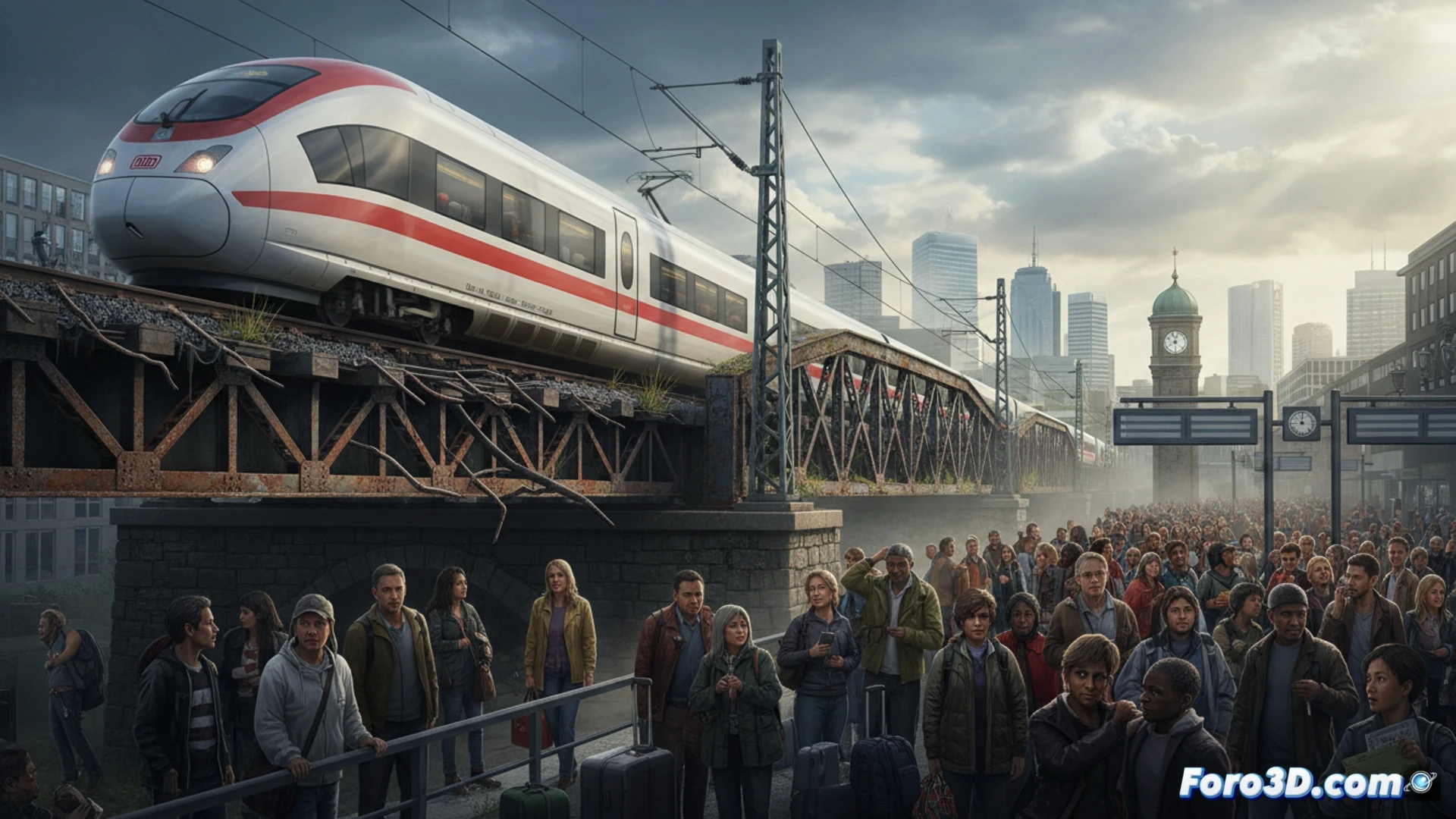
The technical deterioration of the German railway network 🚂
The Deutsche Bahn network suffers from a chronic lack of investment in maintenance and modernization. Obsolete tracks, outdated signaling systems, and an aging train fleet generate frequent breakdowns. Digitalization projects, such as satellite traffic control or predictive maintenance systems, are progressing slowly. Bureaucracy and the lack of coordination between the federal government and the states delay improvements. Meanwhile, trains run at slower speeds and detours due to construction work accumulate.
German solution: being late to arrive on time ⏰
Deutsche Bahn has found a creative solution: if all trains are late, there is no longer a delay, just a new flexible schedule. Travelers no longer stress; they plan their appointments with an hour's margin, just in case. Punctuality has become an abstract concept, like privacy on the internet. Of course, ticket prices keep rising, because punctuality is not paid for, but waiting is.