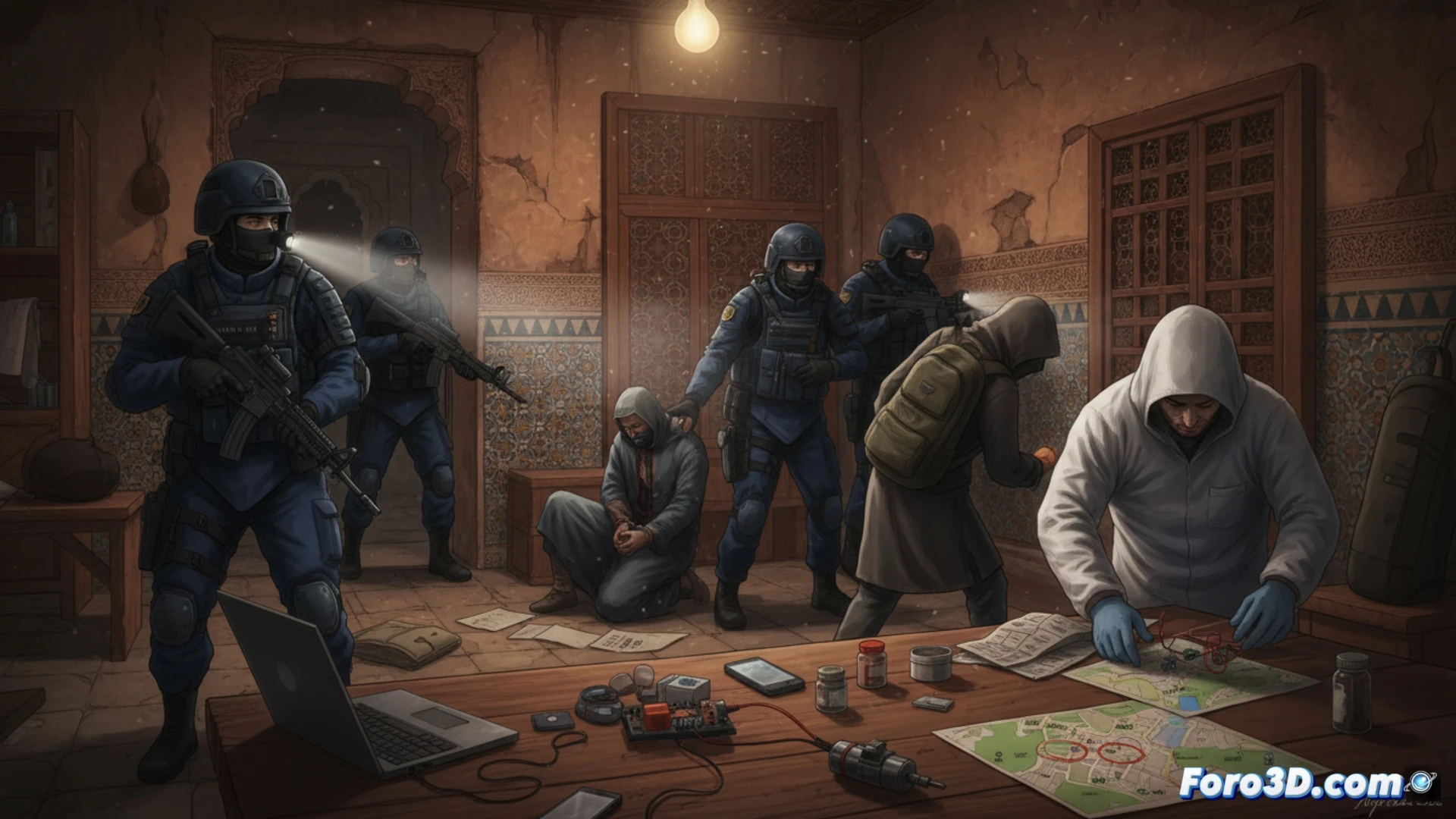
Moroccan authorities have arrested two suspected Islamic State members in the cities of Fez and Meknes. The operation, carried out by the Central Bureau of Judicial Investigations, led to the seizure of computer equipment, documents, and components for manufacturing explosives. The suspects, who had sworn allegiance to the group, were planning attacks against strategic locations and the country's security forces.
The use of technology in the fight against terrorism 🛡️
The investigation relied on forensic analysis of seized digital devices, where manuals for manufacturing explosives and encrypted communications were found. Authorities used electronic surveillance systems and fingerprint tracking to link the detainees to active cells. This type of operation demonstrates the importance of technological tools for anticipating threats, although their effectiveness depends on constant updating in the face of increasingly complex encryption methods.
The perfect plan, except for the café WiFi ☕
According to unconfirmed sources, one of the detainees bitterly complained that his master plan fell through because he used the same public café network to download the bomb manual and to order a kebab with extra sauce. The police, seeing the history, only had to follow the delivery route. It seems modern jihadism also needs a basic cybersecurity course and, incidentally, how not to leave evidence in a fast-food order.