The leak of molten salt in an experimental reactor has put Alloy N under the spotlight, a key material in the nuclear industry. The failure was not a sudden fracture, but a silent process of intergranular corrosion. The 3D pipeline, combining Volume Graphics and Ansys, now allows virtual dissection of the vessel to locate chromium segregation at grain boundaries, identifying the origin of the weakening before it becomes a catastrophic leak.
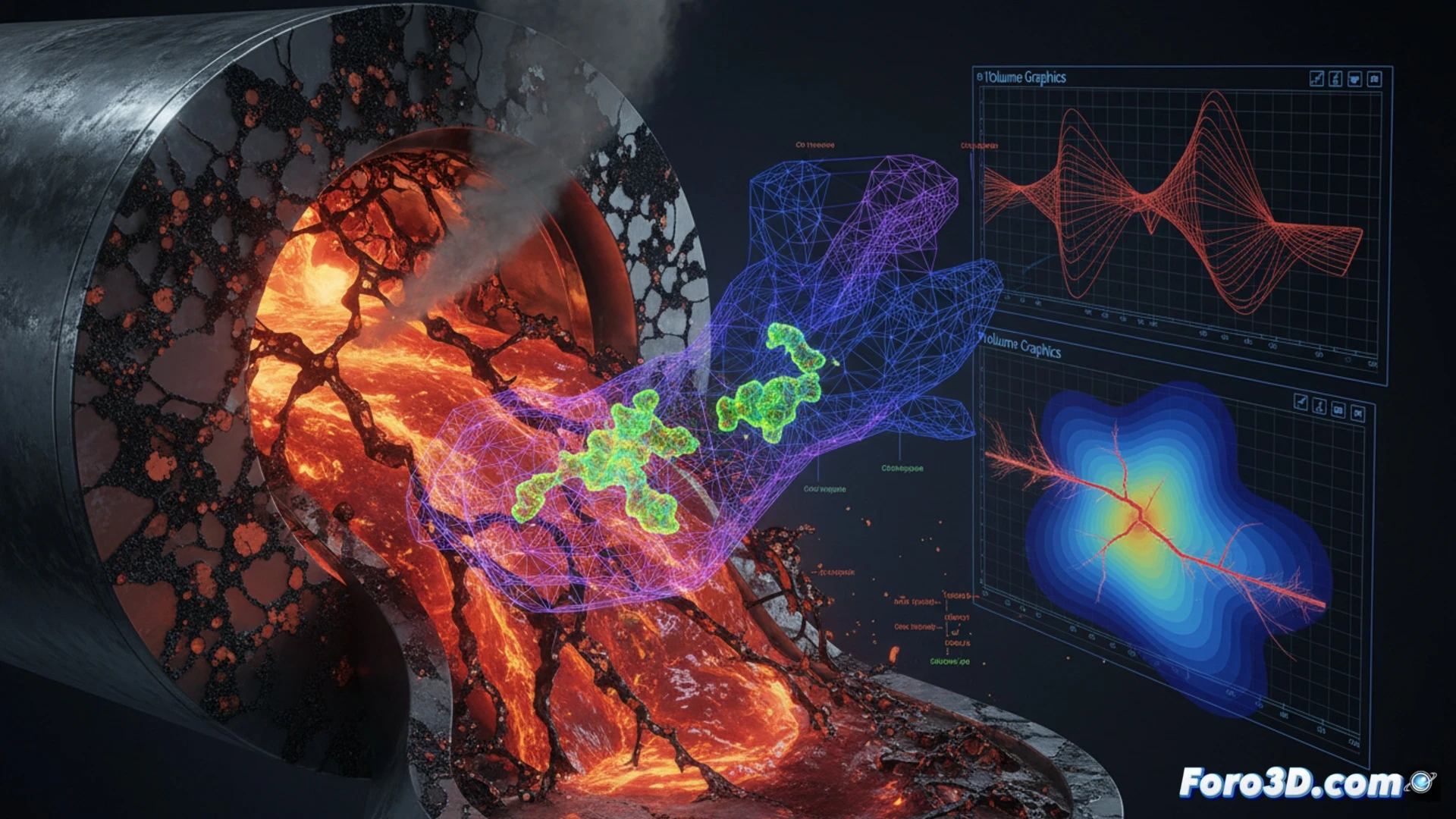
3D Pipeline: Microcracks and Corrosion Maps 🔬
The process begins with a computed tomography scan in Volume Graphics, which generates a volumetric model of the vessel. Here, virtual cuts are made to inspect the network of intergranular microcracks without destroying the part. Subsequently, the data is exported to Ansys, where a chemical corrosion model is applied that simulates the progression of damage along chromium-depleted grain boundaries. The result is a predictive corrosion map showing how initial segregation, caused by inadequate heat treatments, accelerates degradation under high-temperature salt flow. This methodology aligns with ASME nuclear standards, allowing certification of the integrity of critical components.
Leak Prevention in Molten Salt Reactors ⚛️
The key to preventing future leaks lies not only in inspection but in understanding the kinetics of damage. The use of Siemens NX for parametric vessel design, together with Ansys corrosion data, allows modifying the geometry to reduce stress concentration in areas prone to segregation. This integrated approach turns an experimental failure into an engineering lesson: intergranular corrosion is not an accident, but a process that can be mapped, predicted, and mitigated with the right 3D tools.
How the combination of infrared thermography and 3D confocal microscopy can anticipate the nucleation of fatigue cracks in areas with incipient intergranular corrosion in Alloy N exposed to molten salts
(PS: Material fatigue is like yours after 10 hours of simulation.)