In the modern manufacturing environment, early detection of an anomalous component is critical to prevent catastrophic failures. 3D simulation, supported by digital twins, allows for precise modeling of the geometry and behavior of out-of-specification parts. This virtual analysis transforms sensor data into three-dimensional representations, facilitating the identification of millimeter deviations that would go unnoticed in a traditional visual inspection.
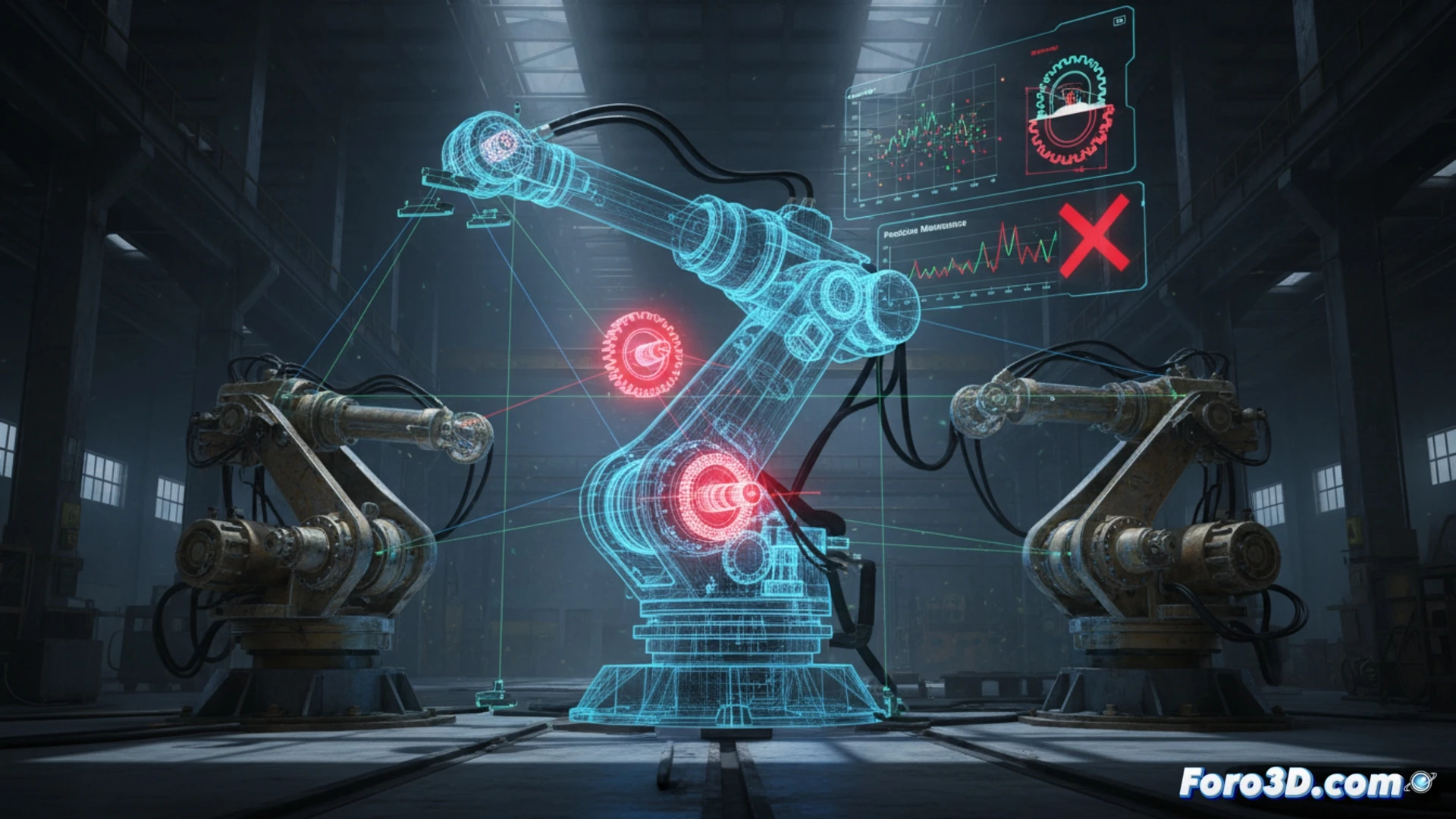
Failure Modeling and Predictive Analysis in Digital Twins 🔧
The implementation of a digital twin replicates not only the exact geometry of the machinery, but also its physical and dynamic properties. When a component presents an anomaly, such as an incipient crack or asymmetric wear, the 3D model can simulate its propagation under different operating loads. Using finite element techniques and computational fluid dynamics, engineers visualize how that failure alters stress distribution or surface temperature. This predictive capability allows maintenance interventions to be scheduled weeks in advance, avoiding unplanned downtime that can cost thousands of euros per hour on continuous production lines.
Towards a Culture of Maintenance Based on Visual Data 📊
The true advantage of this technology lies not only in detection, but in risk communication. A 3D model showing the progressive deformation of a bearing convinces maintenance teams faster than any numerical report. By integrating these models with SCADA systems and historical data, factories evolve towards truly predictive maintenance. The anomalous component ceases to be a surprise and becomes a controlled variable within the simulation process, optimizing machinery lifespan and reducing overall operational costs.
How can 3D simulation of industrial processes improve the accuracy of early detection of anomalous components in machinery, reducing unplanned downtime?
(PS: Simulating industrial processes is like watching an ant in a maze, but more expensive.)