The collapse of a lighting structure at a live event not only causes economic losses but can also lead to tragedies. This article analyzes the main causes of lighting rig collapses, such as structural failures, equipment overload, and material fatigue, and proposes a 3D workflow to prevent it. From BIM modeling to stress simulation, we explore how to validate safety before assembly.
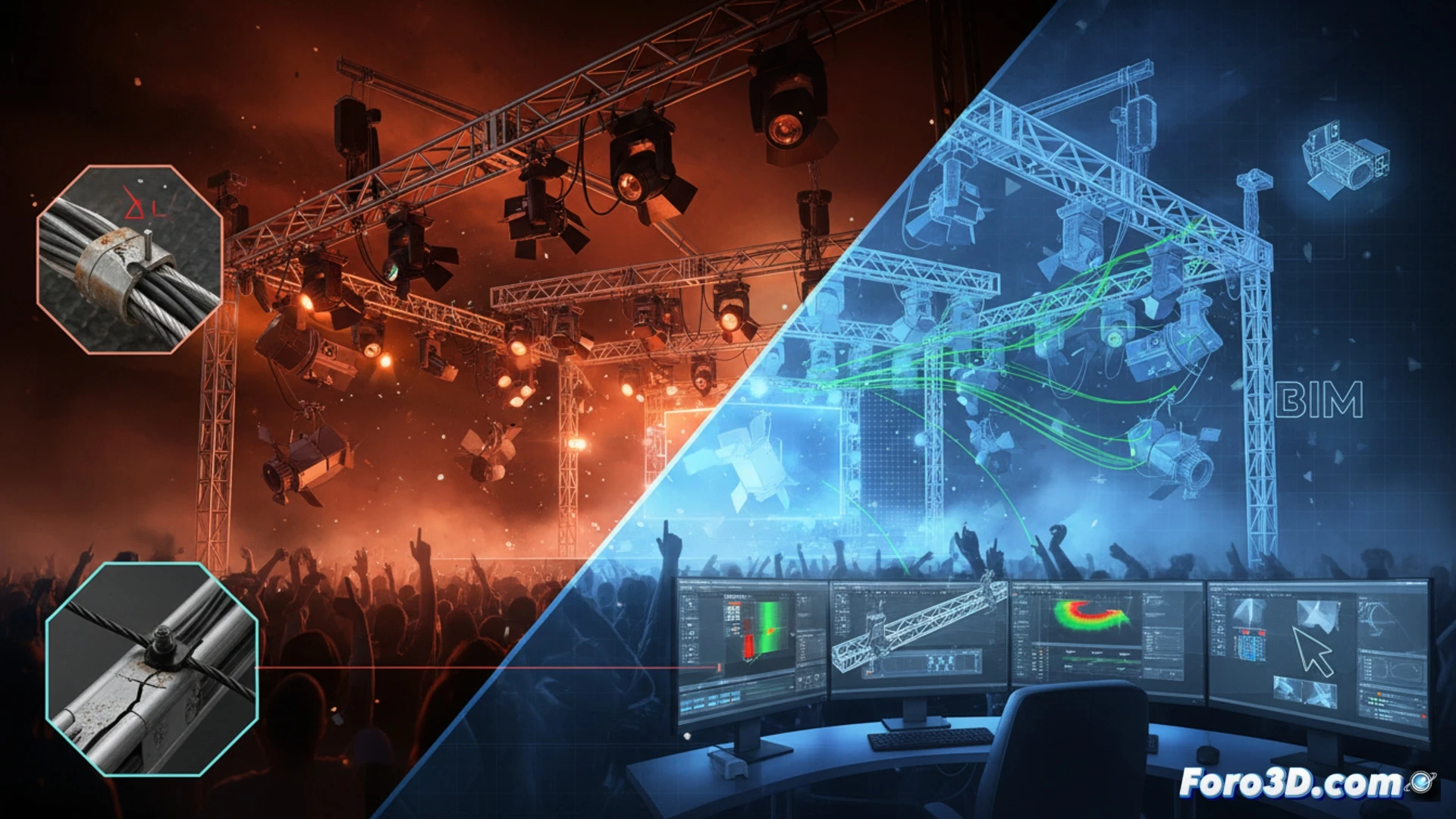
3D Workflow for Structural Validation 🏗️
To prevent a collapse, the process begins with BIM modeling of the stage in Revit, where geometries and anchor points are defined. It is then exported to 3ds Max to add the actual lighting layout and apply load simulations using plugins like MassFX. Finally, it is rendered in Twinmotion to verify visual interferences and dynamic stresses. This workflow allows detecting overloads in beams or fatigue in supports before assembly, reducing risks in concerts and shows.
Lessons from Real Cases and Key Software 🎭
Incidents like the collapse at the Mad Cool festival (2022) highlight the need for prior simulations. Tools like Revit for parametric modeling, 3ds Max for stress testing, and Twinmotion for immersive renders are essential. We recommend integrating material fatigue analysis into the BIM workflow and conducting virtual load tests. Prevention is not optional: it is the line between a safe show and a preventable catastrophe.
As a stage engineer, what structural simulation methodology do you recommend for identifying fatigue points in a lighting truss before a catastrophic collapse occurs at a live event?
(PS: designing a stage in 3D is easy, the hard part is keeping the musicians from falling off it)