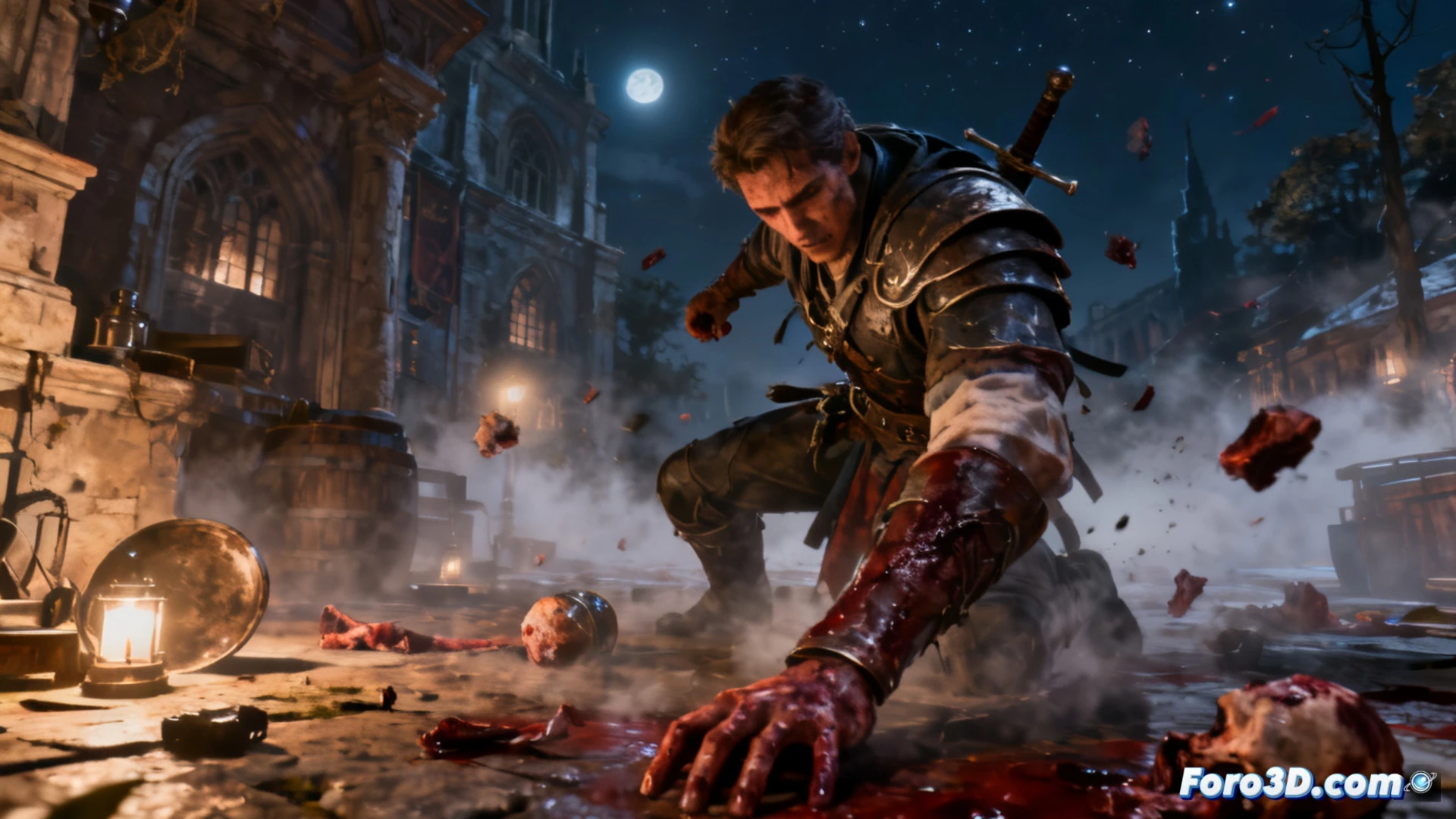
The return to flooded New Orleans in The Walking Dead: Saints & Sinners - Chapter 2: Retribution is not just a narrative exercise, but a technical challenge solved on Unreal Engine 4. Skydance Interactive has refined its destruction physics system to achieve dynamic dismemberment that responds in real-time to the physics of blunt and sharp objects, a cornerstone of the VR horror and survival genre. 🧟
Destruction Physics and Real-Time Optimization for VR ⚙️
The technical core lies in the implementation of a system of fracturable bone meshes. Instead of using predefined animations, the engine applies torsional and cutting forces to the bone hierarchy of the zombie skeleton. Each strike calculates the impact point and the relative velocity of the weapon, triggering a procedural break in the character mesh. To maintain the stable 90 FPS required by VR, the team optimized the shading of cut surfaces and reduced the complexity of secondary collisions (bone and flesh fragments) to simple, short-lived collision spheres, avoiding lag spikes in areas with higher enemy density.
Claustrophobic Lighting as an Immersion Tool 🔦
Nighttime lighting is not decorative; it is functional. Skydance employs a dynamic volumetric lighting system that realistically attenuates the player's visibility, hiding map boundaries and creating the feeling of an infinite, oppressive space. Combined with flashlight reflectors that cast soft shadows in real-time, the game forces the user to rely on positional sound and light flashes, demonstrating that in horror video game development, visual restriction is the ultimate optimization for immersion.
How they optimized the physics engine to manage realistic enemy dismemberment and volumetric fog in VR without compromising performance on Quest 2 and PSVR2
(PS: 90% of development time is polishing, the other 90% is fixing bugs)