In 2026, the video game industry lives a visual paradox. While major studios invest fortunes in graphics engines that simulate every pore of a character, a growing number of developers embrace pixel art, low-poly models, and resolutions of yesteryear. This aesthetic is no longer a sign of technical limitation, but a deliberate choice to prioritize gameplay and the title's identity. Demakes, retro versions of modern games, have become a phenomenon demonstrating that less can be more.
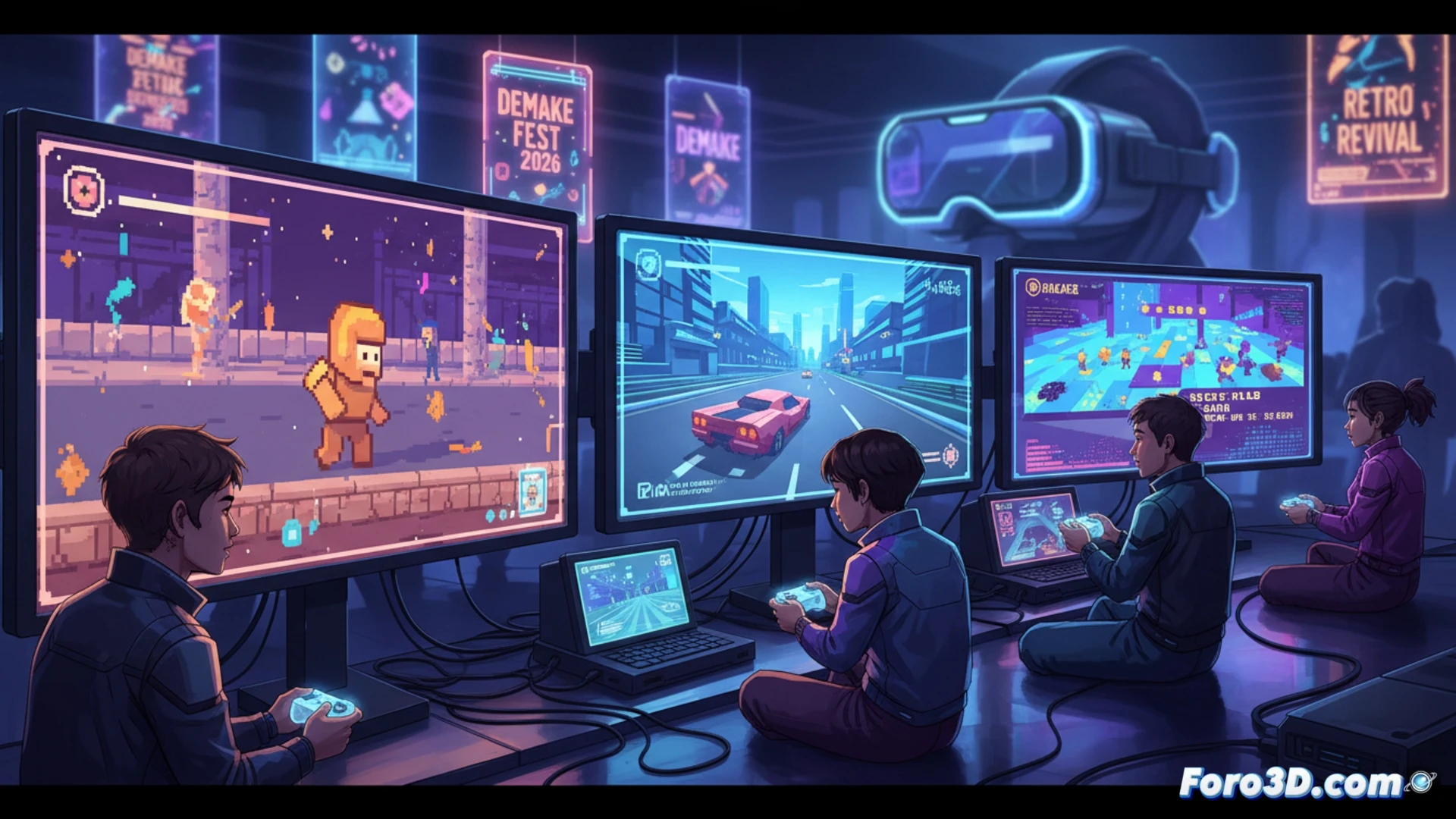
Low poly and sprites: clarity as a technical advantage 🎮
The decision to use simple graphics responds to a design logic: eliminate visual noise so the player can focus on the mechanics. A 16-bit sprite or a 200-polygon model offers instant readability that extreme realism often muddies. Furthermore, development becomes more agile; small teams can create coherent worlds without relying on 4K texture pipelines or global illumination. This allows experimenting with unique artistic styles that, instead of imitating reality, build their own visual grammar.
When your GPU cries, but your game looks like it's from the SNES 😅
It's curious to see a PC with a cutting-edge graphics card sweating to render a game that looks like it's from 1995. Developers have realized that sometimes, the most expensive isn't the most fun. While the industry heavyweights compete over who has the most realistic reflection in a puddle, demake creators laugh with their limited palettes and 16 colors. Because in the end, when your character dies from falling into a bottomless pit, it doesn't matter if it was drawn with 8 bits or with ray tracing.