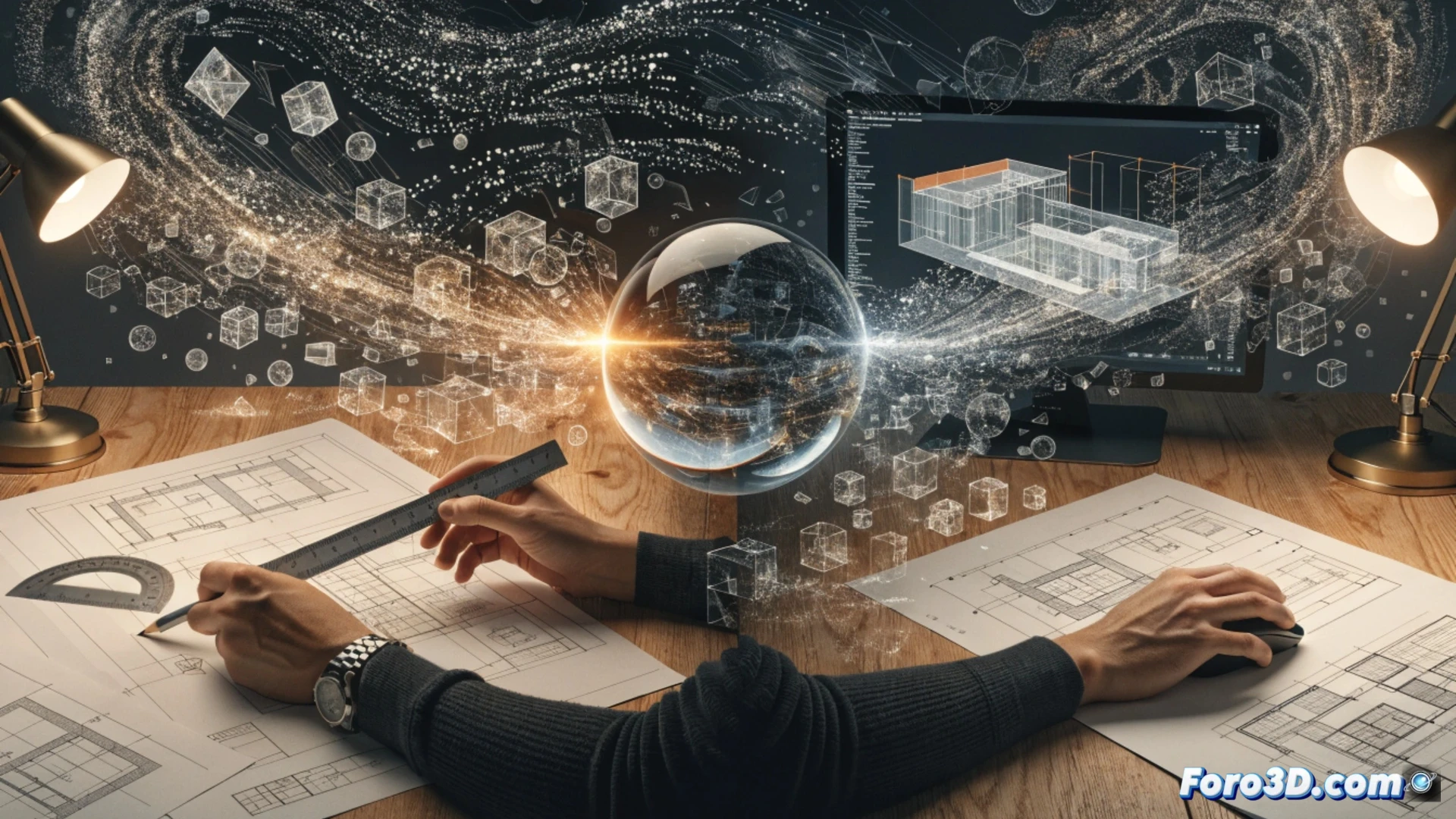
The profession of the drafter has evolved faster than a freehand sketch. 3D technology allows moving from two-dimensional plans to virtual models to detect interferences, calculate volumes, and present realistic projects. A clear example: modeling a metal structure in BIM and seeing how the beams fit together before buying the first screw.
Key software for the modern drafter 🛠️
Autodesk Revit is the standard for architectural documentation and BIM, allowing automatic extraction of plans from the 3D model. AutoCAD remains useful for complex geometries and 2D details, while SketchUp speeds up conceptual models. For surveying or scanning work, Recap Pro converts point clouds into editable meshes. The combination of these three programs covers everything from the preliminary design to construction.
The drafter who couldn't render and ended up on YouTube 🎥
The good thing about 3D technology is that it allows a drafter to look like a visualization wizard without having to sell their soul to Photoshop. The bad thing: when your boss asks you for a photorealistic animation for tomorrow and you just wanted to update an elevation. But hey, with a Lumion tutorial and three coffees, even the dullest plan can look like the lobby of a five-star hotel. Virtual reality doesn't forgive, but neither does coffee.