A simple button cell battery on the motherboard can become a bomb of shrapnel and toxic gas. We analyze a real deflagration incident in a computer system. We reconstruct the thermal failure sequence in 3D, from the internal short circuit to the casing explosion. We visualize fluid dynamics, the pressure wave, and structural damage to critical components such as the processor socket and capacitors.
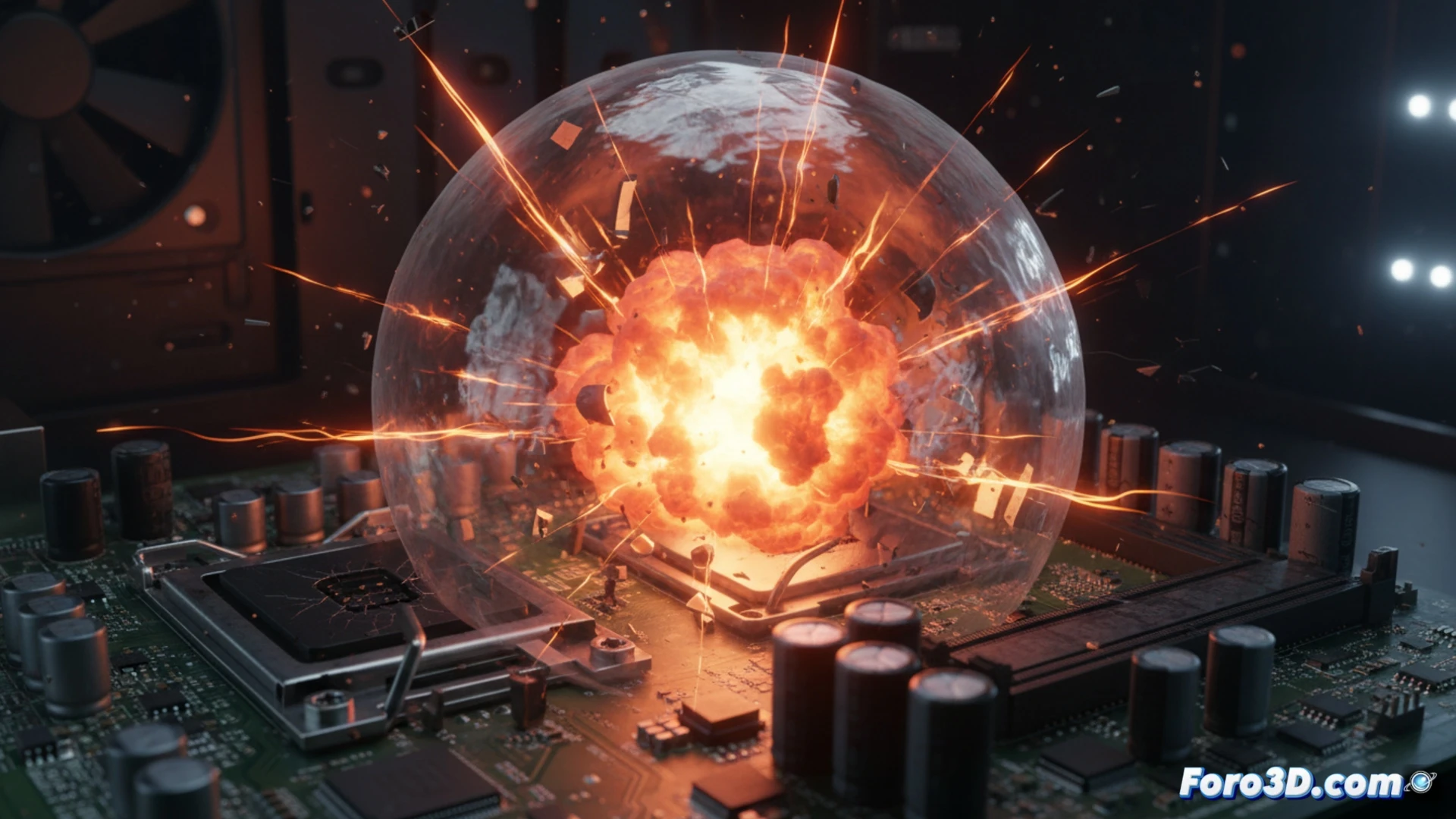
Technical reconstruction of the event: from short circuit to deflagration 🔥
The simulation begins with a CR2032 battery in a normal charge state. We apply an anomalous resistive load to induce an internal short circuit. The thermal model shows a temperature increase in the lithium electrolyte from 25°C to 180°C in less than 2 seconds. Internal pressure exceeds 10 bar, causing the battery seal to rupture. The leak of flammable gases (mainly phosphorus hexafluoride) mixes with the oxygen inside the chassis. A spark from the original short circuit ignites the cloud, generating a deflagration. The CFD (computational fluid dynamics) simulation reveals a 120 dB shockwave that deforms the metal casing and propels battery fragments at speeds of up to 15 m/s. The corrosive smoke, rich in hydrofluoric acid, spreads through the ventilation grilles in 0.8 seconds.
Lessons from the simulation: prevention and safe design ⚠️
The 3D reconstruction shows that 90% of battery deflagrations in equipment are due to failures in the charging circuit or the use of non-certified batteries. The simulation allows us to design a passive heatsink that evacuates heat before reaching the critical point. We also visualize the effectiveness of an 80°C thermal fuse placed in series with the battery connector. Our final advice is clear: visually inspect your motherboard's battery every two years and always replace it with a UL-certified lithium one. A rendered image of the component's before and after is more eloquent than a thousand safety manuals.
What 3D simulation parameters allow for more accurate prediction of the trajectory of button cell battery casing fragments during a thermal deflagration inside a motherboard?
(PS: Simulating catastrophes is fun until the computer melts down and you are the catastrophe.)