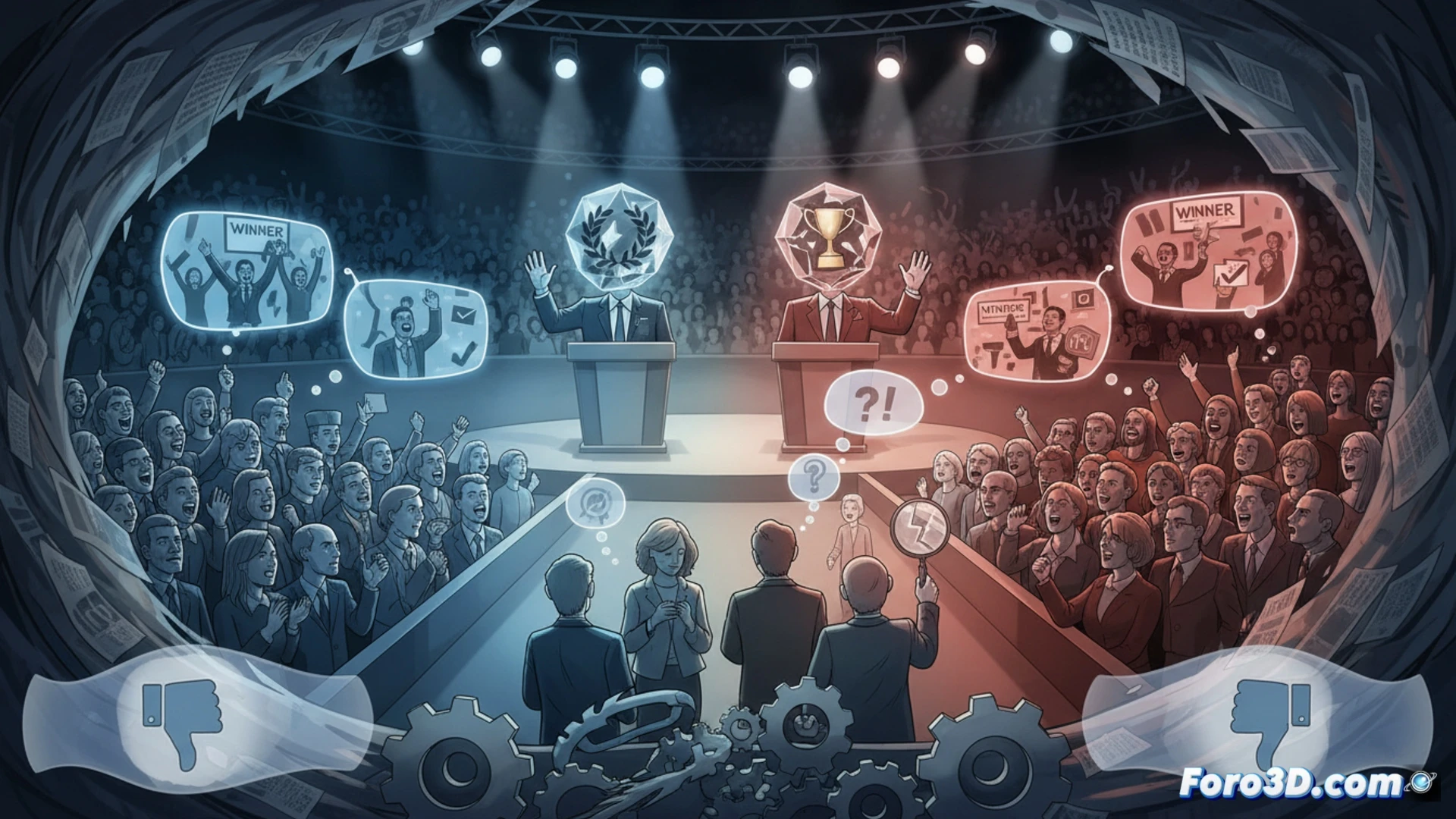
Electoral debates have a predictable dynamic: each party declares their candidate the winner regardless of how the event unfolds. It's the classic confirmation bias, where one supporter sees successes where another only sees evasions. This phenomenon, similar to arguing over a penalty in a derby match, turns any confrontation into an exercise of faith rather than objective analysis.
Confirmation bias and the digital architecture 🧠
Since the development of platforms, this bias is amplified by recommendation algorithms that reinforce information bubbles. Machine learning systems prioritize content that validates the user's previous beliefs, segmenting audiences into homogeneous clusters. In forums and social networks, automated moderation and karma systems create echo chambers where dissent is penalized. The result is an ecosystem where each side receives a filtered version of reality, amplifying technical and social polarization.
The invisible referee of the audience 🏀
The funny thing is that after the debate, each group takes screenshots and edits them to prove their thesis, as if they were linesmen with one eye covered. The candidate who tripped over a chair is a moment of humility for some and a sign of clumsiness for others. And meanwhile, the moderator tries to keep order, like a basketball referee in a soccer match: nobody listens to them and everyone blames them.