Razer updates its iconic DeathAdder with a special edition signed by Faker, but beyond the design, the real appeal for the 3D professional lies in its hardware. Weighing only 63 grams and capable of reaching a polling rate of 8000Hz via the HyperPolling dongle, this mouse promises extreme fluidity. We analyze whether these figures translate into a real advantage in modeling and animation software like Blender, ZBrush, or Maya.
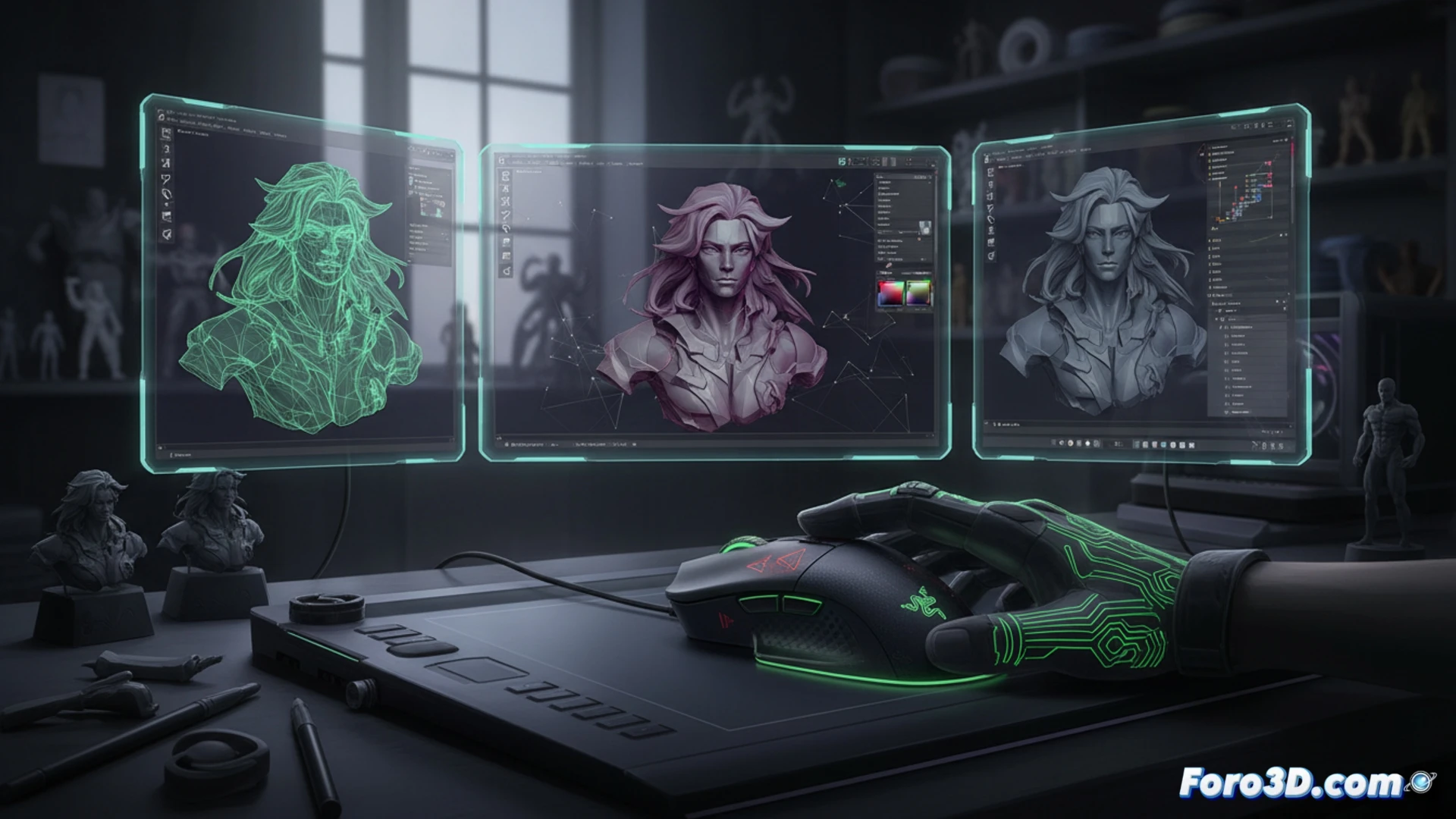
Reduced latency and precision in the viewport 🖱️
The 8000Hz polling rate, compared to the standard 1000Hz, reduces input latency to approximately 0.125 milliseconds. In practice, this translates to a cursor that responds almost instantaneously to micro-movements. For a ZBrush user, this is crucial when sculpting fine details with high-resolution brushes, where even minimal delay can break the workflow. In Blender, orbital viewport navigation feels more solid and predictable, eliminating that phantom drag sensation sometimes present in heavier mice or those with lower polling rates. The 63-gram weight, combined with this latency, allows for quick and precise movements without muscle fatigue during long retopology or rigging sessions.
Ergonomics and weight: Myth or real necessity? ⚖️
While an ultralight mouse is ideal for competitive gaming, in 3D modeling, weight reduction is not always an absolute benefit. Some professionals prefer a certain heft for smooth, controlled camera movements. However, the DeathAdder V3 Pro Faker Edition achieves a remarkable balance. Its right-handed ergonomic shape offers full palm support that compensates for the lack of weight, preventing instability. The real advantage here is not just the weight, but the combination with the Focus Pro 30K sensor, which offers impeccable tracking on irregular desktop surfaces, common in design studios. For the 3D workflow, this special Razer edition is a tool of surgical precision, provided the user adapts to its slim profile and the need for the HyperPolling dongle to unlock its full potential.
Do the high-precision optical sensors in mice like the DeathAdder V3 Pro Faker offer a real advantage in resolving fine details during 3D sculpting with programs like ZBrush or Blender, or is it simply a marketing myth for gamers?
(PS: Your CPU heats up more than the Blender vs. Maya debate)