The Itinerant Deaf Cinema Festival arrives with over 30 global works: short films, documentaries, animation, and experimental cinema. Its key moment will be the drafting of the first Deaf Cinema Manifesto, 150 years after the 1880 Milan Congress that banned sign languages. The films showcase bodies that become expressive, intimate, and political, where sign language is resistance and identity. The festival does not conceive inclusion as a concession, but as a transformative approach to cinematic language.
Sign language on celluloid: new tools for a silent gaze 🎬
Audiovisual technology adapts to capture the visual grammar of sign languages. Editing prioritizes sustained shots and wide frames that allow reading hands and facial expressions without abrupt cuts. Lighting is designed to avoid shadows that hide gestures, and sound is used as ambient texture, not as the main narrative support. Subtitles integrate descriptions of emotional tone, not just dialogues. These technical adjustments redefine the relationship between image, rhythm, and narration, moving away from the canons of hearing cinema.
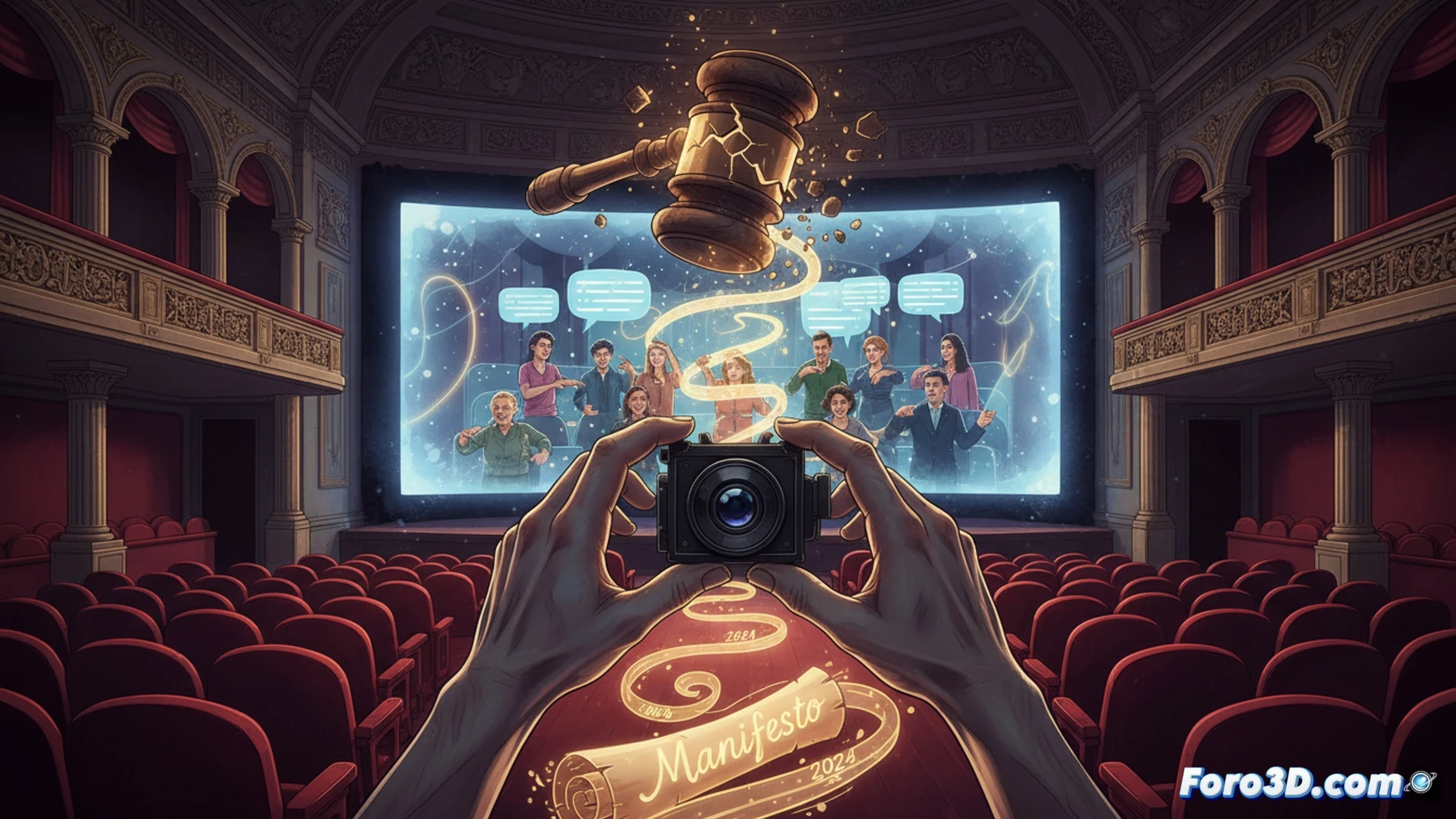
The manifesto that will make the Milan Congress turn in its grave ✊
150 years after a group of gentlemen decided that speaking with hands was the devil's work, a festival dares to draft a manifesto. As if cinema needed a notarial act to remember that hands also tell stories. Meanwhile, silent film purists have spent decades unaware that they too were making deaf cinema without knowing it. Ironies of fate: they removed voices and created art. Now they call it a manifesto.