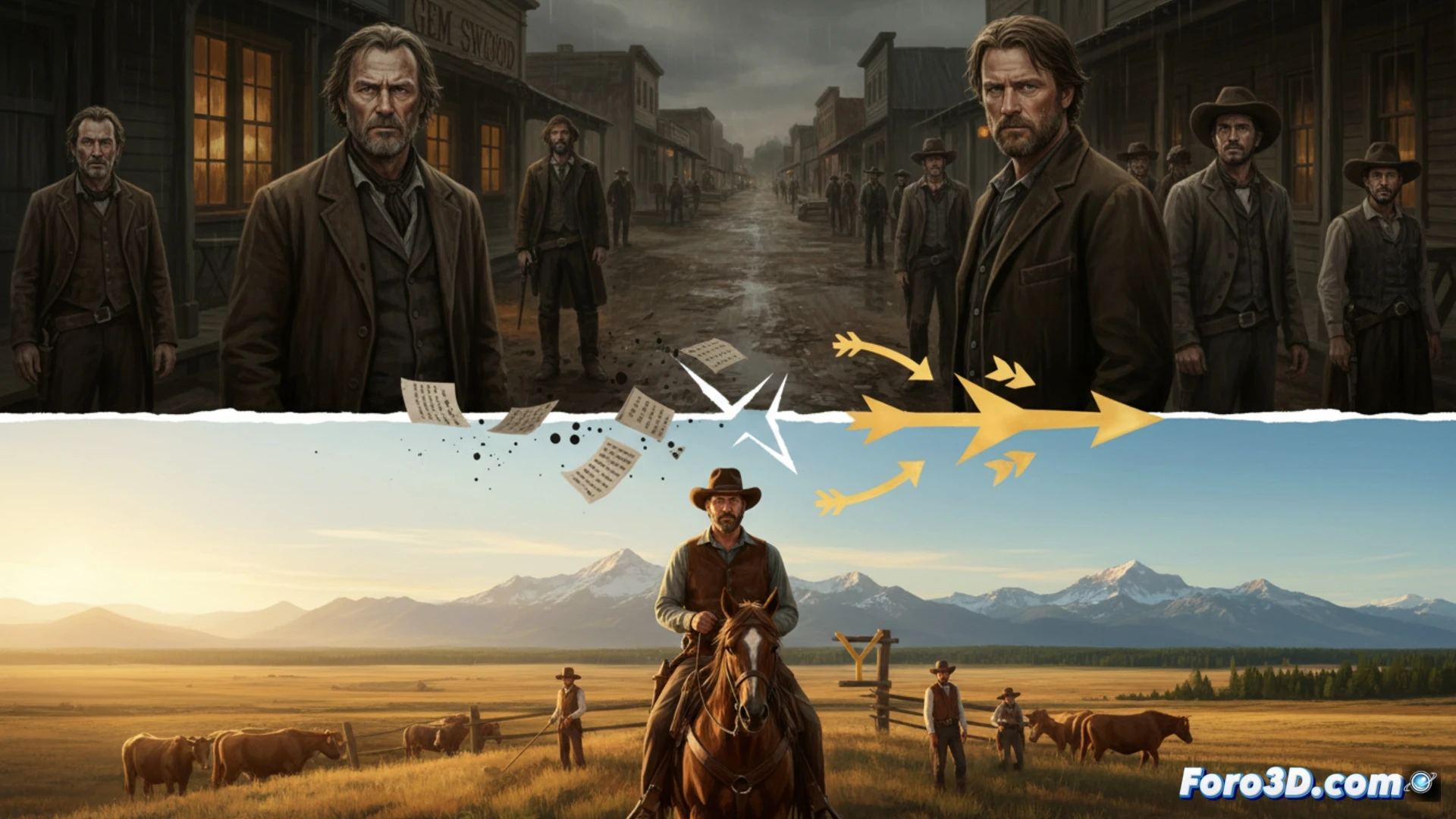
While Yellowstone racks up audiences with its ranches and conspiracies, HBO's Deadwood has spent 22 years showing how to write a western without concessions. Where Taylor Sheridan simplifies morality so you root for his protagonists, David Milch built a town full of gray characters, with no clear heroes or villains. The difference isn't in the budget, but in the narrative ambition.
The technical engine behind Deadwood's narrative 🎬
Deadwood stands out not only for its script, but for a production that HBO pampered with period sets and pioneering use of natural lighting to capture the grit of the Wild West. The ambient sound, far from Sheridan's epic soundtracks, immerses the viewer in dusty streets and noisy saloons. Every technical detail, from the costumes to the grainy cinematography, reinforces the feeling of a real and dangerous place, without modern artifice breaking the immersion.
When the modern rancher needs history lessons 🤠
Watching Yellowstone after Deadwood is like comparing a fairground rodeo to a real bar fight. The Duttons solve their problems with threats and intense stares, while in Deadwood even the blacksmith has more nuance than John Dutton. Even Deadwood's language, with its foul-mouthed poetry, makes Yellowstone's dialogue sound like a self-help manual for stressed-out ranchers. Maybe Sheridan should take notes.