Housing in the Sahrawi refugee camps has evolved from traditional tents to brick constructions, a physical change that reflects a bitter reality: patience has become structure. The UN classifies this as one of the longest refugee crises in the world, where 80% of the population depends on external aid to survive.
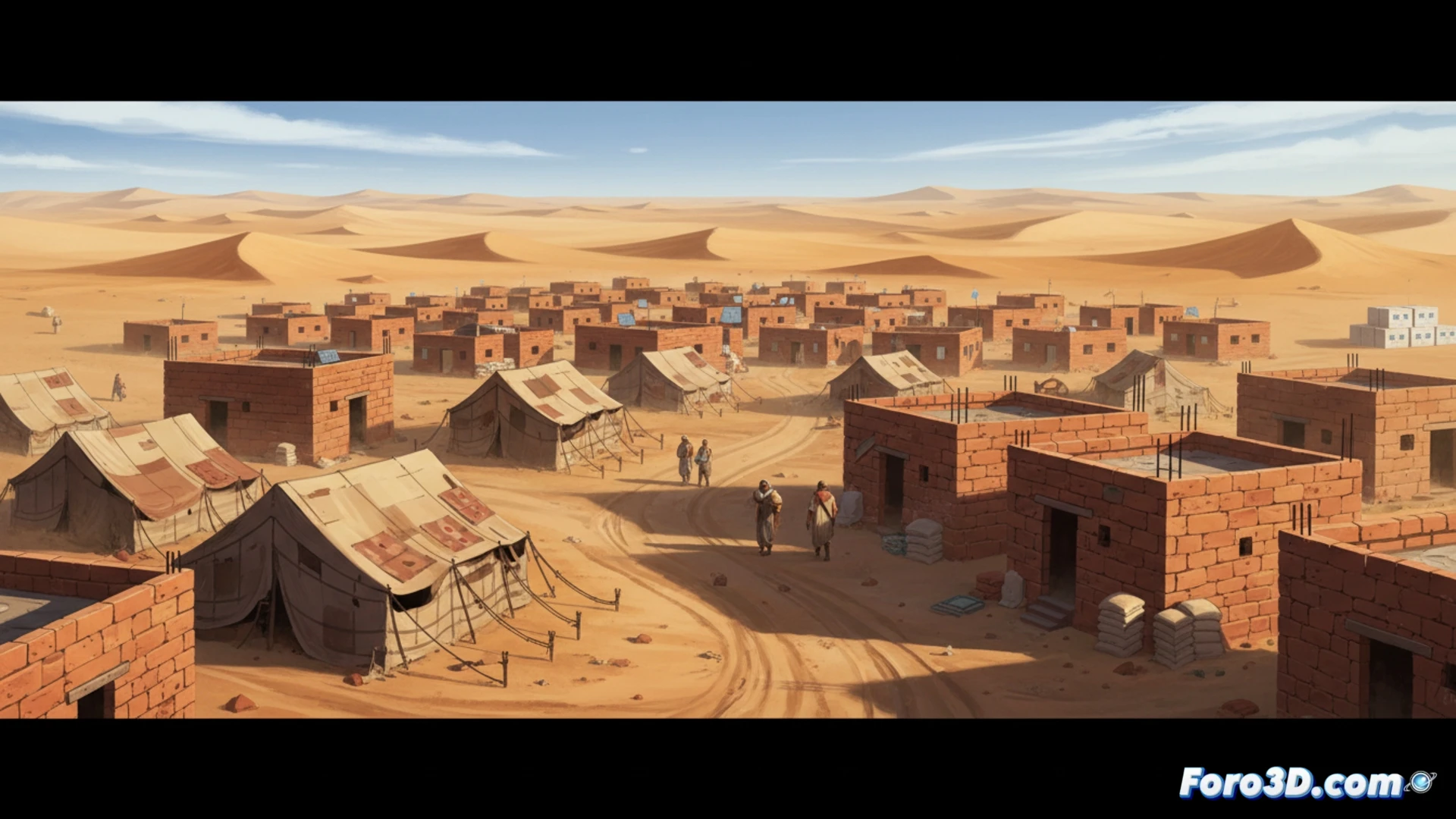
Technology of adaptation: infrastructures with no expiration date 🏗️
Stable construction involves access to materials such as concrete blocks and fiber cement roofs, techniques requiring logistics and funding. However, UNHCR and WFP report budget cuts affecting food and water distribution. The paradox is clear: walls are being built while basic assistance crumbles, generating a humanitarian dependency that the infrastructure itself perpetuates.
The brick also waits: the UN calls for funds for the next wall 🧱
Refugees have gone from waiting under a canvas to doing so under a cement roof. The UN warns that money for vital aid is lacking, but no one says anything about the price of the brick. Perhaps the solution is not to return to the tent, but to demand that the next walls have at least a window with a view of independence. Meanwhile, we keep building and waiting.