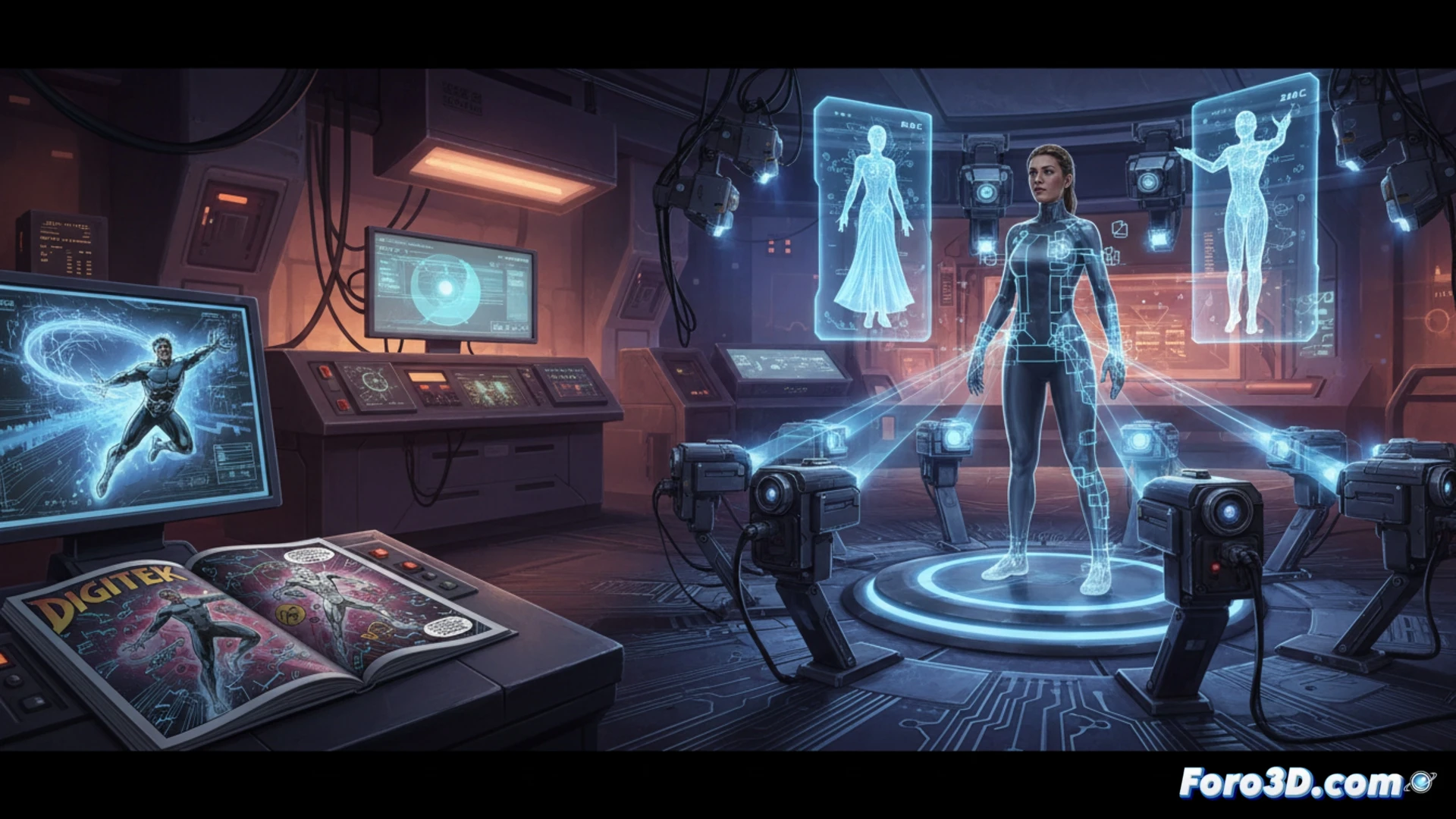
The Marvel character Digitek had the ability to digitize his own body to infiltrate computer systems, a skill that in the 90s seemed like pure science fiction. Today, that premise finds a tangible echo in 3D body scanning technology. Although we cannot turn into code to travel through cables, we can generate hyper-realistic digital twins of our anatomy using structured light scanners or photogrammetry, opening a range of technical applications that surpass the comic book fantasy.
Technical principles of modern anthropometric scanning 🔬
Unlike Digitek's instant digitization, the real process relies on capturing point clouds using infrared sensors or multi-camera setups. Systems like the Artec Eva or the Structure Sensor allow obtaining models with submillimeter precision in seconds. The resulting digital anthropometry is used to create avatars that replicate exact measurements of perimeters, volumes, and proportions. However, limitations persist: capturing hair or reflective surfaces remains problematic, and mesh processing requires computational power that the fictional character avoided by merging directly with the system.
Between myth and application: the digital twin as a tool 🛠️
While Digitek manipulated technology from within, today's engineers manipulate technology to replicate the exterior. 3D body scanning is already a reality in custom fashion, occupational ergonomics, and surgical planning. The major difference lies in interactivity: we cannot inhabit the system like the Marvel character, but we can simulate, measure, and predict with a fidelity that, in many aspects, surpasses any 90s fantasy. The barrier is no longer technology, but the bandwidth to transmit these digital bodies in real time.
Considering that Digitek digitized his body to infiltrate systems, what security and privacy implications arise when storing and transmitting hyper-realistic 3D models of the human body in digital anthropometry applications?
(PS: Scanning your body for an avatar is like taking a 3D selfie, but without a selfie stick.)