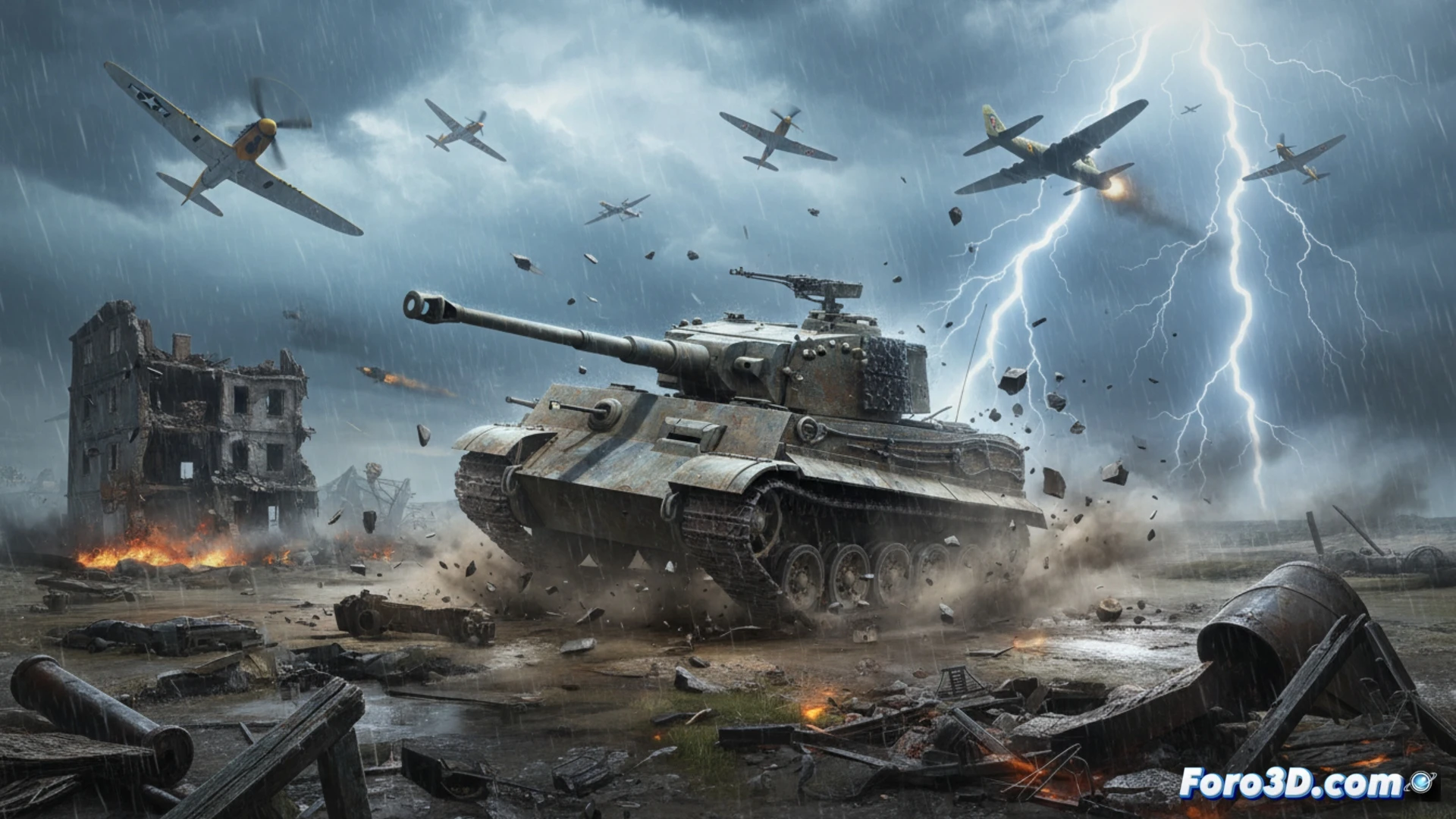
The Dagor Engine of War Thunder has evolved to offer one of the most complex combat simulations on the market. Its advanced physical destruction system allows each tank and aircraft to fracture in real-time based on the point of impact, while dynamic weather alters visibility and aerodynamics. The integration of ray tracing elevates lighting realism but demands a precise workflow between 3ds Max and Photoshop to maintain performance in massive matches.
Asset optimization for ballistic simulation 🎯
Ballistic simulation affected by wind requires projectiles to calculate trajectories based on variable atmospheric data. To achieve this without overloading the CPU, Dagor Engine uses a predictable particle system from 3ds Max, where artists model shrapnel fragments and smoke effects with low polygon density. Photoshop is used to generate normal maps and opacity textures that trick the human eye, simulating volume without real geometry. Ray tracing is applied only to metallic surfaces and glass, avoiding computational cost on terrain and vegetation.
Lessons for real-time developers 💡
The War Thunder case demonstrates that physical destruction does not need to be 100% realistic to be convincing. By combining pre-fractured meshes with impact damage simulation, the calculation load is reduced. Dynamic weather, on the other hand, should prioritize gameplay over graphical detail; clouds that block vision are more effective than individual raindrop particles. The key is to delegate to the engine only what the player perceives as critical, using external tools to precompile the rest.
As a developer, what specific technical challenges does the implementation of the dynamic destruction system in Dagor Engine present to maintain real-time performance without sacrificing the accuracy of structural damage in War Thunder.
(PS: optimizing for mobile is like trying to fit an elephant into a Mini Cooper)