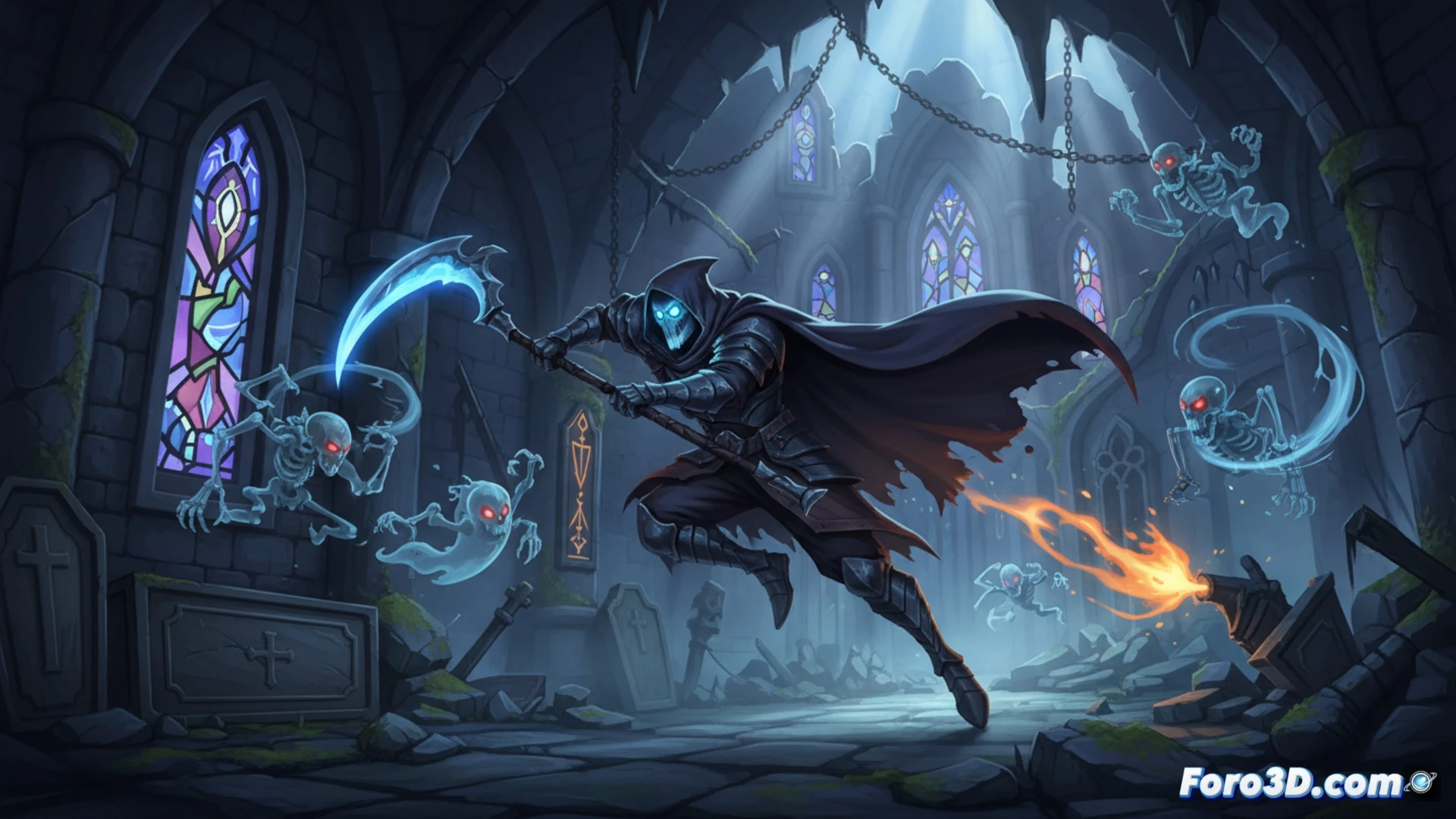
The development of independent games has found in the combination of GameMaker and Spine a winning formula for achieving visually polished productions without resorting to complex 3D engines. Crypt Custodian is a clear example of this trend, presenting a Metroidvania with a hand-drawn aesthetic that makes the most of Spine's rigging and bone animation to give fluidity to its characters and enemies.
Artistic Pipeline: From Photoshop to Procedural Animation 🎨
The workflow in Crypt Custodian begins in Photoshop, where the base sprites are created with a traditional illustration style. These assets are exported in parts (body, limbs, head) to be imported into Spine. Here, the team applies skeletal rigging that allows deforming and animating each character through bone interpolation. The technical advantage of this method is that it drastically reduces the number of sprites needed for a walking or attack cycle, since a single set of well-articulated pieces generates organic movements. Spine then exports the animations as mesh and texture data, which GameMaker renders in real-time with optimized performance, maintaining the cartoon feel without sacrificing the responsiveness required by a Metroidvania.
Real Optimization and Accessibility for Small Studios ⚙️
The choice of GameMaker as an engine is no coincidence: its sprite system and drawing surface handling integrate natively with Spine files, allowing small teams to focus on level design and gameplay without dealing with the complexity of a 3D pipeline. Crypt Custodian demonstrates that, with the right tools, it is possible to achieve a strong visual identity and detailed animations by investing fewer resources in graphics programming and more in artistic creativity. This reinforces the idea that talent and the correct technical choice can compensate for the lack of a large budget.
Which integration techniques between GameMaker and Spine were most effective for synchronizing character animations with gameplay in Crypt Custodian and optimizing performance in complex 2D scenarios.
(PS: a game developer is someone who spends 1000 hours making a game that people complete in 2)