CrossCode is a title that proves the Impact engine (JavaScript/HTML5) can compete with the big players. Its refined pixel art, reminiscent of the SNES era but with much faster animations, is not just an aesthetic achievement. It is the result of careful optimization in rendering and intelligent sprite management. For any indie developer seeking a retro style without sacrificing fluidity, this game is a mandatory case study.
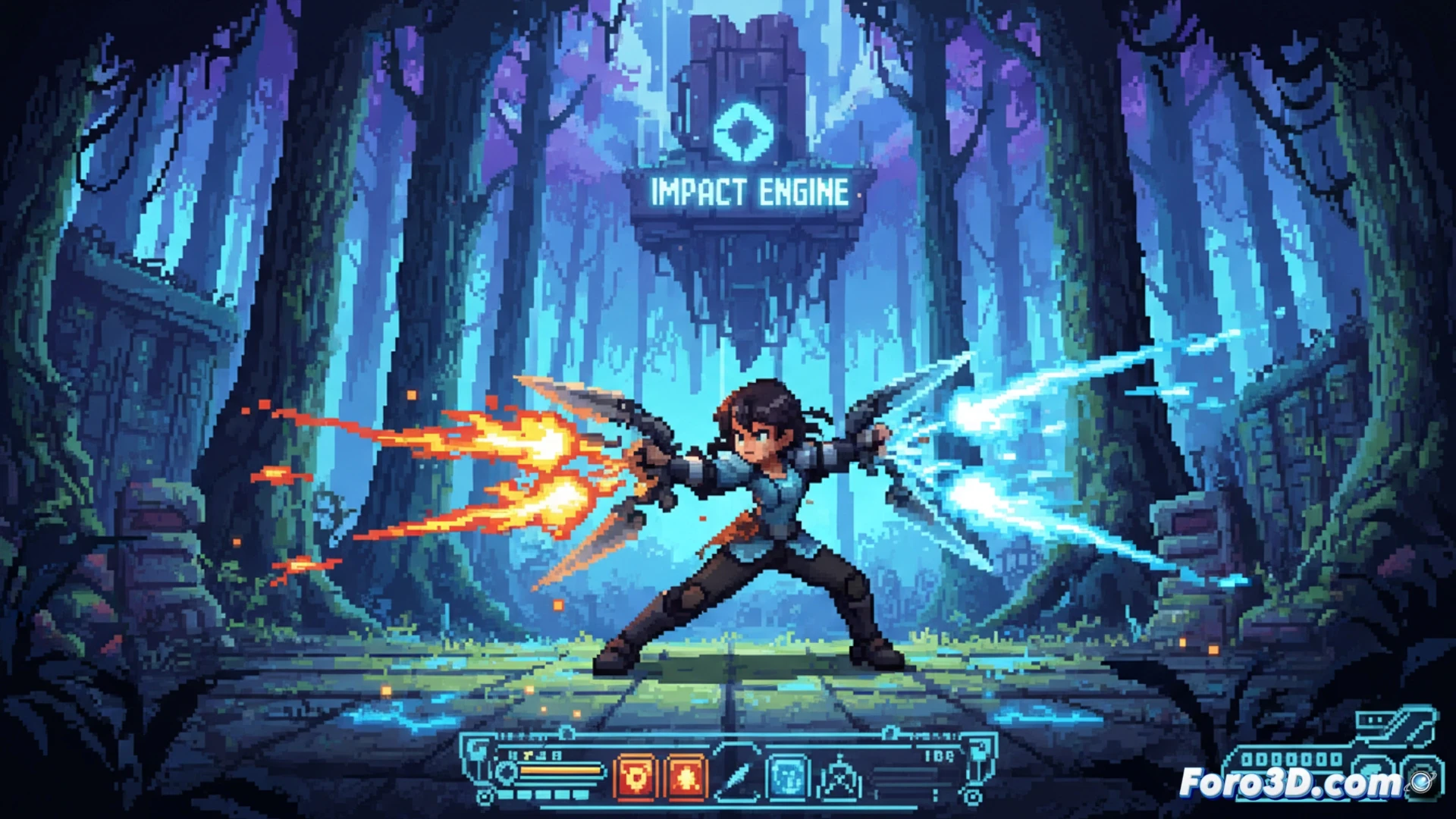
Animation and physics techniques in ImpactJS 🎮
The secret of CrossCode lies in how it handles animation cycles within Impact. Instead of using static sprites, the engine renders keyframes at 60 fps, interleaving smooth transitions through interpolation. This allows characters to have fast movements without appearing choppy. For puzzles, physics are implemented through pixel-perfect collisions and inertia simulations within the JavaScript game loop itself. The key is to limit complex calculations to small areas of the map, preventing the CPU from becoming saturated. If you want to emulate it, use 16x16 pixel tilesets with color palettes limited to 256 tones, and pre-calculate animations in arrays to reduce the load on the JS garbage collector.
Lessons for the modern indie developer 🚀
CrossCode proves you don't need Unity or Unreal for a quality game. The Impact Engine, with its simple architecture and Canvas 2D rendering, is ideal for projects that prioritize gameplay over realism. However, the biggest challenge is optimization in browsers. Use compressed spritesheet techniques and avoid redrawing static backgrounds. The result is a game that feels native, even though it runs on HTML5. If your goal is smooth pixel art, remember: fewer pixels on screen, more frames per second.
How does CrossCode achieve SNES-quality pixel art with fluid animation using the Impact Engine in JavaScript and HTML5, considering its technical limitations compared to more traditional engines?
(PS: shaders are like mayonnaise: if they break, you start all over again)