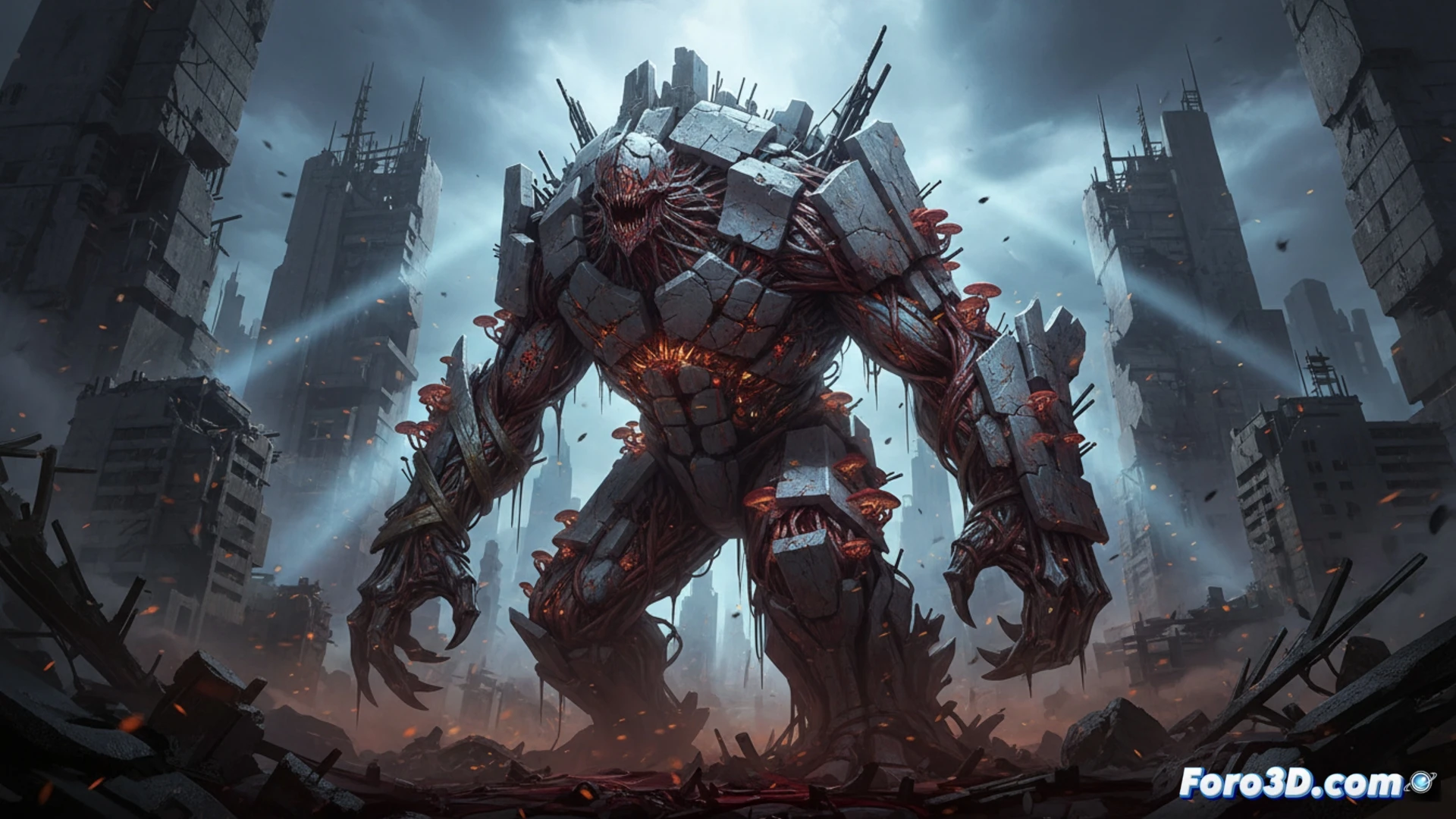
Bloober Team returns with Cronos: The New Dawn, a horror title that bets on a brutalist aesthetic combined with body horror. The Polish studio, known for Layers of Fear, uses Unreal Engine 5 to push the realism of its textures to the limit. Volumetric lighting and the Nanite system allow rendering stone and flesh with a level of detail that challenges the player's perception, setting a new standard in the creation of organic and inorganic assets for real-time. 🎮
Technical Pipeline: From ZBrush to UE5 with Nanite 🔧
The workflow starts in ZBrush, where artists sculpt high-poly models for flesh and organic matter textures. Subsequently, Autodesk Maya handles retopology and the creation of the base structure. The visual leap comes with Substance Painter, which generates roughness and occlusion maps to simulate wet or torn surfaces. The key lies in UE5: by activating Nanite, high-density assets go directly into the engine without the need for traditional LODs. Volumetric lighting, combined with dynamic shadows, enhances every pore and crack in the stone and flesh, achieving a visual impact that previous engines could not sustain in real-time.
Tips for Indies: Dirty Realism and Optimization 💡
For independent studios looking for a similar style, the lesson is in texturing. Don't try to sculpt every detail in ZBrush; use Substance Painter to generate procedural imperfections that simulate wear or moisture. Take advantage of Nanite to avoid manual LOD work, but limit the use of excessive geometry on non-visible elements. Finally, UE5's volumetric lighting can consume resources: use point lights with soft shadows and adjust the fog volume density to maintain stable performance on consoles. Body horror works best when the texture suggests more than it shows.
How does Bloober Team achieve the technical integration between the brutalist aesthetic and body horror in Unreal Engine 5 to generate an atmosphere of tension in Cronos: The New Dawn?
(PS: optimizing for mobile is like trying to fit an elephant into a Mini Cooper)