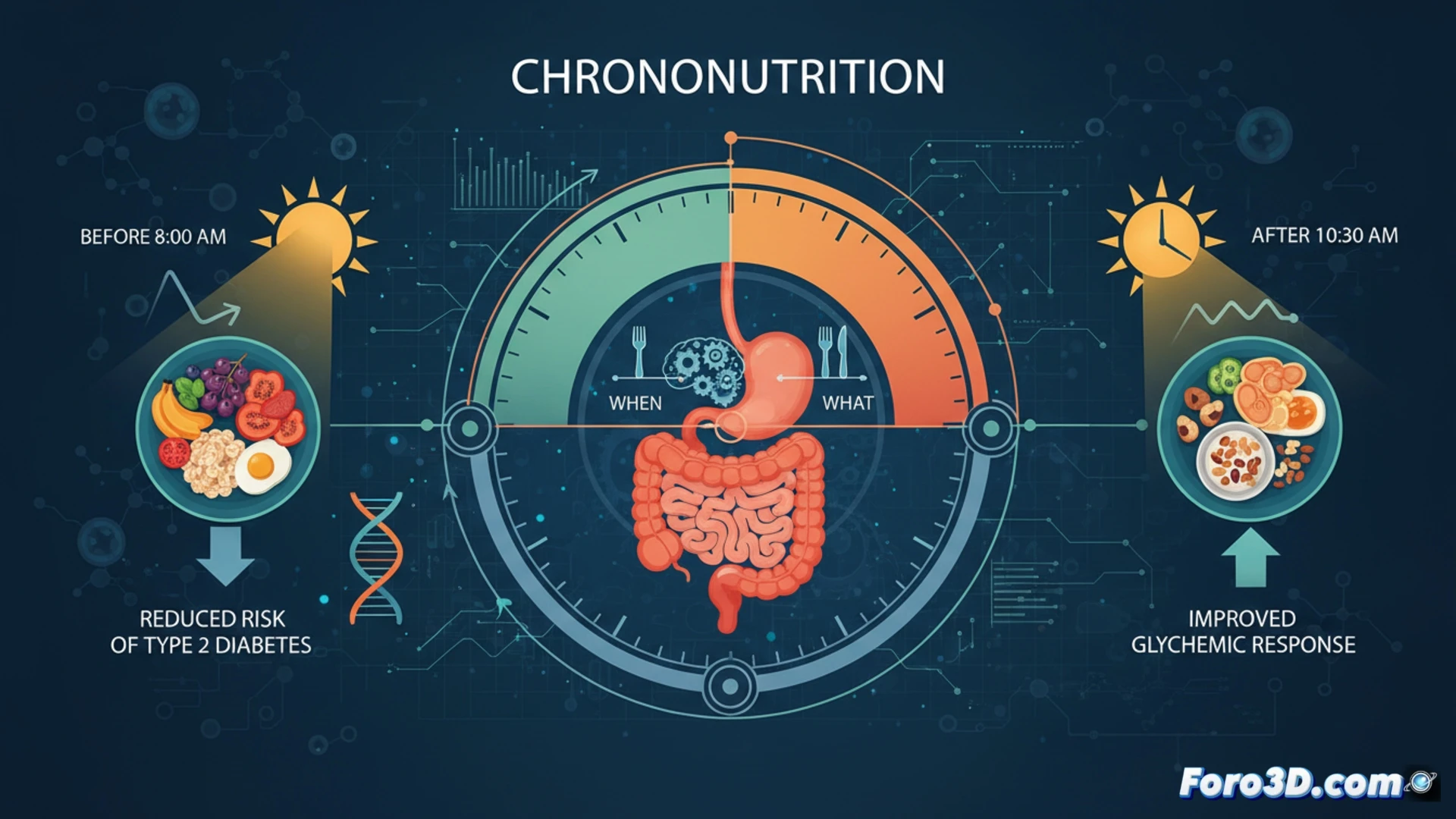
Chrononutrition has revolutionized the way we understand eating. It's not just about what we eat, but when we eat it. Recent studies reveal that an early breakfast, before 8:00 AM, reduces the risk of type 2 diabetes. However, a 2025 trial suggests that delaying breakfast until 10:30 AM can improve the glycemic response at the next meal. This article explores how to model these processes in 3D for educational campaigns.
Metabolic Modeling of the Circadian Rhythm in 3D Infographics 🕒
To visually represent chrononutrition, we propose an interactive 3D infographic that simulates circadian metabolism. The model should include two scenarios: a breakfast at 7:30 AM and another at 9:30 AM. Using animated bar charts, it can be shown how insulin sensitivity decreases by 59% in the second case, according to a 2023 study with 100,000 participants. Foods should be rendered with realistic textures to differentiate complex carbohydrates and simple sugars. A visual timeline will animate the glycemic response, where the blood sugar peak is delayed and reduced in the late breakfast, demonstrating how the interval between meals modulates energy processing.
The Breakfast Paradox: Early or Late? ⚖️
Scientific evidence presents a fascinating paradox. Eating breakfast early protects against diabetes and cardiovascular diseases, but waiting a couple of hours can reduce post-meal glycemia in people with type 2 diabetes. For a public health educational campaign, the 3D infographic should show this duality. An interactive model would allow the user to adjust the breakfast time and see how the metabolic risk changes in real-time. Thus, we turn complex data into a clear visual tool to promote informed eating habits.
How 3D models of morning glucose metabolism can help personalize the optimal breakfast time in patients with type 2 diabetes according to their individual chronotype
(PS: virtual reality for kids: where carrots taste like pizza (if you program the shaders right))