Traditional gastronomic criticism relies on palate and sensory memory. 3D technology allows the critic to document each dish with millimeter precision. A 3D scanner captures exact texture, volume, and color, while digital modeling reveals details invisible to the naked eye, such as ingredient distribution or the porosity of a foam.
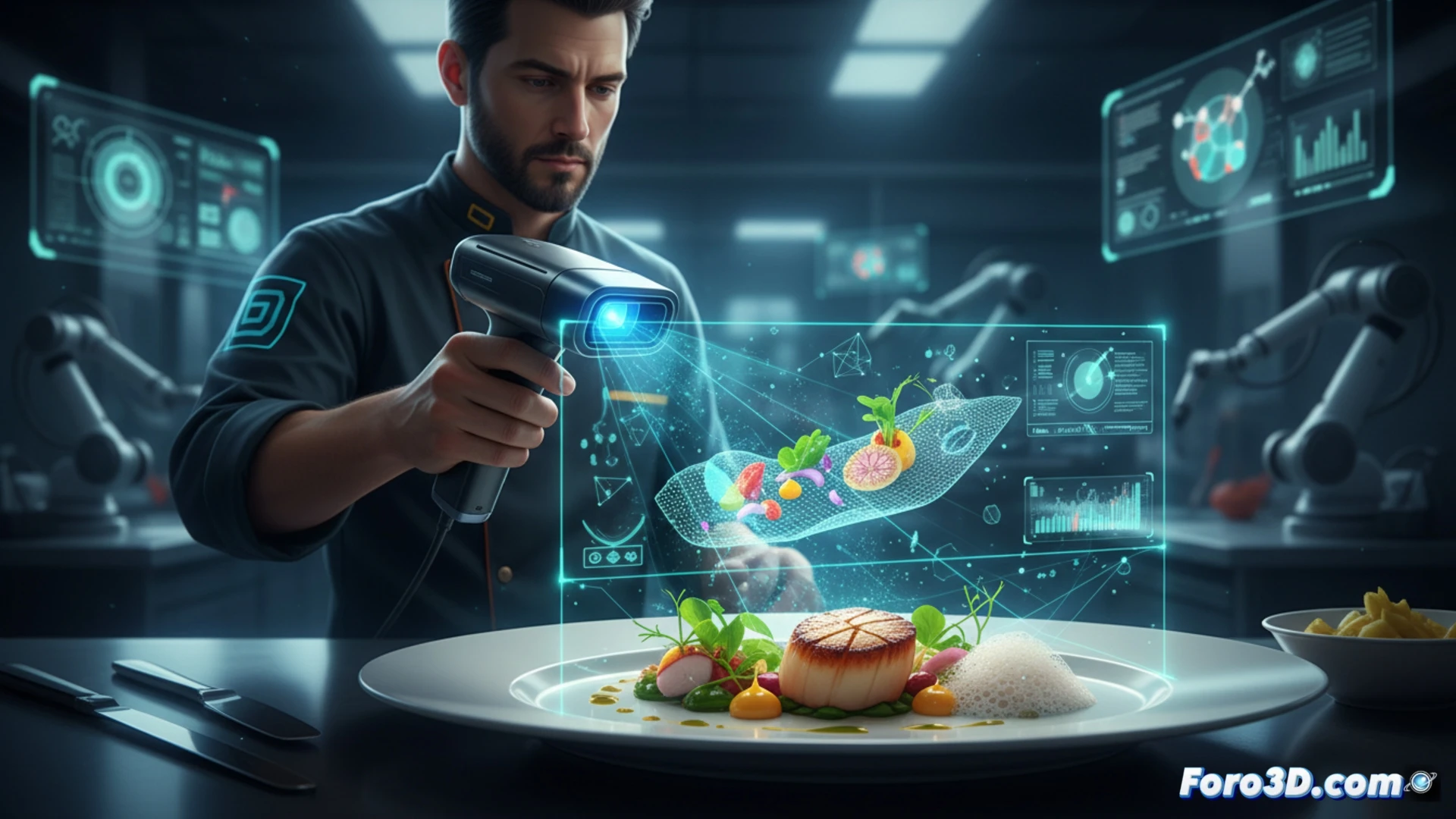
Scanning and digital analysis of molecular cuisine 🍽️
The process begins with a scanner like the Einscan Pro 2X to capture the dish's geometry. Then, in Blender or ZBrush, the structure of spherifications or gels is analyzed. A program like MeshLab allows measuring volumes and detecting internal bubbles in a soufflé. The critic can compare the theoretical recipe with the actual execution, detecting cooking or assembly errors that the human eye overlooks.
When the digital critic discovers the chef uses industrial gelatin 😱
The 3D scanner revealed that the house flan had a suspiciously uniform bubble network. After measuring the density, the critic confirmed it was not artisanal agar gelatin, but powdered mix. The chef, upon being discovered, claimed it was a tribute to supermarket molecular cuisine. At least the 3D model looked nice for Instagram.