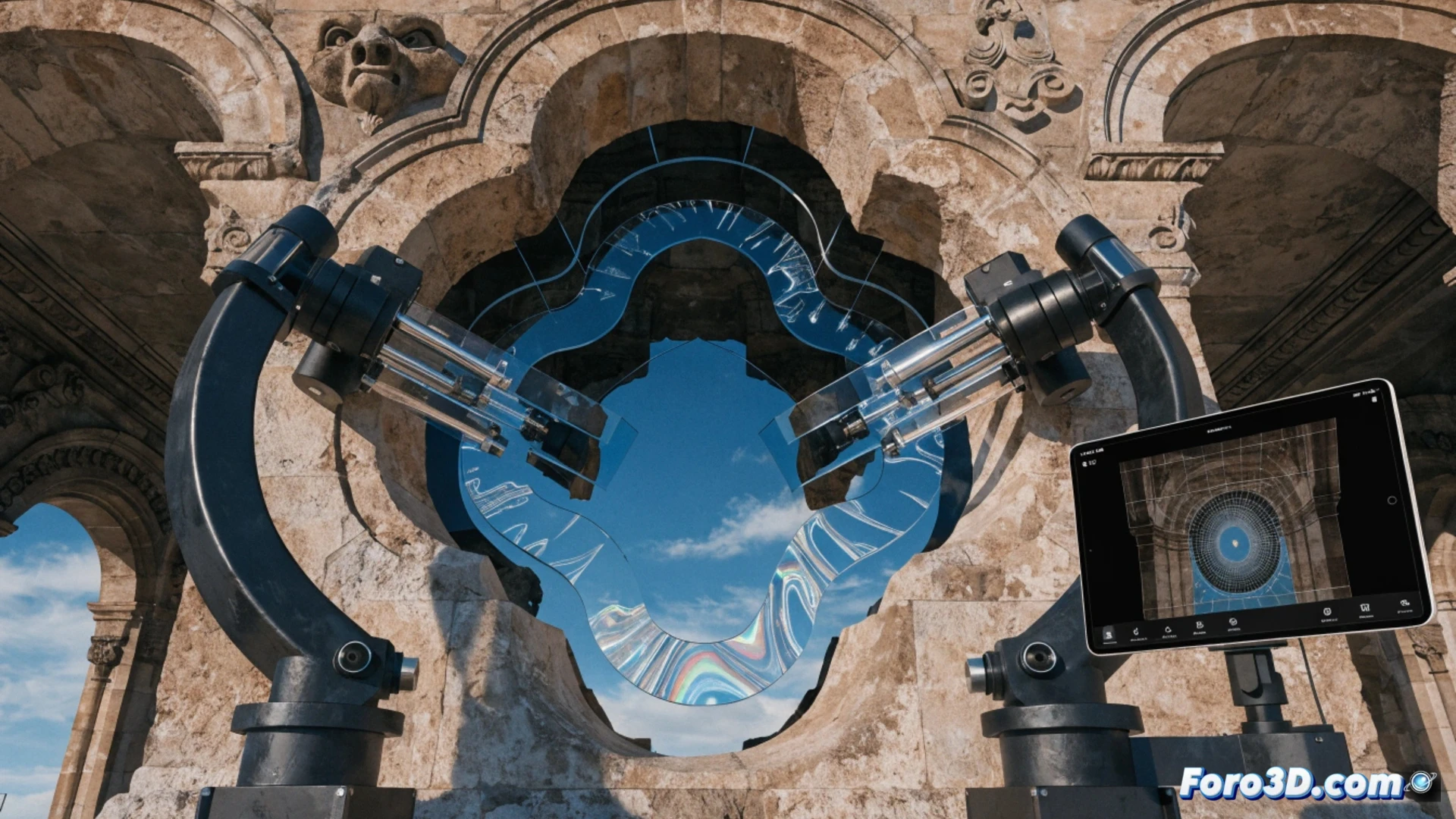
3D technology allows glaziers to work with exact measurements and avoid costly errors. For example, by scanning an irregular facade opening with an iPad Pro and the Polycam app, a 3D model of the frame is generated. This allows the glass to be cut on the first try, without needing multiple visits or cardboard templates.
From the wooden meter to the digital twin 🛠️
The modern workflow begins with a 3D scanner like the Revopoint POP 3 or a LiDAR camera. The model is processed in software such as Rhinoceros 3D or SketchUp to adjust complex geometries. Then, nesting programs like Optima or iFloating optimize the cut on the CNC waterjet table. The result: less wasted material and perfect fits in projects with impossible angles.
How to avoid the client asking you for a perfect circle 😅
Because yes, in real life walls are never straight and openings look like they were drawn by a child with a shaky hand. With 3D technology, you tell the client: look, your window is a trapezoid with two degrees of deviation. And he responds that he wants a glass circle. Good thing the software calculates the exact radius. Humor is free, broken glass is not.