Electric car sales in China fell 21% in 2026, with Tesla recording a 15% decline between January and April. The company lost market share, dropping below 3%, and relies 75% on the Model Y. The Model 3 suffered a year-on-year drop of 66.09% in April. Faced with this situation, Tesla resorted to price reductions to stimulate demand, a strategy it has used in the past.
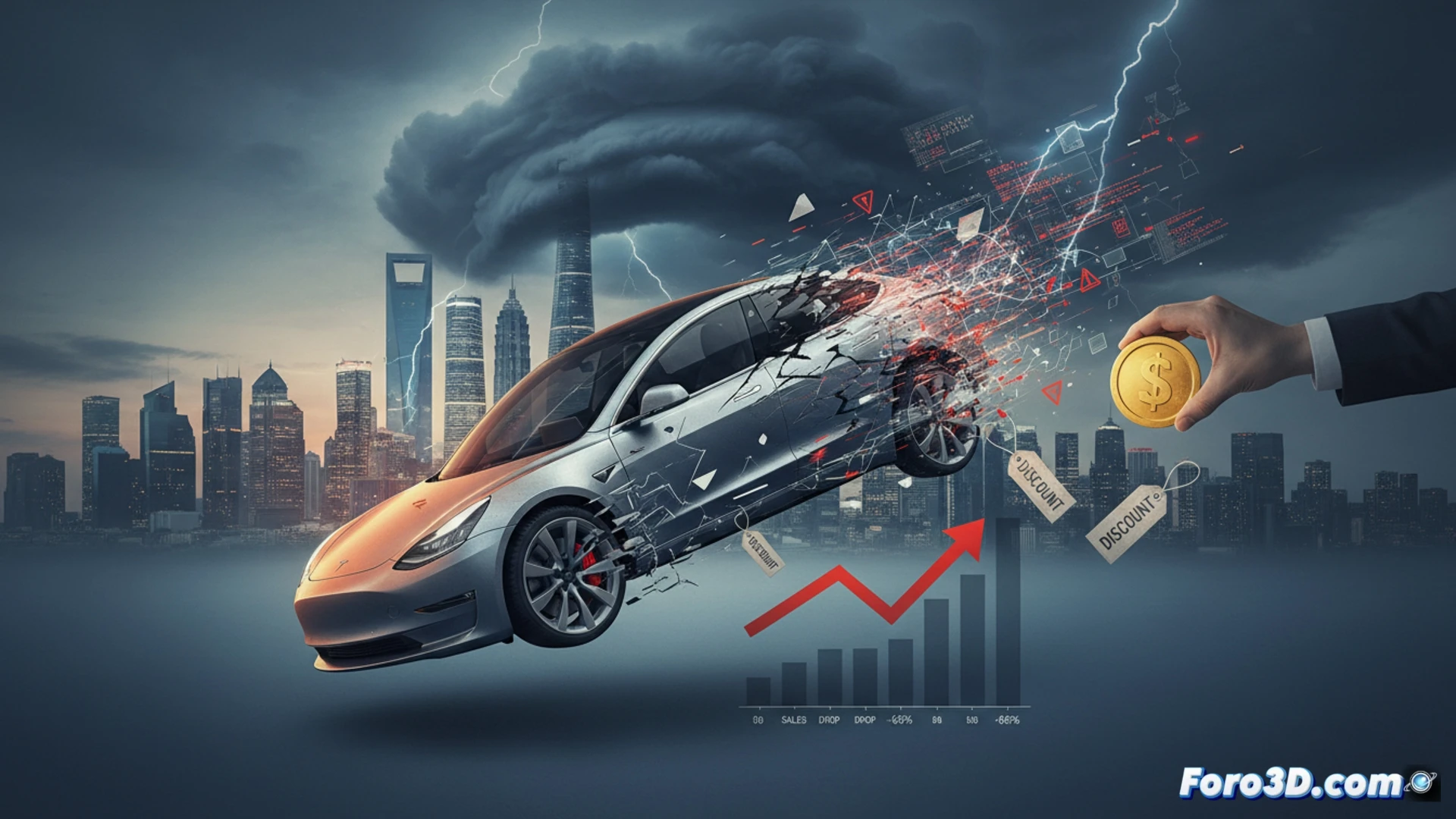
Electric architecture and dependence on the Model Y 🚗
The excessive reliance on the Model Y, which accounts for 75% of sales, exposes a critical vulnerability in Tesla's electric architecture. This vehicle concentrates the majority of investment in autonomous driving systems (ADAS) and 3D components, such as LiDAR sensors and surround-view cameras. The sales decline forces prioritizing cost-cutting over R&D. Meanwhile, competitors like Geely, with a diversified range including models with modular electric architectures and advanced ADAS systems, surpassed BYD in January and February. The visual comparison of ADAS systems shows that Tesla maintains a pure vision-based approach, while Geely integrates redundant 3D sensors in its high-end models.
Discounts as a brake on 3D innovation ⚠️
Tesla's discount strategy could have a perverse effect: by reducing margins, it limits the ability to invest in the development of new electronic and autonomous driving systems. The Hormuz crisis, which initially hurt sales but later boosted savings compared to gasoline, fails to compensate for the lack of state subsidies in China. If Tesla does not diversify its offering and reduce its dependence on the Model Y, its technological leadership in 3D components and ADAS could be compromised against local rivals with greater industrial flexibility.
As Tesla's sales decline in China reduces R&D investment in its ADAS systems, how specifically will the precision and future development of the high-definition 3D maps used by its autonomous driving be affected?
(PS: ADAS systems are like in-laws: always watching what you do)