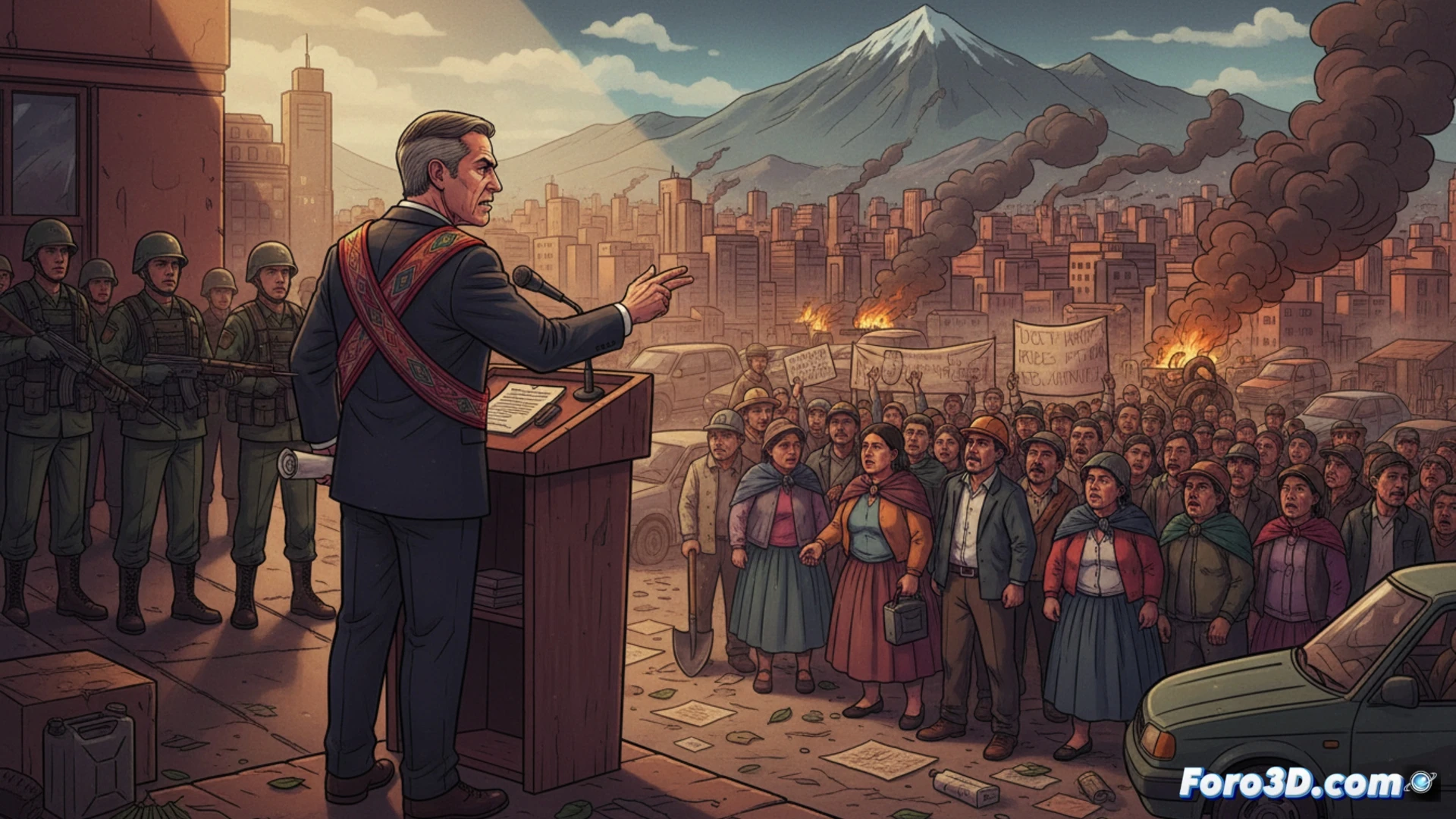
President Rodrigo Paz issued an ultimatum to unions, peasants, and social movements that have been maintaining protests and blockades for 27 days. He invited them to dialogue for the last time and warned that if they do not negotiate, he will declare a state of emergency and escalate the conflict with a possible deployment of military forces. The protests erupted after the elimination of fuel subsidies, which caused a 90% price increase, compounded by contaminated gasoline and a law that facilitates land concentration. The conflict has left at least four dead and blockades causing shortages of fuel, medicine, and food, especially in La Paz and El Alto.
Technology as a monitoring tool in conflict zones 🛰️
In contexts of blockades and shortages, the use of surveillance drones and satellite communication systems becomes key to assessing the state of routes and resource distribution. Authorities could use real-time images to identify critical protest points and coordinate humanitarian corridors. However, the lack of digital infrastructure in rural areas limits the effectiveness of these tools, leaving entire communities without access to vital information during the crisis.
Dialogue as an app no one wants to update 📱
President Paz insists on inviting dialogue like someone offering a software update that no one downloads. The unions, for their part, prefer to maintain their version of protest with blockades and road closures, which, although lacking security patches, at least gives them immediate results. Meanwhile, ordinary citizens, without access to the dialogue app or gasoline, wonder if the next patch will be military or if there will be an offline mode to survive.