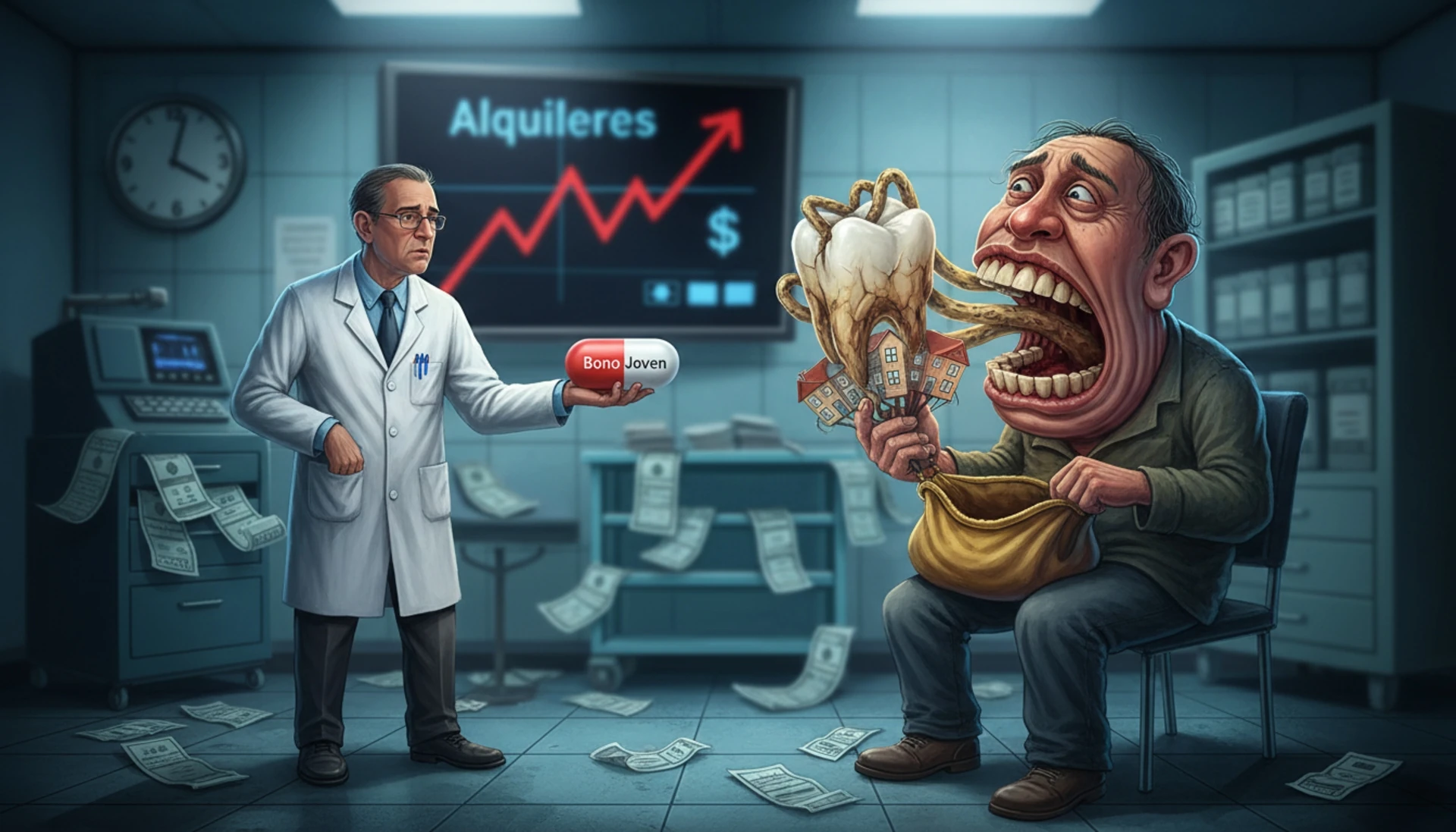
The government acts like an emergency room doctor in the face of the housing crisis: faced with a toothache caused by speculation, it prescribes a paracetamol in the form of a youth bonus instead of extracting the damaged tooth. While rents rise uncontrollably, one-off aid does not correct the root problem, leaving those affected with chronic inflammation and empty pockets.
Triage algorithms: how AI replicates emergency management 🤖
In the technology sector, AI models applied to crisis management mimic this same pattern of superficial triage. Machine learning systems trained on housing data prioritize quick solutions (temporary subsidies) over structural changes (market regulation). The result is a loop of predictive patches that alleviate symptoms without modifying root variables, such as land prices or the accumulation of vacant properties.
Doctor, my wallet hurts when I breathe 💸
The youth bonus is the ibuprofen of housing: it relieves for a while but doesn't pull the tooth. Meanwhile, speculators smile with gold-plated dentures, and young people wait their turn in the waiting room with a mortgage in hand and a little glass of sugar water. The only thing missing is the doctor prescribing yoga to pay the rent.