Fantastic creature designers reveal the secret to making a dragon or a griffin not look like a digital blob: studying real anatomy. They analyze bird, feline, and human skeletons so that every muscle and gesture makes sense. For the viewer, this means that realism in film or art depends on basic biology, not just imagination. Fantasy needs a scientific foundation to be convincing.
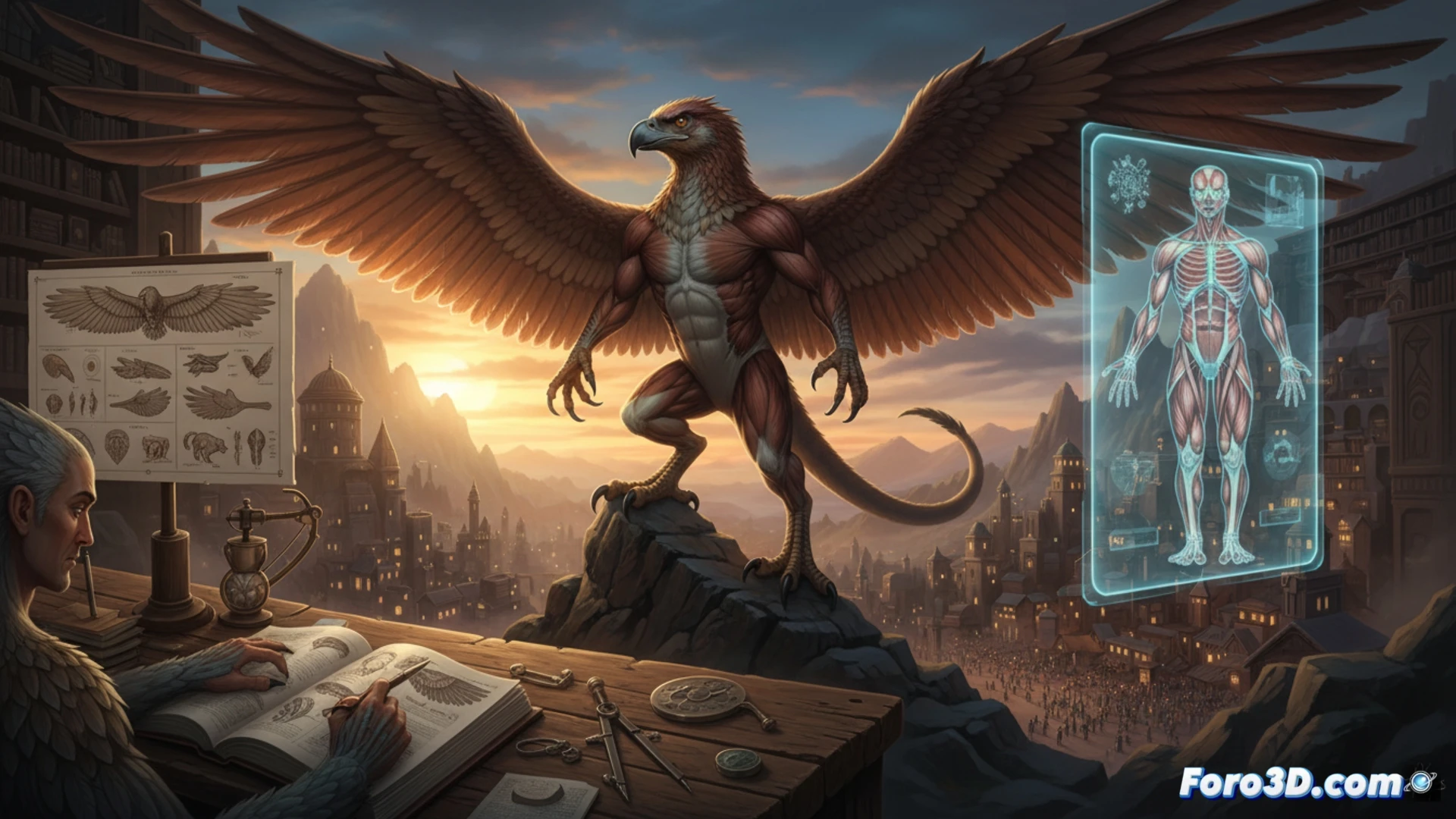
The engine of realism: applied biomechanics 🦴
Artists use references from animal and human movement to bring their creations to life. For example, a wyvern doesn't just fly because it has wings; its torso must rotate like a bat's and its legs land like a hawk's. They also apply body language: an aggressive monster hunches its shoulders, a submissive one lowers its head. This technical approach, based on observation and physics, prevents the creature from being a mere static drawing and turns it into a believable being within its environment.
The yeti that didn't do yoga 🐾
The problem arises when a novice designer forgets anatomy and draws a yeti with octopus arms and a gymnast's posture. The result is a being that looks like it's asking for help, not causing fear. Fortunately, professionals know that even a cyclops needs functional hips to walk. So, if you see a creature that seems to struggle going to the bathroom, its creator probably skipped biology class. Fantasy without reality is just a well-intentioned draft.