Machine Teen, the teenage robot from Marvel created by Marc Sumerak and Mike Hawthorne, presents a unique challenge for 3D animation: a character that must appear human but hides a complex mechanical structure. This article analyzes the rigging, skinning, and facial expression techniques necessary to bring Adam Jensen to life in a digital environment, balancing organic realism with the concealment of his true robotic nature.
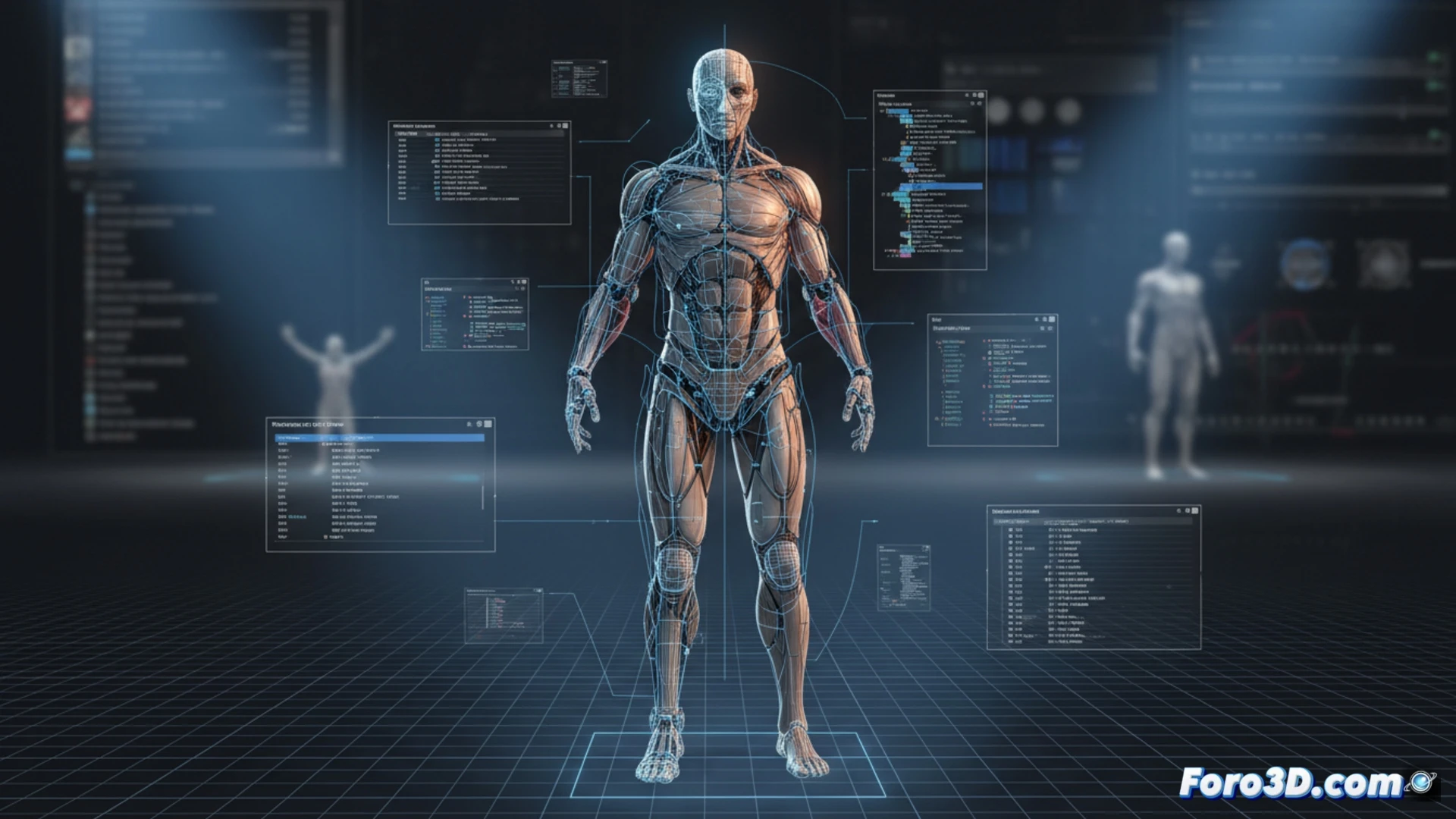
Rigging and Skinning for an Organic Robot 🤖
The rigging of Machine Teen must integrate a standard humanoid skeleton with hidden mechanical joints. To achieve natural movements with slight robotic pauses, it is recommended to use a hierarchical bone system with IK/FK controls on arms and legs. Skinning requires a hybrid approach: in visible areas (synthetic skin) use soft weights with blendshape deformation, while in transition zones (wrists, neck) apply hard weights that reveal subtle metal panels. The key is to use displacement maps and alignment textures so the skin perfectly covers the joints, avoiding clipping during animation.
Facial Expressions and the Concealment Dilemma 🎭
Adam Jensen's facial expressions must convey human emotions without betraying his mechanical interior. To achieve this, a blendshape system based on FACS (Facial Action Coding System) is recommended, modulating 45 key morph targets, from a furrowed brow to a forced smile. However, in moments of stress or revelation, subtle LED glints in his eyes or a slight tremor in his jaw can be activated, hinting at his nature without breaking the illusion. The use of skin shaders with subsurface scattering and controlled specular reflectance helps maintain organic credibility.
How to optimize the rigging and skinning of Machine Teen to achieve realistic mechanical movements without sacrificing the facial and gestural expressiveness required for a robotic teenage character?
(PS: check the rigging before recording, so we don't end up like with the textures without UVs!)