The resolution of a robbery at a silver shop depends not only on physical evidence, but also on the reliability of witnesses. Traditionally, the comparison of testimonies is based on subjective statements. However, the application of a 3D forensic pipeline allows transforming those words into verifiable spatial data. By creating an exact digital twin of the store through photogrammetry, we can overlay each person's versions and confront them with the real geometry of the scene, eliminating ambiguities and detecting visual contradictions impossible to perceive in a textual report.
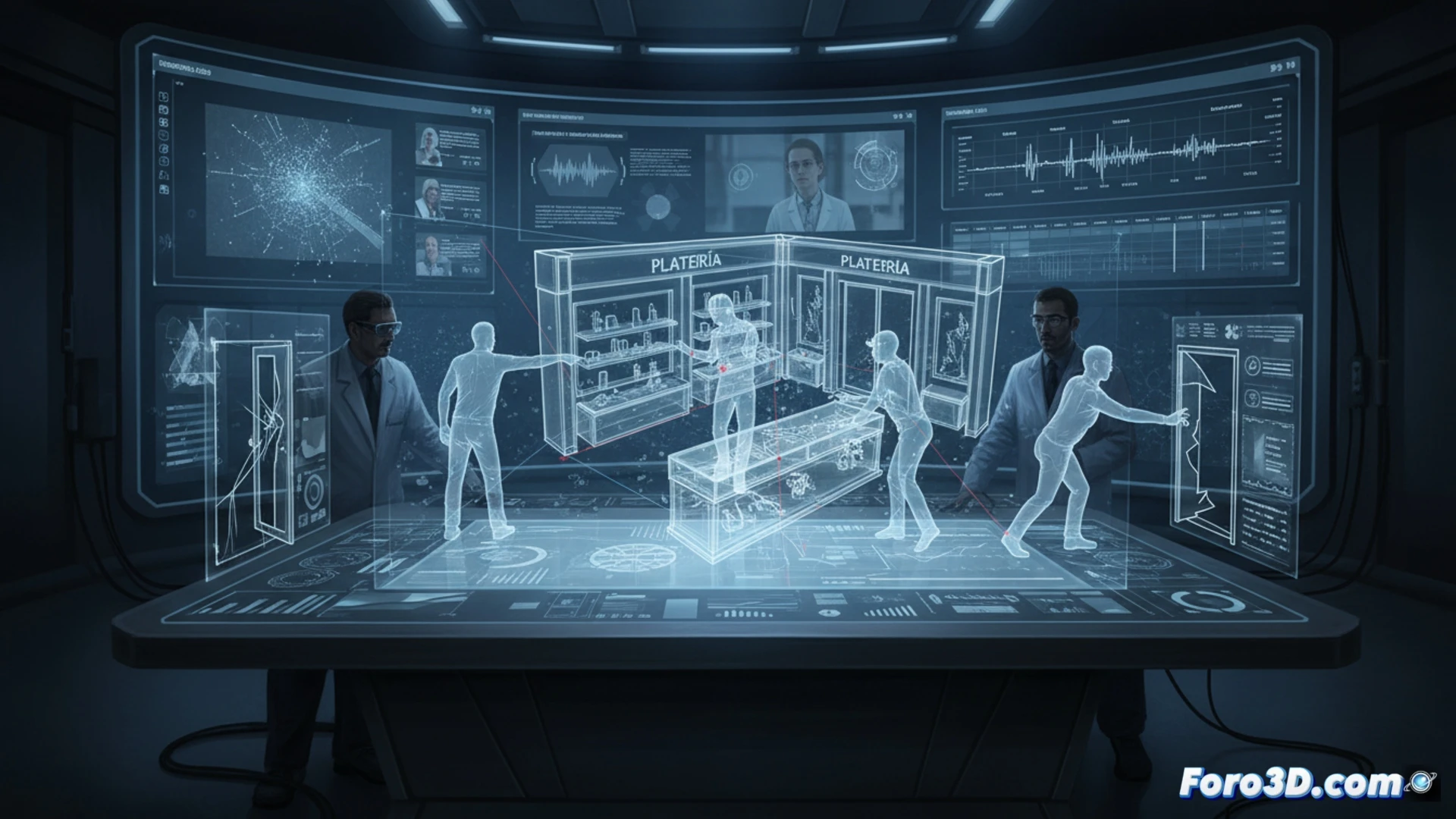
Vector Reconstruction and Occlusion Analysis 🧠
The technical process begins with a high-density photogrammetric scan of the interior of the silver shop, capturing every display case, column, and counter. From this point cloud, a meshed model is generated that serves as a virtual stage. Subsequently, each witness's statements are imported as position vectors and trajectories. The key to the comparison lies in the line-of-sight simulation engine. The software traces rays from each virtual witness's eyes to the key points of the robbery (safe, shelves, exit). If the geometry of the digital twin intersects that ray, occlusion is determined. This allows validating whether a witness could actually see the suspect from their location, or if their testimony contradicts the physics of the space.
Geometric Truth as a Silent Witness ⚖️
Beyond the technology, this approach redefines the concept of reliable testimony. By visualizing the overlapping versions in the 3D model, patterns emerge that are impossible to detect in a traditional confrontation. For example, two witnesses who claim to see each other can be invalidated if a central column blocks their mutual line of sight. The digital twin neither lies nor forgets; it simply exposes the geometric truth of the scene. In the forensic pipeline, the comparison of testimonies ceases to be a duel of words and becomes an exercise in spatial simulation, where the very architecture of the silver shop becomes the most relentless judge.
How can the reliability of a testimony be determined when the witness's memory conflicts with the precise recreation of the digital twin of the crime scene?
(PS: In the forensic pipeline, the most important thing is not to mix the evidence with the reference models... or you'll end up with a ghost in the scene.)