A nearly decade-long study by researcher Vincent Bombail has revealed that rats not only laugh when tickled, but their emotional response varies according to sex and the intensity of the stimulus. Published in Biology Letters, the experiment compared intense and gentle tickling in male and female rats, recording their ultrasonic vocalizations, the most reliable indicator of their positive mood. The results are clear: males enjoy both types of tickling equally, while females show a marked preference for softer, more playful strokes.
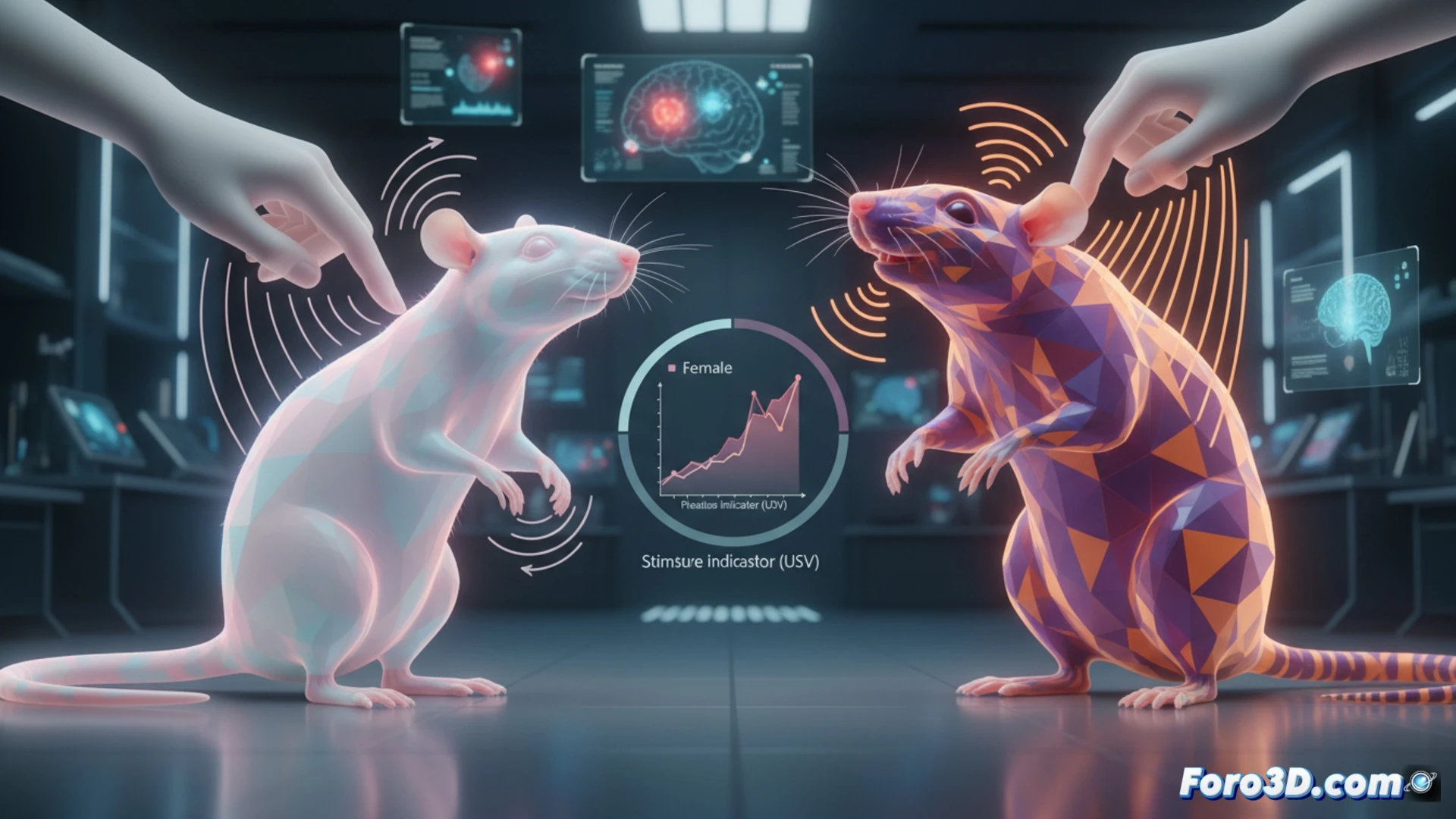
3D Modeling of Neurological and Behavioral Response 🧠
To visually represent these findings, we propose an interactive 3D infographic that integrates three data layers. The first layer would show a simplified anatomical model of the rat brain, with somatosensory and reward regions illuminated in different tones according to stimulus intensity. The second layer would include animated bar graphs representing the frequency of ultrasonic vocalizations (between 22 and 50 kHz), known as rat laughter, differentiating between males and females. The third layer would consist of a heat map on a 3D model of the rat's body, highlighting the dorsal and abdominal areas most sensitive to tickling, with a color palette ranging from blue (low response) to red (high response). This visualization would allow researchers and science communicators to see at a glance how the same physical experience generates different emotional responses depending on the individual.
Implications for Visualizing Animal Welfare 🐾
This study underscores the emotional complexity of animals and the need for visual tools that capture behavioral nuances. A well-designed 3D infographic would not only facilitate the understanding of this data but could also be applied to other animal welfare experiments, such as responses to environmental enrichment or social interactions. By graphically representing sex differences in the perception of pleasure, we help break the idea that all individuals of the same species react identically to a stimulus, opening the door to more precise and ethical experimental designs in the field of ethology.
Is it worth creating a complete underwater environment, or are the specimens enough?