3D technology is transforming traditional trades, and butchery is no exception. From templates for precise cuts to bone replicas for practicing deboning techniques, 3D printing offers tools that reduce meat waste and improve safety. A concrete case: creating a rib model to train new employees without using real raw materials.
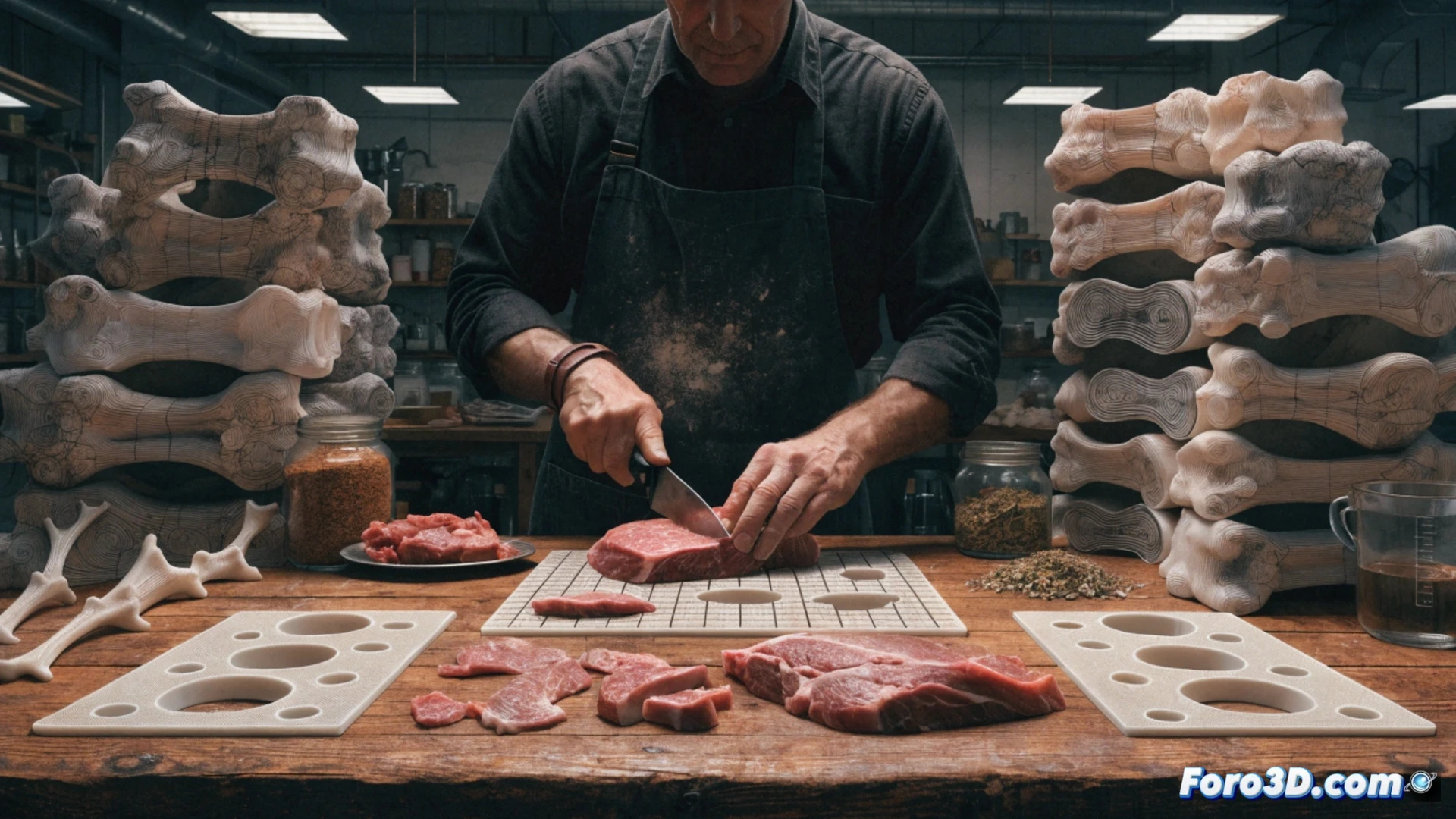
Programs and workflow for designing cutting templates 🛠️
To develop these tools, modeling programs like Blender or Fusion 360 are used, which allow designing custom cutting guides based on the type of piece. Then, slicing software like Cura or PrusaSlicer prepares the file for printing in PLA filament, which is resistant and suitable for food contact if sealed. The process is simple: scan the meat piece with a 3D sensor, adjust the digital design, and manufacture the template in a few hours.
When the butcher prints their own knife (and fails) 😅
Sure, some optimistic soul will try to print a knife in PLA to save on steel. Result: a plastic fork with chef delusions that breaks at the first contact with a bone. But hey, at least the printer doesn't complain about the bad cut. The moral: better leave the blades to steel and use 3D for what it does best: templates, ergonomic handles, and danger: butcher with printer signs.