Summer, 40 degrees in the shade and your dog won't leave the fan. It's panting as if it had run a marathon. The owner, torn between compassion and doubt, wonders if a radical haircut would relieve its suffering. It's a common scene, but the answer is not as simple as it seems.
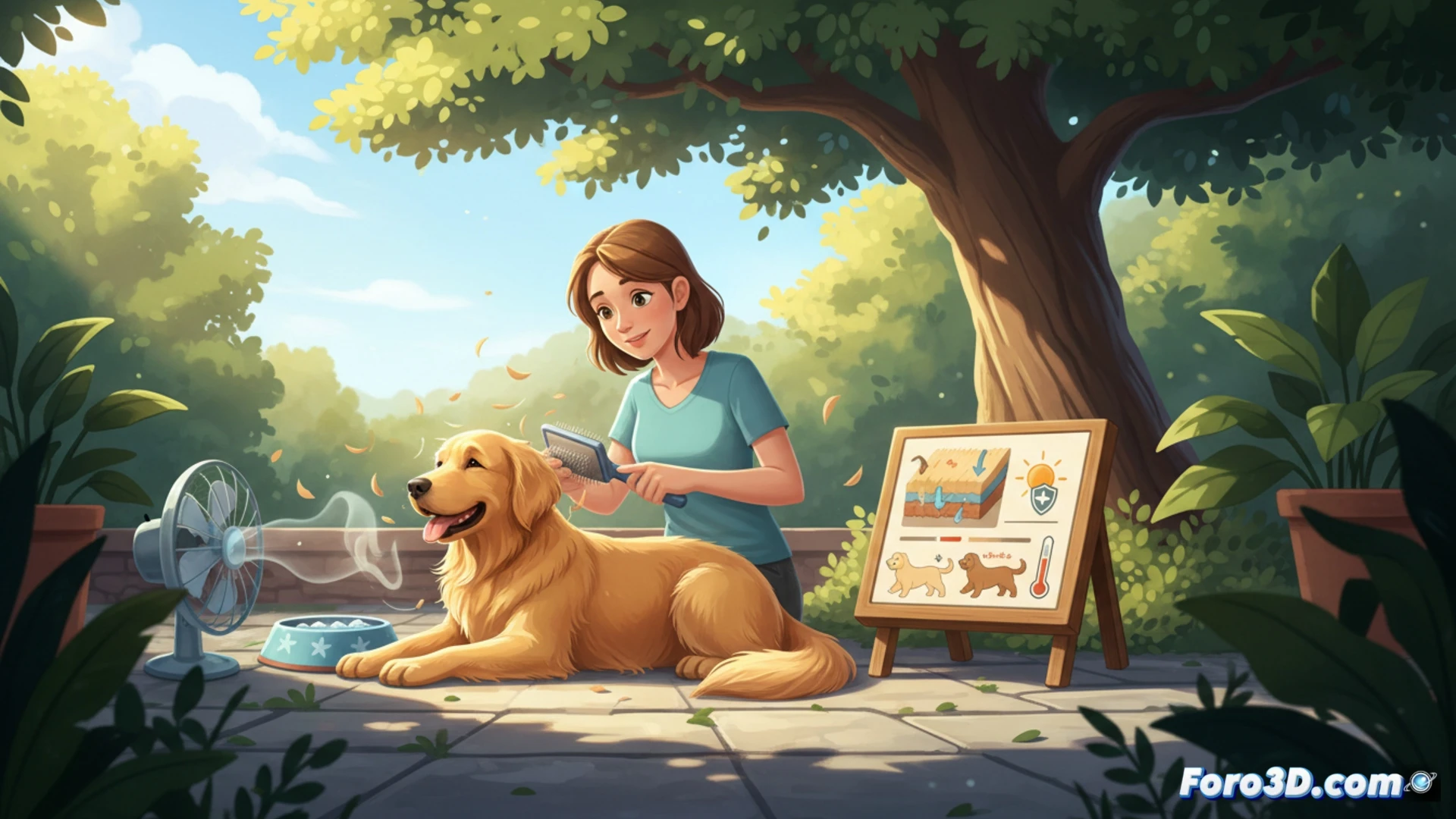
Canine thermoregulation: the myth of fur as an insulator 🐾
Dogs don't sweat through their skin like humans; their main cooling system is panting and sweat glands in their paw pads. Fur, although it may seem like a blanket, acts as a thermal insulator. In double-coated breeds (like huskies or German shepherds), the fur traps cool air and protects from external heat. Shaving it down removes this barrier, exposing the skin to sunburn and increasing the risk of heatstroke. Frequent brushing to remove dead fur is more effective than scissors.
Canine hair fashion: the lion look isn't always cool ✂️
Of course, if your Parisian poodle looks like a mink coat, a functional cut will do it good. But seeing a golden retriever shaved like a greyhound is a summer classic. The dog, far from being grateful, will look at you with a seriously, human face while shivering from cold at the first draft of air conditioning. Remember: the fan is its friend; your clippers, its aesthetic enemy.