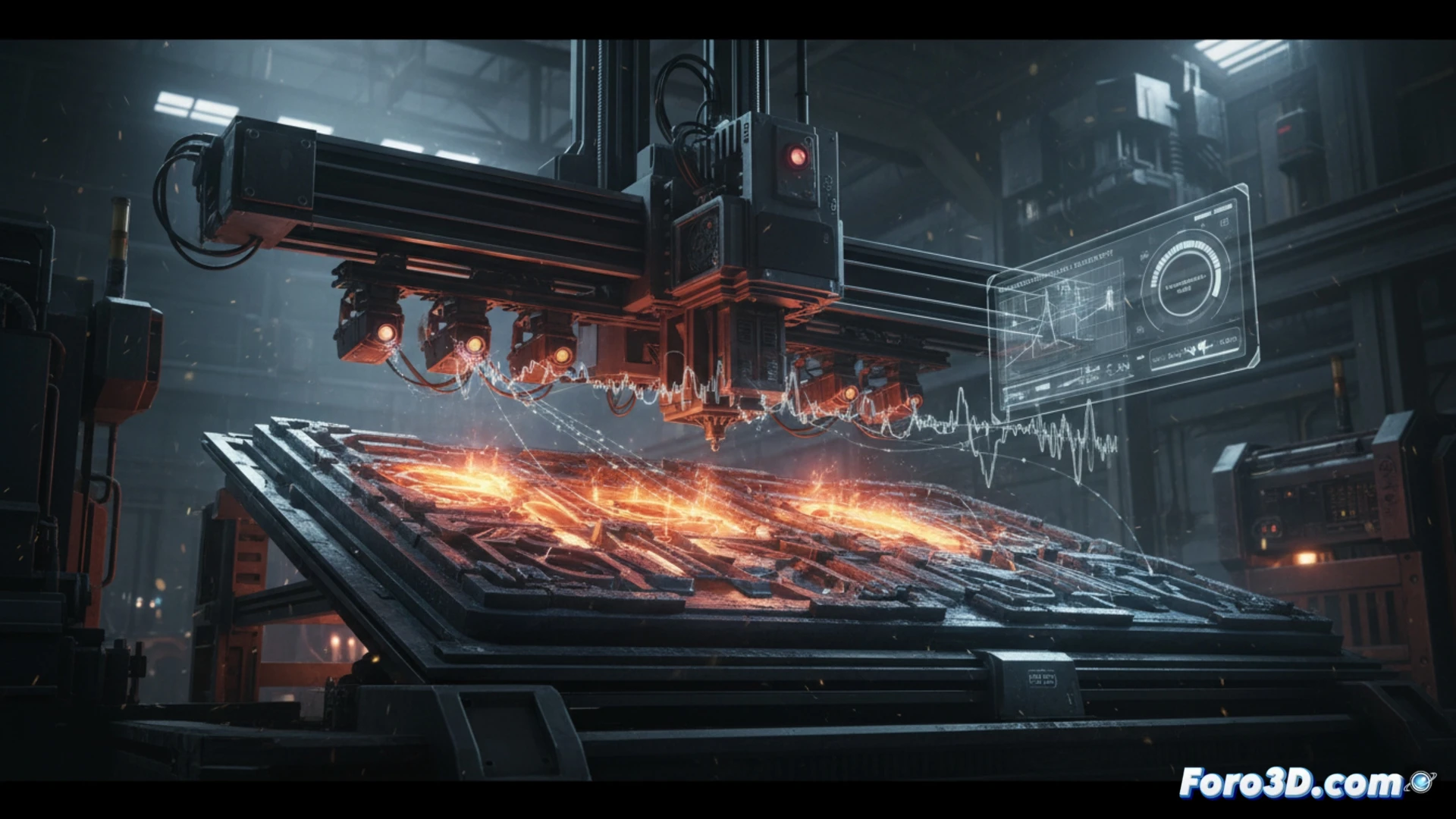
3D printing of large parts, such as beams or aircraft components, has a problem: uneven heat distribution deforms the material. Scientists have developed a system that uses low-cost thermal cameras to detect deviations in real time and adjust the printing speed. Everything happens without human supervision or the need to retrain the algorithm for each new design or material.
Thermal cameras and real-time adjustments 🔥
The system is based on algorithms that analyze the thermal image of the part while it is being printed. If it detects an area that cools or heats outside of expected parameters, it modifies the head speed to compensate. No recalibration is required for each change in material or geometry, reducing costs and production times. The technology allows for manufacturing structural parts without deformations or breakage, using affordable hardware and without operators monitoring the machine.
Goodbye to the operator watching the thermometer ☕
Until now, monitoring the temperature of a large 3D printer was like watching a paella: if you got distracted, it burned. This new system does the dirty work for you, so you can stop staring at the thermal screen and dedicate yourself to more productive things, like drinking coffee or pretending to work on another project. The machine no longer needs you to whisper thermal encouragement phrases.