Choreography requires visualizing bodies in space, but dancers or a studio are not always available. 3D technology allows choreographers to plan, rehearse, and correct movements without needing a physical stage. With virtual models, you can experiment with formations, transitions, and timing before bringing it to the real world, saving time and resources in production.
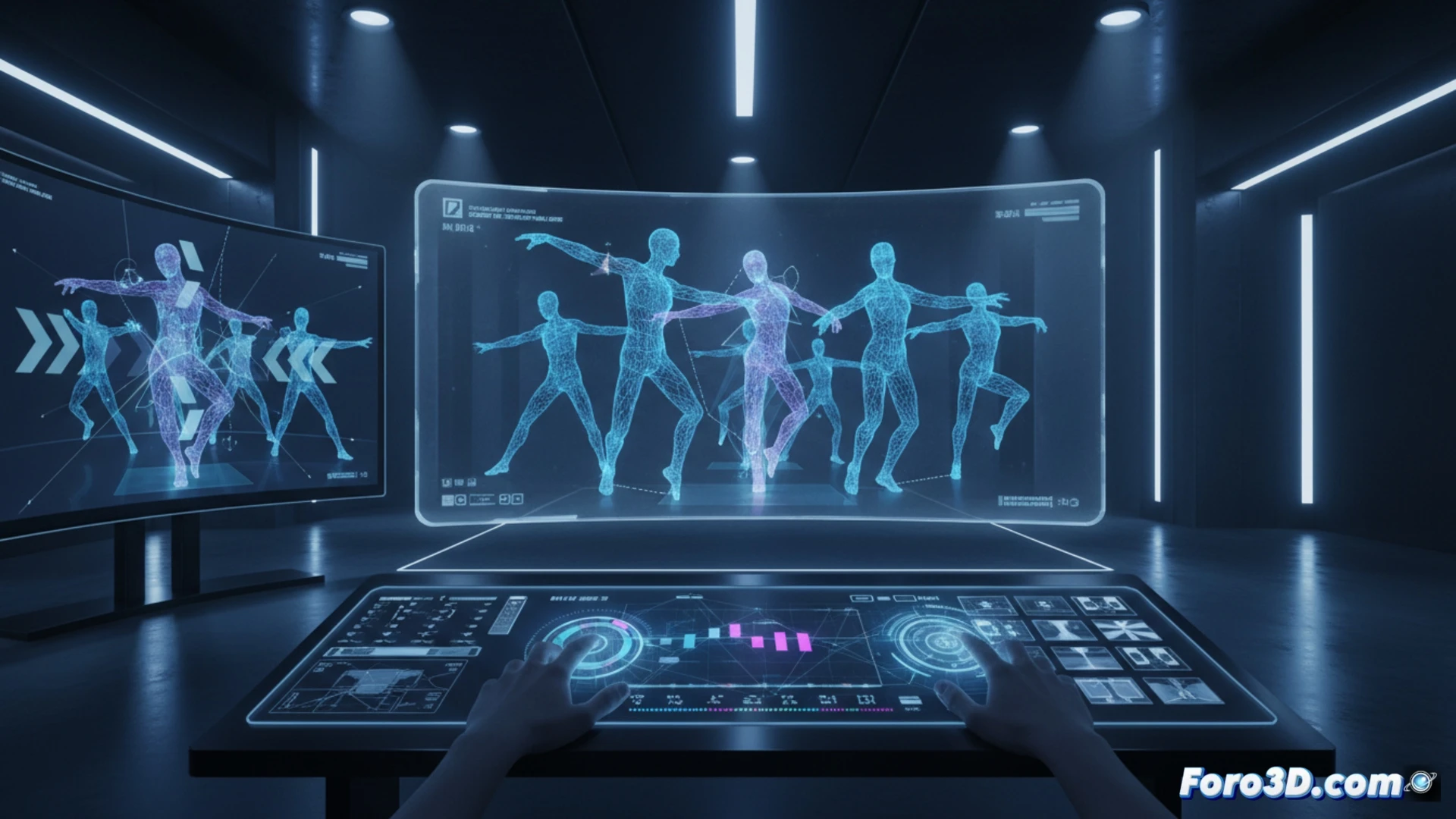
Simulation and planning with 3D software 🎭
Programs like Blender (free) or Autodesk Maya offer character animation tools that allow you to create avatars with bones and joints. The choreographer can define trajectories, speeds, and contacts between virtual dancers. For a concrete example: rehearsing a 12-person choreography on a small stage, adjusting distances and avoiding collisions, all from a screen. There are also tools like MotionBuilder for real-time motion capture, integrating sensor data to refine the staging.
The choreographer who doesn't sweat (but their PC does) 💻
Sure, now you can spend hours moving rigid avatars that look like 90s robots, while your real dancers have a coffee. Of course, when the software crashes just as you save the 8-minute sequence, you remember that a shout of again from the top is better understood in the studio than in a failed render. In the end, 3D doesn't replace the sweat, but at least you avoid having to explain why that dancer crashed into the set.