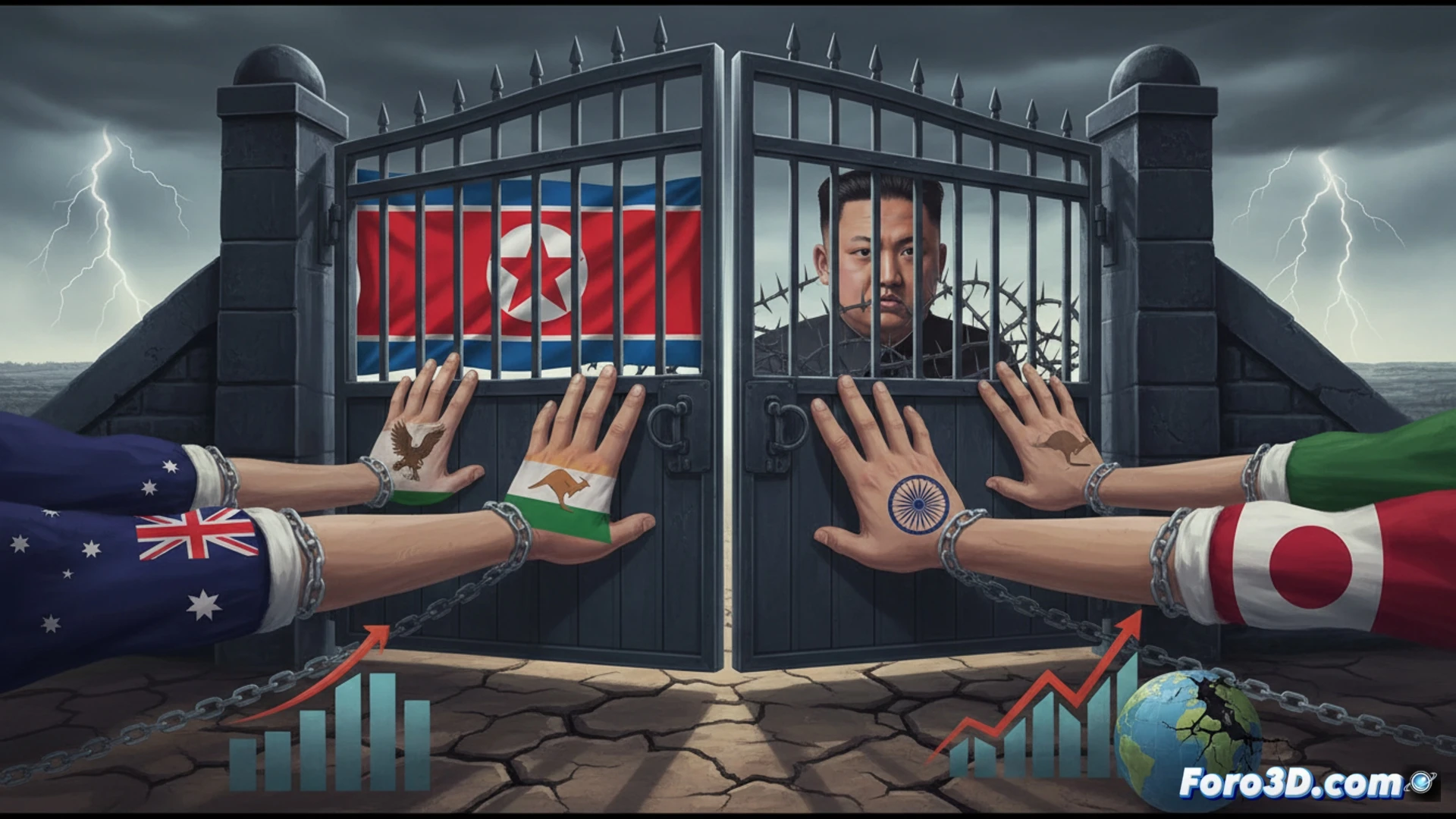
North Korea has been blunt: it will not renounce its nuclear arsenal, despite joint pressures from the United States, Australia, India, and Japan. Kim Jong-un's regime describes these demands as a direct attack on its sovereignty and promises to defend its interests at all costs. For the global citizenry, this translates into a diplomatic stalemate that will keep international tensions at high levels, affecting stability and the price of basic goods.
Missiles and satellites: North Korean technology advances non-stop 🚀
Far from yielding, Pyongyang is accelerating its intercontinental ballistic missile (ICBM) program and testing solid-fuel engines, which reduces launch time and complicates interception. Furthermore, the country is advancing its constellation of reconnaissance satellites, seeking technological independence in military surveillance. These developments, combined with its nuclear capability, create a scenario where technical deterrence surpasses any attempt at negotiation, raising the risk of miscalculations in the region.
Meanwhile, in the global peace market 🍿
It seems North Korea's negotiation manual is simple: if you ask me to disarm, I triple my missile tests. It's like being told to lose weight on a diet and responding by opening a pastry shop. The rest of the world watches, holds onto its wallet, and assumes that gas and wheat will go up. After all, peace is a luxury few can afford, and Kim seems to be the only one who doesn't need an invoice.