Researchers at Oak Ridge National Laboratory have achieved a milestone in industrial metallurgy by combining 3D printing with hot isostatic pressing (PM-HIP). For the first time, the containers that house the metal powder during the consolidation process are manufactured using additive manufacturing, eliminating the traditional steps of welding, machining, and forming. This breakthrough allows for the production of critical parts closer to their final shape, drastically reducing material waste and shortening lead times without compromising the structural integrity of the component.
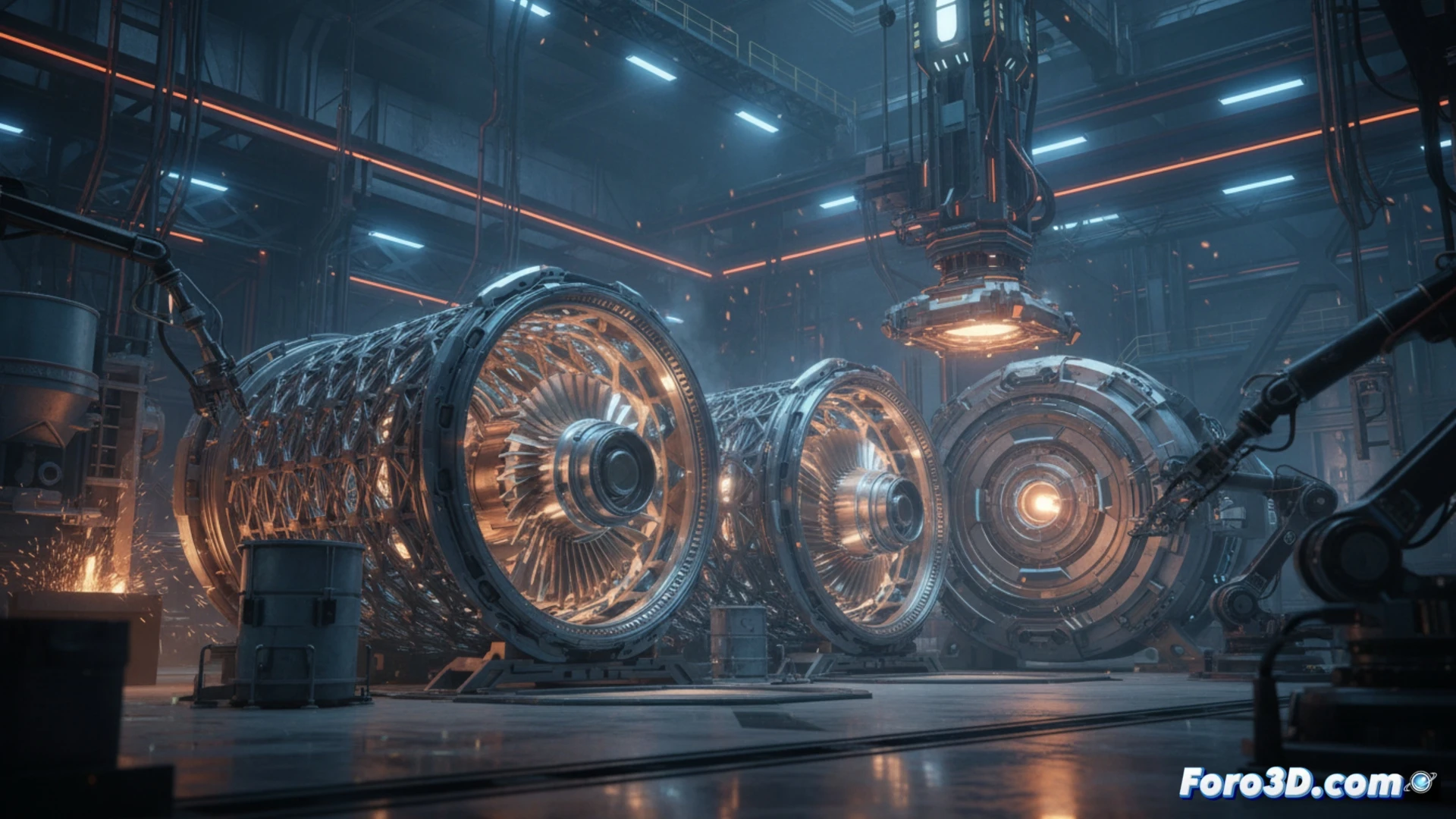
Technical process: from mold printing to the final consolidated part 🛠️
The traditional PM-HIP method involves manufacturing a steel container through welding and machining, filling it with metal powder, and subjecting it to high temperatures and pressures to consolidate the material. The weakness of the process lay in the multiple failure points of the welded container and its high production costs. With the new technique, the container is 3D printed directly, allowing for complex geometries impossible to achieve with conventional methods. This eliminates welded joints, reduces the risk of leaks during compaction, and offers precise control over the final properties of the material. The result is a near-net shape part requiring minimal post-processing, ideal for advanced alloys in nuclear reactors, turbines, and aerospace systems where resistance to corrosion and radiation is critical.
Logistical impact: efficiency, costs, and flexibility in the production chain 📦
From an industrial production perspective, this breakthrough transforms the manufacturing logistics of high-value metal components. By printing the container on demand, the long lead times associated with machining and welding molds are eliminated. Material waste is significantly reduced, as the final part is closer to its definitive shape, minimizing excess metal powder. Additionally, design flexibility allows for iterating prototypes and adapting specific alloys without the need for new tooling. Companies can integrate this process into their production lines to manufacture small batches or critical parts with an efficiency previously reserved for mass production, lowering costs and accelerating the time-to-market of strategic components.
As a production engineer, the elimination of welding and subsequent machining sounds like a paradigm shift, but what practical limitations regarding scaling and isotropic quality control have the Oak Ridge researchers detected when moving from a laboratory test specimen to an industrial-sized 3D container for PM-HIP?
(PS: at Foro3D we optimize routes like we optimize polygons: until the computer says stop)