Living near the sea has its advantages, but for hardware it poses a constant challenge. The sea breeze, laden with salts and humidity, accelerates oxidation in pins and metal slots of any device. This process, known as galvanic corrosion, can render connections unusable in months if no measures are taken. It's not a factory defect; it's the chemistry of the environment acting on unprotected metals.
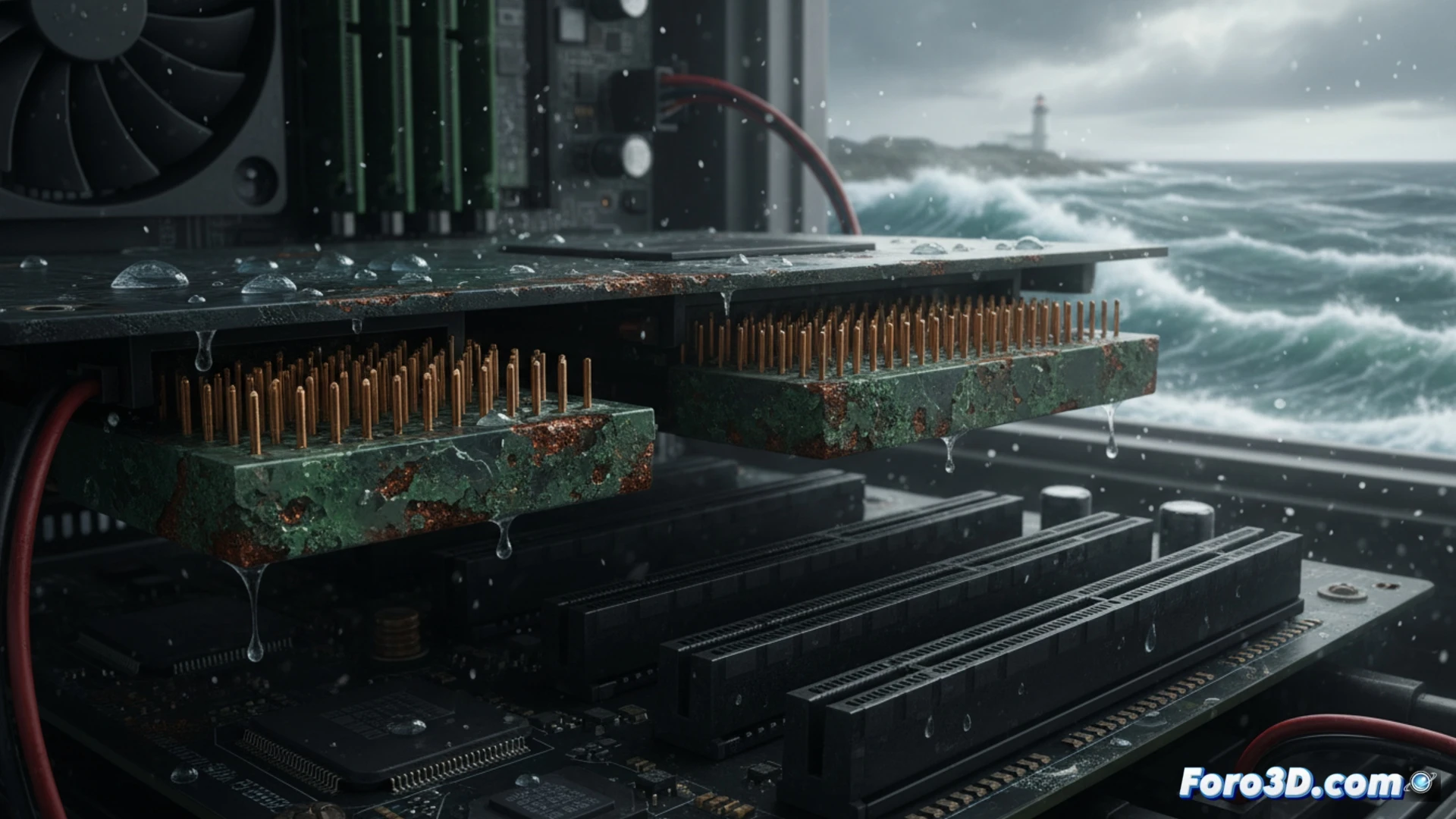
Corrosion mechanism in coastal electronic connectors ⚡
Oxidation begins when saline humidity forms an electrolyte on the metal surface. In contact with metals such as copper, tin, or nickel, an electrochemical reaction occurs that generates non-conductive oxides. This increases contact resistance, causes voltage drops, and in advanced cases, intermittent outages. A partial solution is to use gold-plated connectors, which offer greater resistance to corrosion, although they are not immune if the layer is thin. Maintenance with residue-free contact cleaners and the application of dielectric greases can delay deterioration.
The sunscreen your motherboard never asked for 🏖️
It turns out the sea breeze not only tans your skin, but also gilds your pins, though in the color of rust. Your RAM could be rustier than an anchor forgotten on the beach. If your laptop starts failing only on days with a south wind, don't blame Windows; the culprit is the saline aerosol seeping through the vents. Next time, put SPF50 sunscreen on your tower, or better yet, an anti-rust cover.